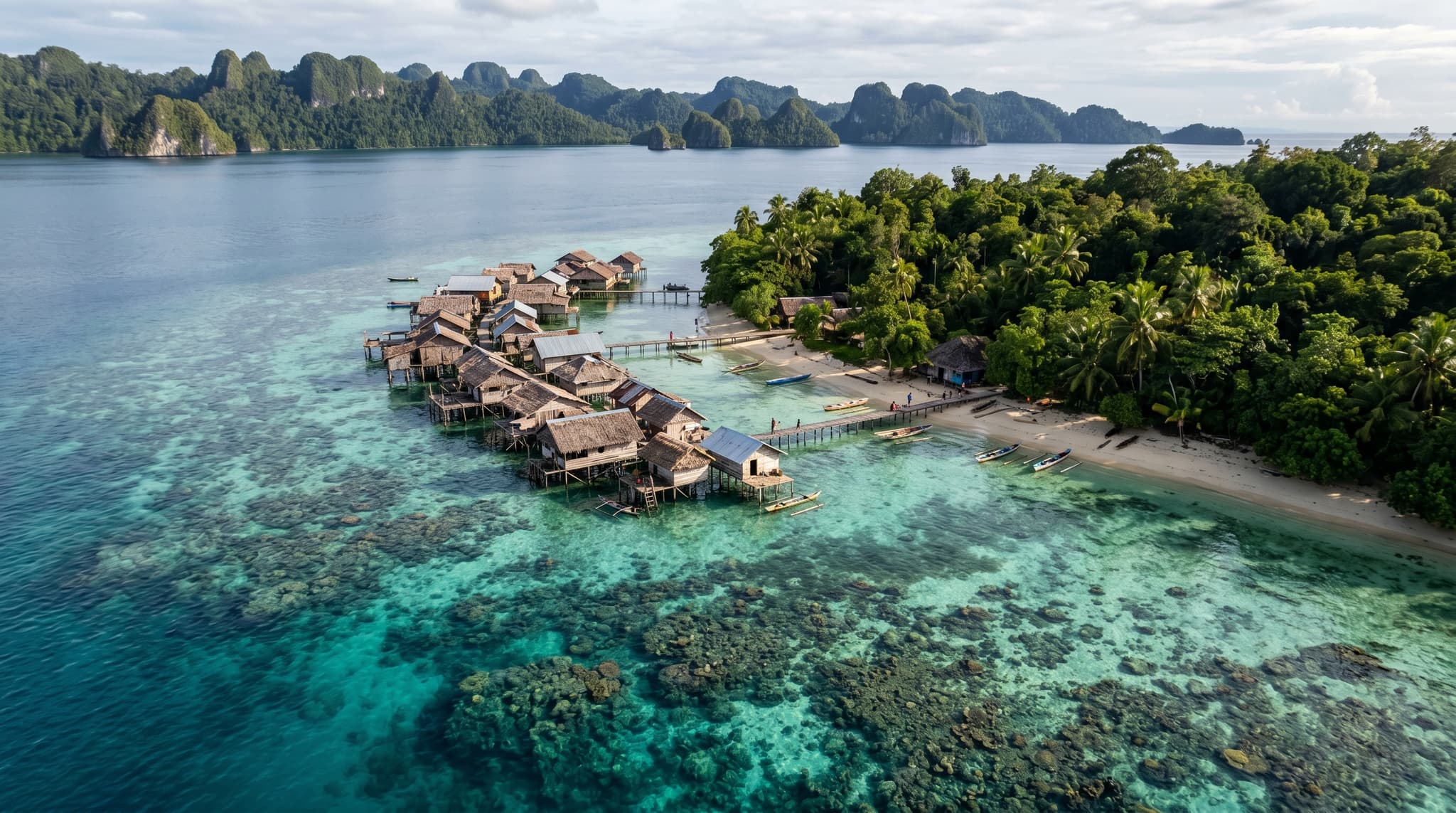
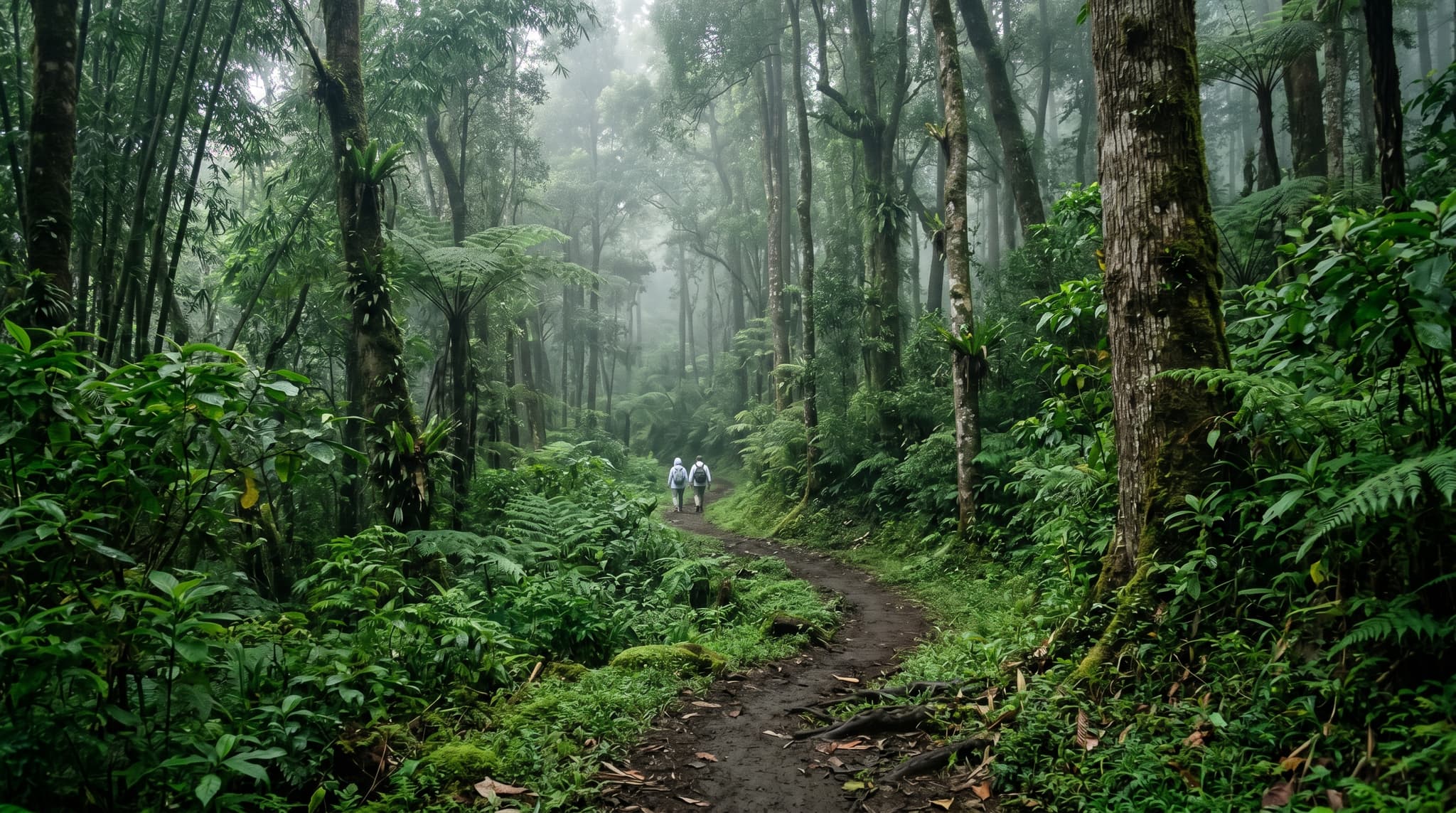
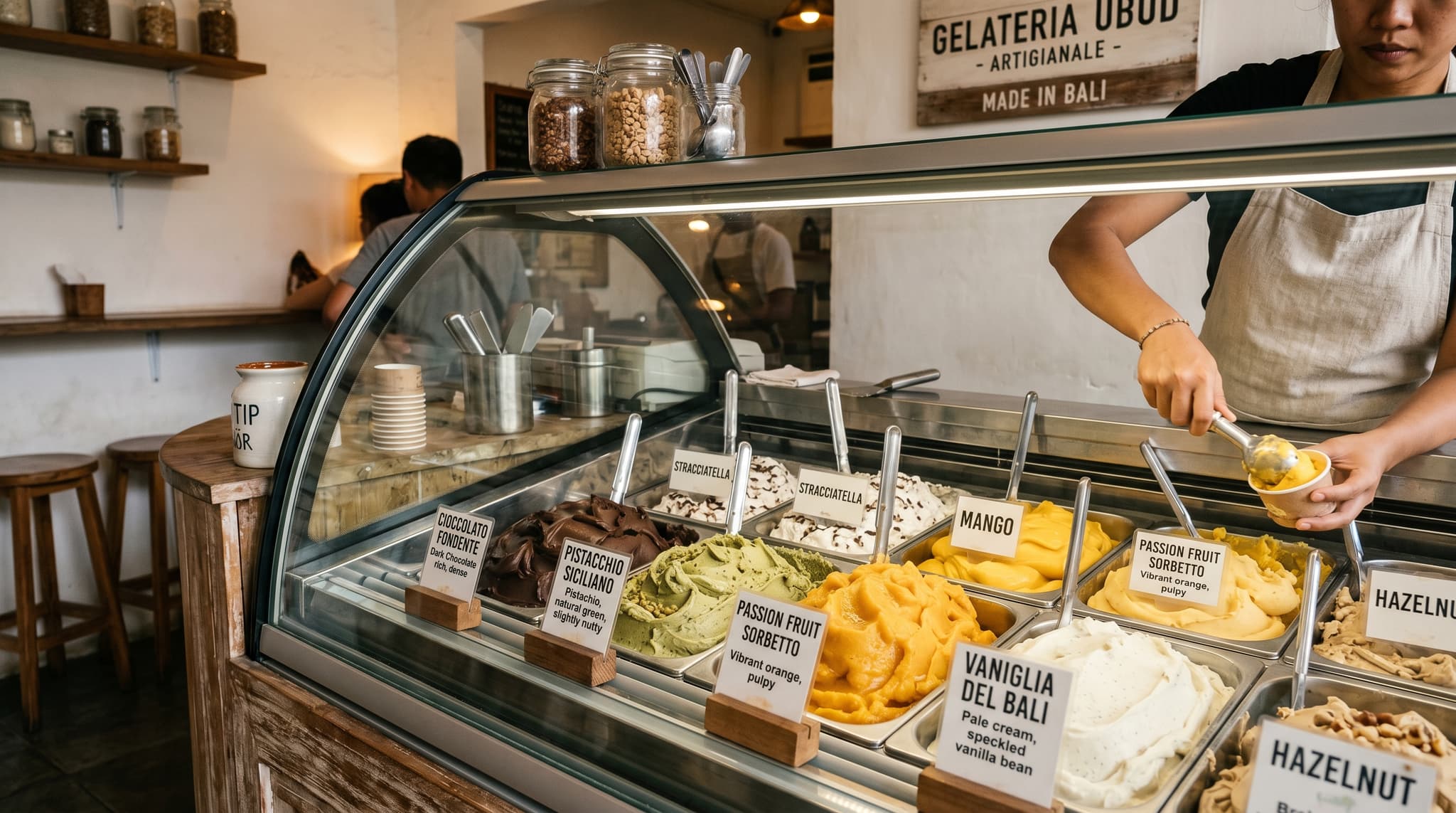
A quiet coastal village in east Bali with calm seas, water palaces, and traditional villages nearby — Candidasa is a base for the island's unhurried side.
The drive east from Ubud takes about 40 minutes. You pass through villages where the road narrows and the souvenir shops thin out, then the land opens toward the coast and something shifts. The air gets drier. The hills turn brown-gold in the afternoon light. By the time you reach Candidasa, the Bali you've been reading about — the one with beach clubs and ring roads and smoothie bowl content — feels like a different island entirely.
Candidasa is a coastal village in Karangasem regency, stretched along a single main road facing the Lombok Strait. On clear mornings, you can see the peak of Mount Rinjani across the water. Most evenings, everything closes by 11 PM. This is not a place that's trying to become something. It's a place that hasn't yet been asked to.
The Town Itself
Candidasa isn't photogenic in the way Bali's south coast is. The town shoreline is mostly rocky, lined with concrete seawalls built after erosion stripped the original beach decades ago. There are man-made lagoons where people swim, but nobody comes here for the sand.
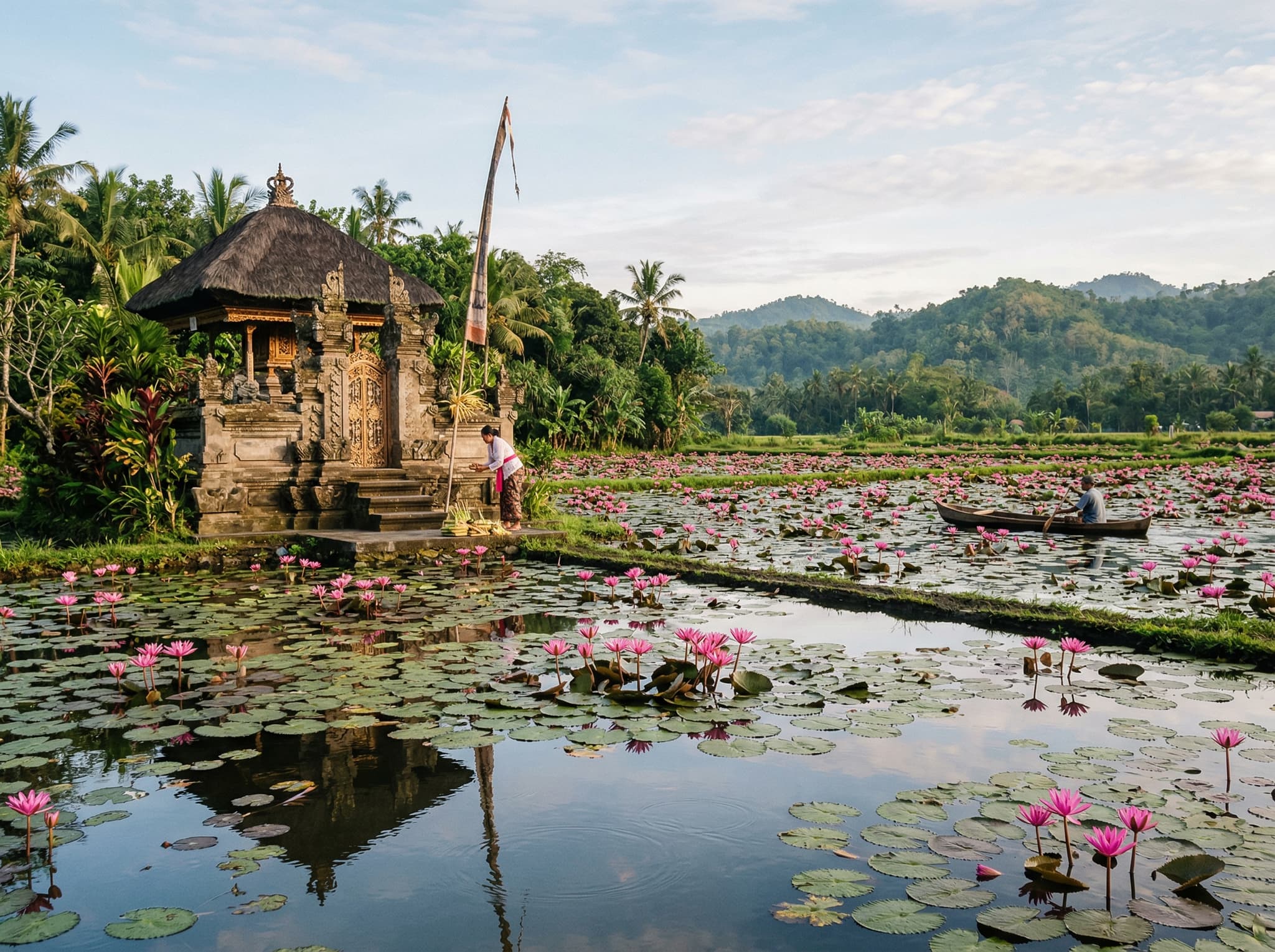
What Candidasa has instead is the Lotus Lagoon — a shallow pond at the center of town filled with pink lotus flowers and a small temple at its edge. No entry fee. The flowers open in the morning, so arrive before 9 AM if you want to see them at their best. It's a five-minute stop that tells you everything about the pace here: small, unhurried, free.
Accommodations line Jalan Raya Candidasa, the main road. Budget guesthouses and mid-range hotels sit closer to the center; resorts with better ocean views tend to cluster to the west. Temple Cafe & Seaside Cottages offers 15 rooms at $19–$27 per night with a restaurant serving local food at local prices. Ramayana Candidasa Beach Resort & Spa occupies the higher end at $76–$100 per night, with a beachfront restaurant.
Where to Eat
Warung Astawa
Set menu, IDR 100,000/person (~$6)
Dapur Aria
Indonesian seafood, beach views, open 8 AM–9:30 PM
Ganesh Lodge
European-Asian fusion, ~€15 for two with drinks, vegan options
Vincent's
Long-running, European and Balinese, slightly higher prices
The Beaches Worth Reaching
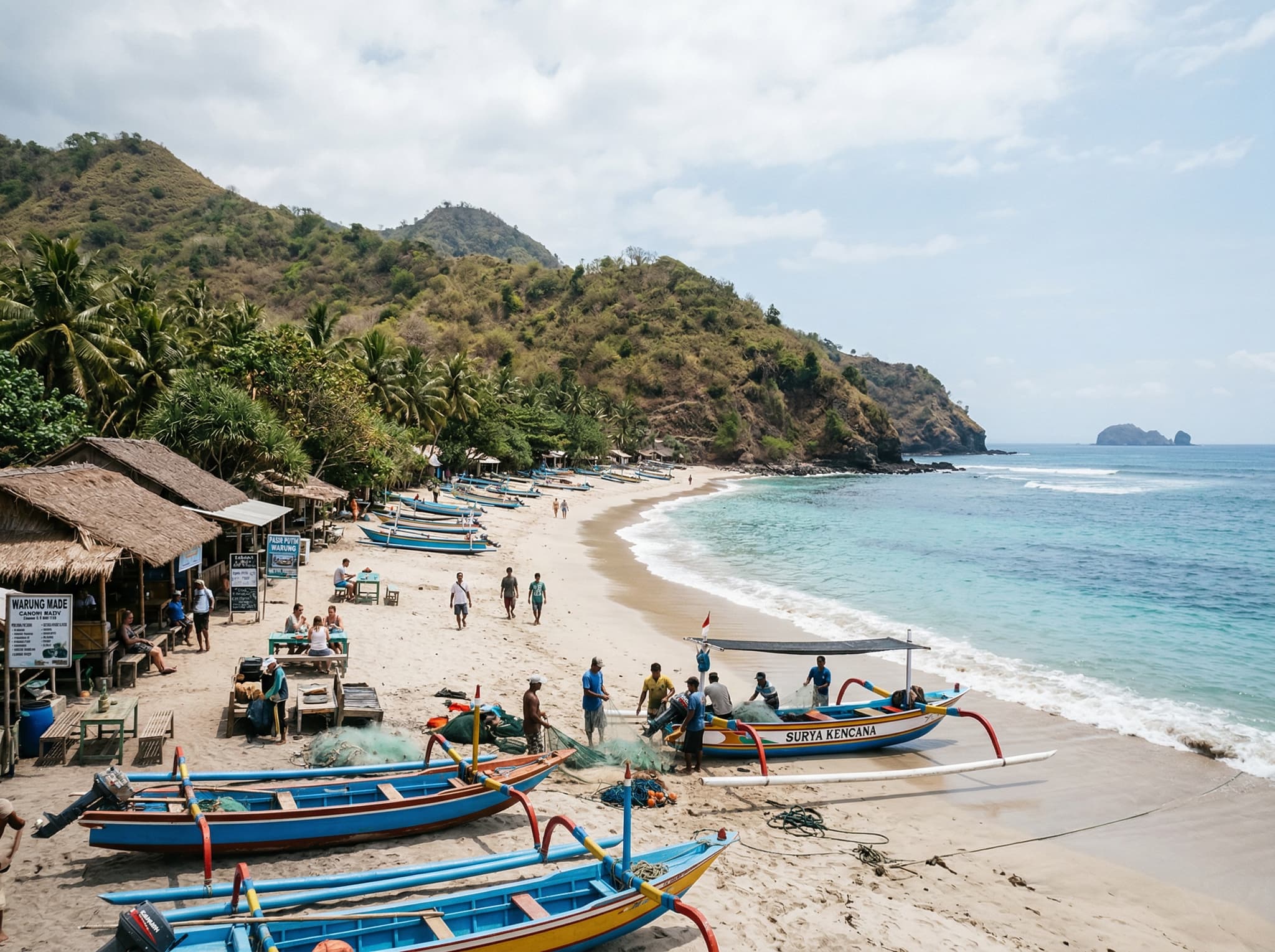
The best sand near Candidasa requires a short trip. Pasir Putih — also called Virgin Beach — is a white-sand cove about 15 minutes south, tucked below dry hills with views of Gili Biaha on clear days. There's no official entry fee, but expect to pay around IDR 20,000 for parking and road access. Sun loungers, umbrellas, and drinks from local concessions can bring total spending to around IDR 200,000 per person. Warungs line the beach. Fishermen work the water nearby. It feels found, even though it isn't a secret anymore.
[Blue Lagoon Beach](/places/bali/blue-lagoon-beach-bali-s-best-snorkeling-you-re-probably-driving-past), near Padang Bai (30–45 minutes northwest of Candidasa), is a small cove with bright blue water and reef accessible for shore snorkeling. Parking is IDR 2,000 for a scooter, IDR 5,000 for a car — no entry booth, no queue. Bring your own snorkel gear if you have it.
What's Around Candidasa
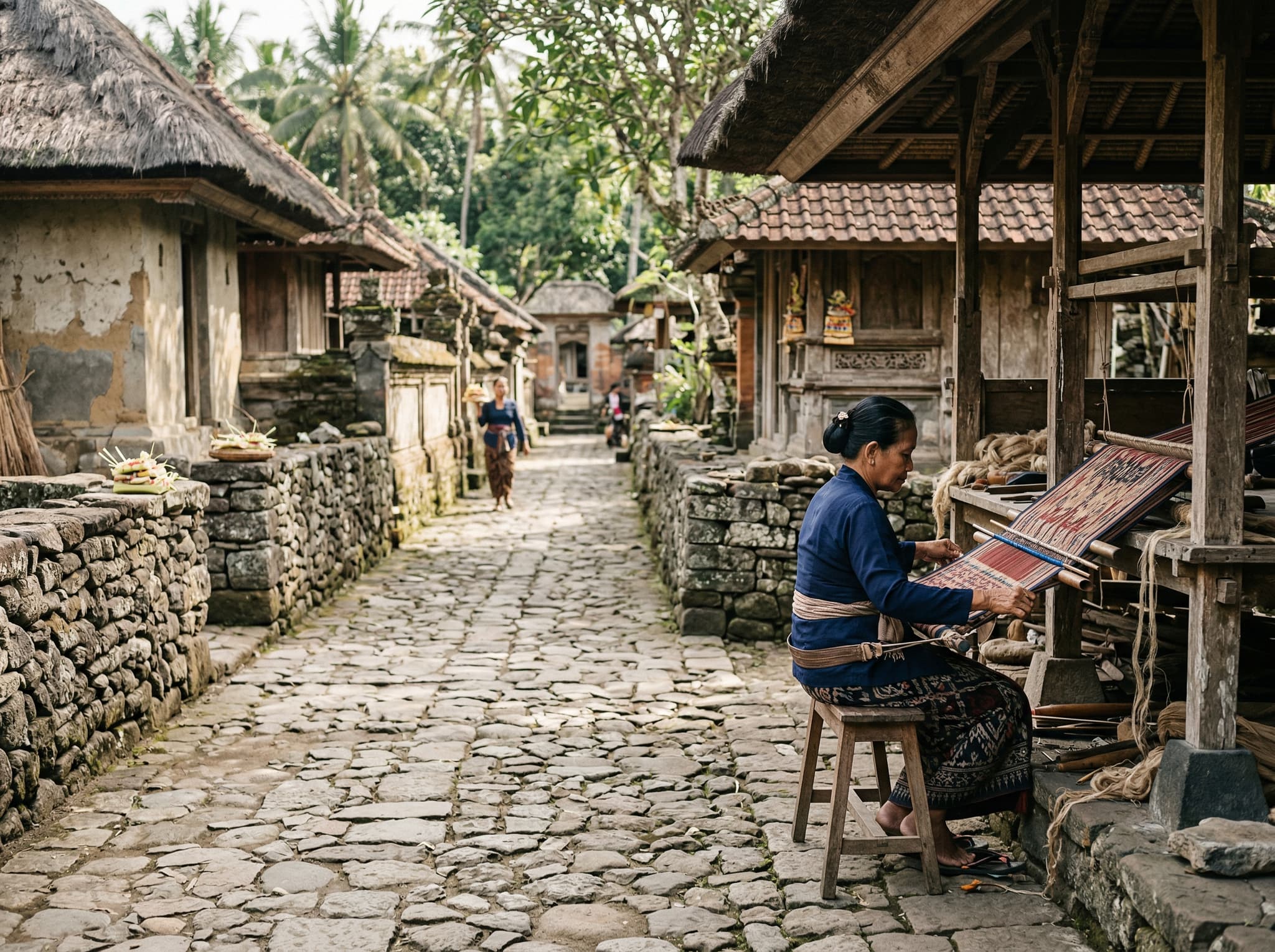
The east coast's real draw is what sits within a short drive.
Tenganan Village is about 10 minutes inland — one of Bali's oldest Bali Aga communities, where pre-Hindu Balinese traditions persist. The village is known for geringsing, a double ikat weaving technique found almost nowhere else. It's a living village, not a museum, and spending an hour here recalibrates your sense of what Bali was before the rest of the island happened.
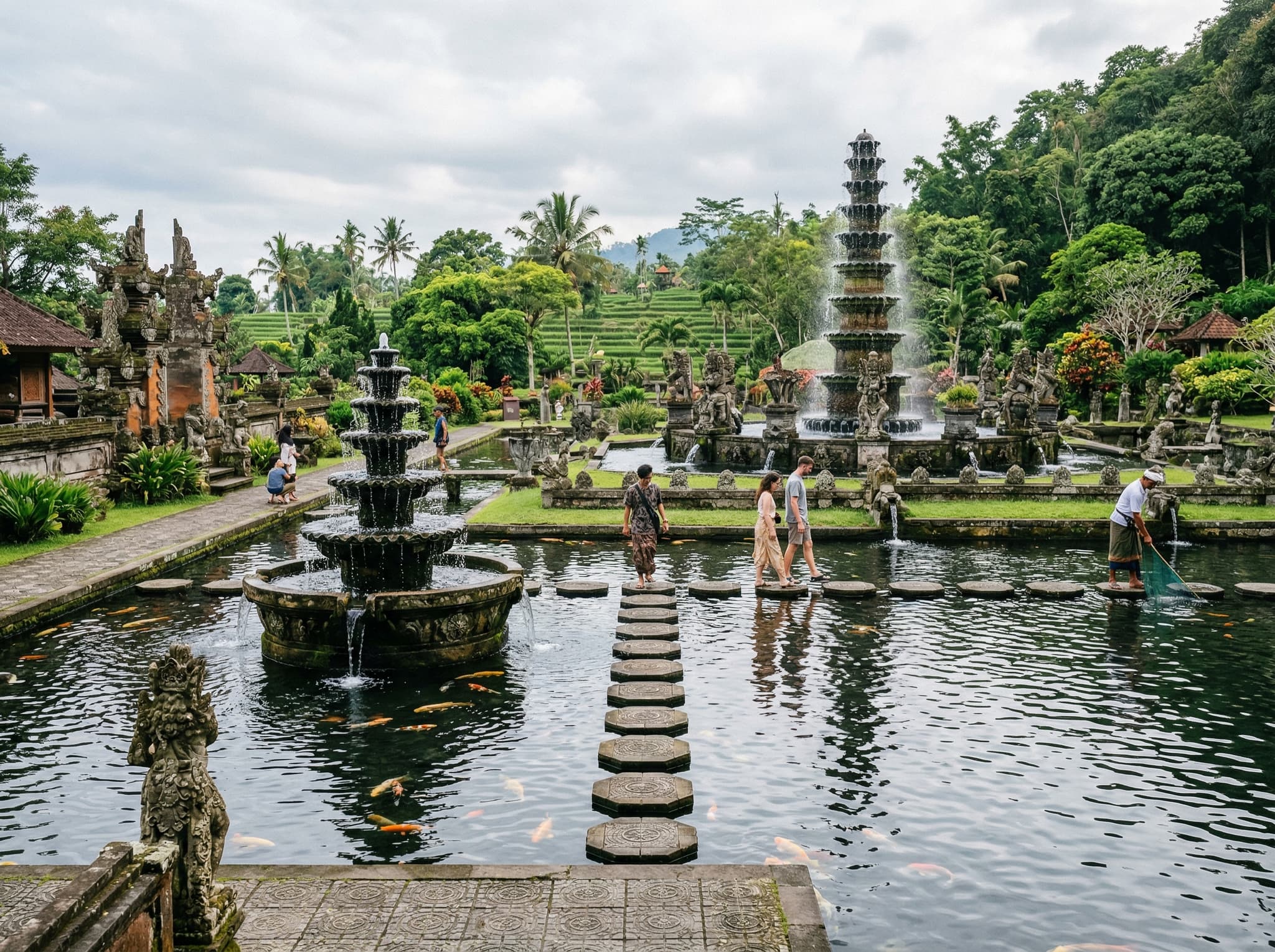
Tirta Gangga and Taman Ujung are the two royal water palaces of Karangasem, both within 30–40 minutes of Candidasa. Tirta Gangga has spring-fed pools, koi ponds, and tiered fountains set against rice terraces. Taman Ujung is more expansive — an oceanfront complex of pools and pavilions with views toward the coast. Entry fees have historically been around IDR 50,000 per adult, though current pricing should be confirmed locally.
Jemeluk Bay, further north toward Amed, offers some of the best accessible snorkeling on Bali's east coast — calm water, visible coral, and the kind of quiet that the Gili Islands lost years ago.
Getting to Candidasa
From Ubud (car/taxi)
40 min, IDR 370,000–450,000
From Ubud (bus)
90 min, IDR 120,000 via Perama Tour, once daily
From Sanur
1–1.5 hours, ~IDR 500,000 private transfer
From Kuta/Airport
~2 hours, IDR 500,000–700,000 (estimate — confirm with provider)
Who This Is For
Candidasa works for travelers who've already done the south, or who want to skip it entirely. It's a base for exploring Karangasem — the water palaces, the old villages, the coast north toward Amed — without the density or the noise. The seas are calm year-round (waves rarely exceed one meter), which makes it better for swimming and snorkeling than surfing. The nearest surf is at Jasri Beach.
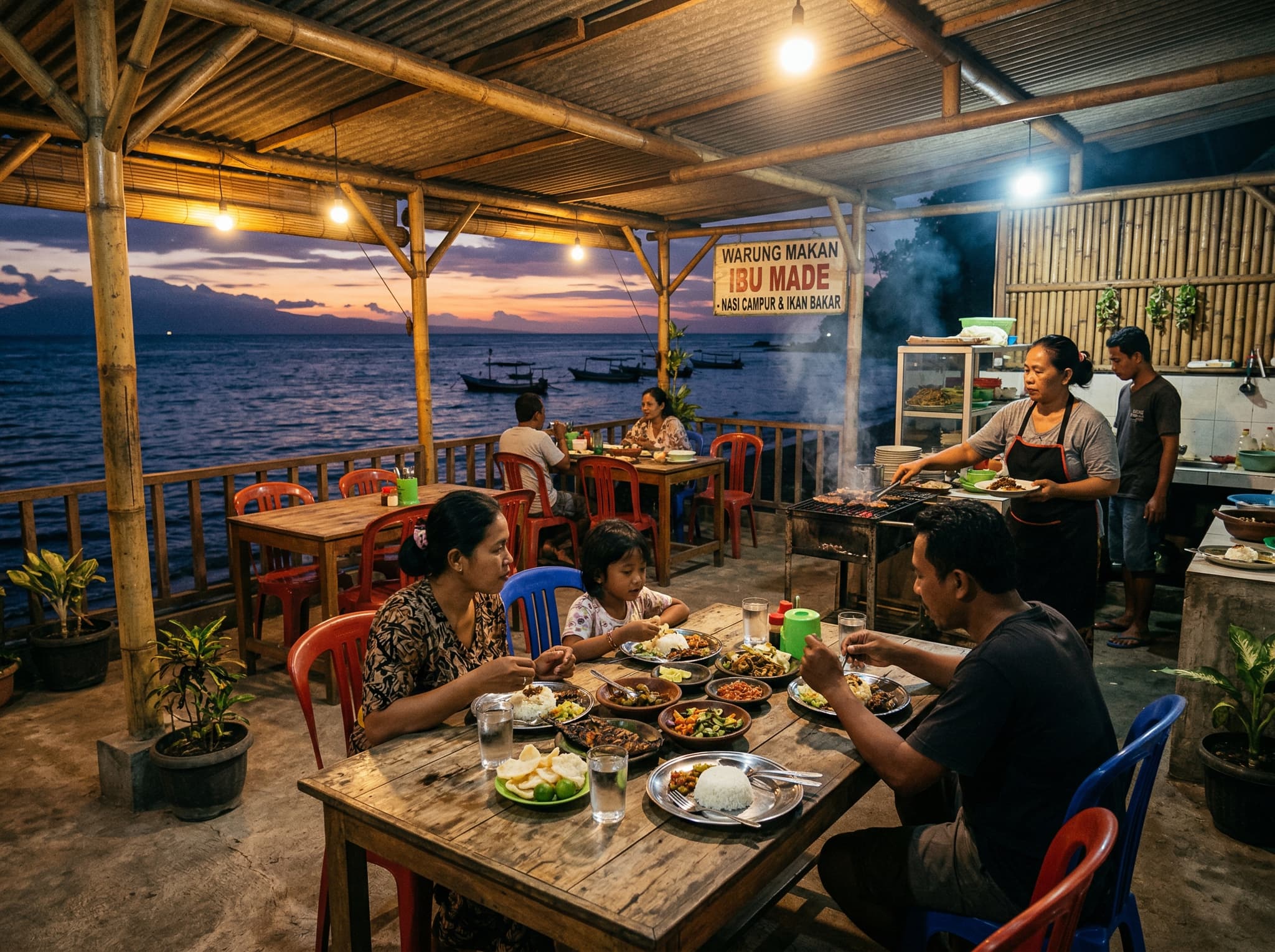
It's also honest about what it isn't. The nightlife is negligible. The town beach won't end up on anyone's feed. The dining scene is modest and local-priced, which is part of the appeal. A warung set menu for IDR 100,000 and a quiet evening watching the strait darken — that's the offer.
The east coast is changing, slowly. New guesthouses appear along the road. A few more rental scooters park outside the warungs each year. But for now, Candidasa still belongs to the version of Bali that doesn't need to perform for anyone. That window won't stay open forever.