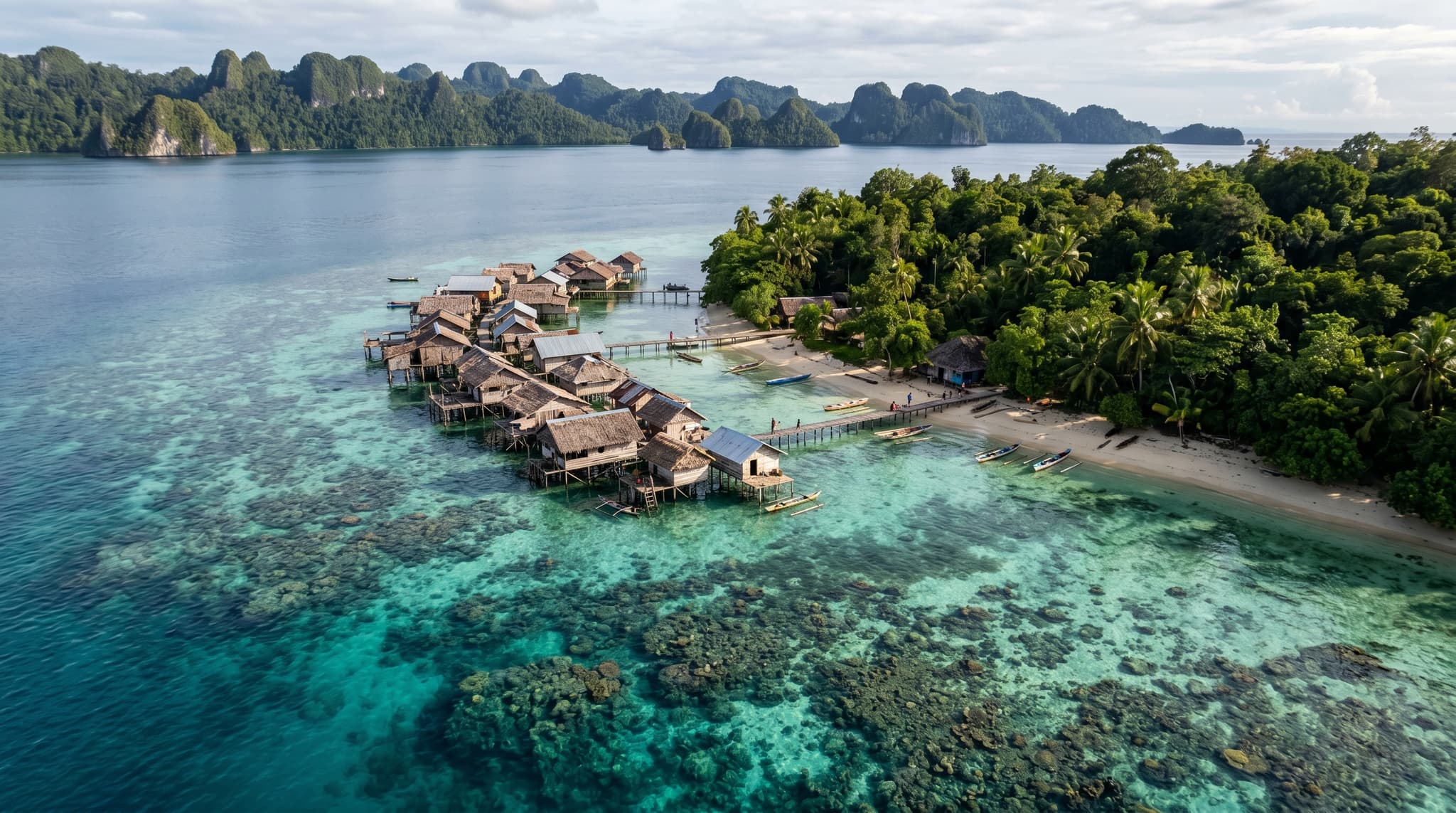
Pasir Putih, known as Virgin Beach, is a calm white-sand bay on Bali's east coast near Candidasa. Here's what to expect, how to get there, and what it costs.
Pasir Putih — known to most visitors as Virgin Beach — is a 500-meter crescent of white sand on Bali's east coast, tucked between two rocky headlands near Perasi village. It's one of the few beaches in Bali that still feels like a discovery, even though it hasn't been a secret for years. The name "Pasir Putih" simply means "white sand" in Indonesian, and the beach delivers on that promise without much else getting in the way.
Getting There

The beach sits in Karangasem Regency, roughly 15–20 minutes east of Candidasa by car or scooter. From Ubud, budget 1.5–2 hours. From Seminyak or the southern tourist belt, it's a 2–2.5 hour drive — long enough that most visitors combine it with a day exploring East Bali.
There's no reliable public transport to Pasir Putih. Your options are a rented scooter (IDR 70,000–100,000 per day), a hired car with driver (IDR 800,000–1,200,000 per day), or a Grab/Gojek booking from wherever you're staying. If you're already based in Candidasa or Amed, it's a simple side trip. From the south, it's a commitment — but one that rewards.
The main road is paved until the final kilometer, which turns steep, rocky, and narrow. It's drivable by car and manageable on a scooter if you're comfortable on Bali's roads. Parking is IDR 5,000–10,000 per vehicle. You'll pay the entry fee — cash only — at a checkpoint on the access road before you reach the beach.
Entry Fees
Adults
IDR 10,000–20,000
Children
IDR 5,000–10,000
Parking
IDR 5,000–10,000
Payment
Cash only
The fee structure is informal and varies slightly — some visitors report paying IDR 10,000, others IDR 20,000. Don't expect a printed receipt. It's a village-managed beach, and the pricing reflects that.
What the Beach Is Like

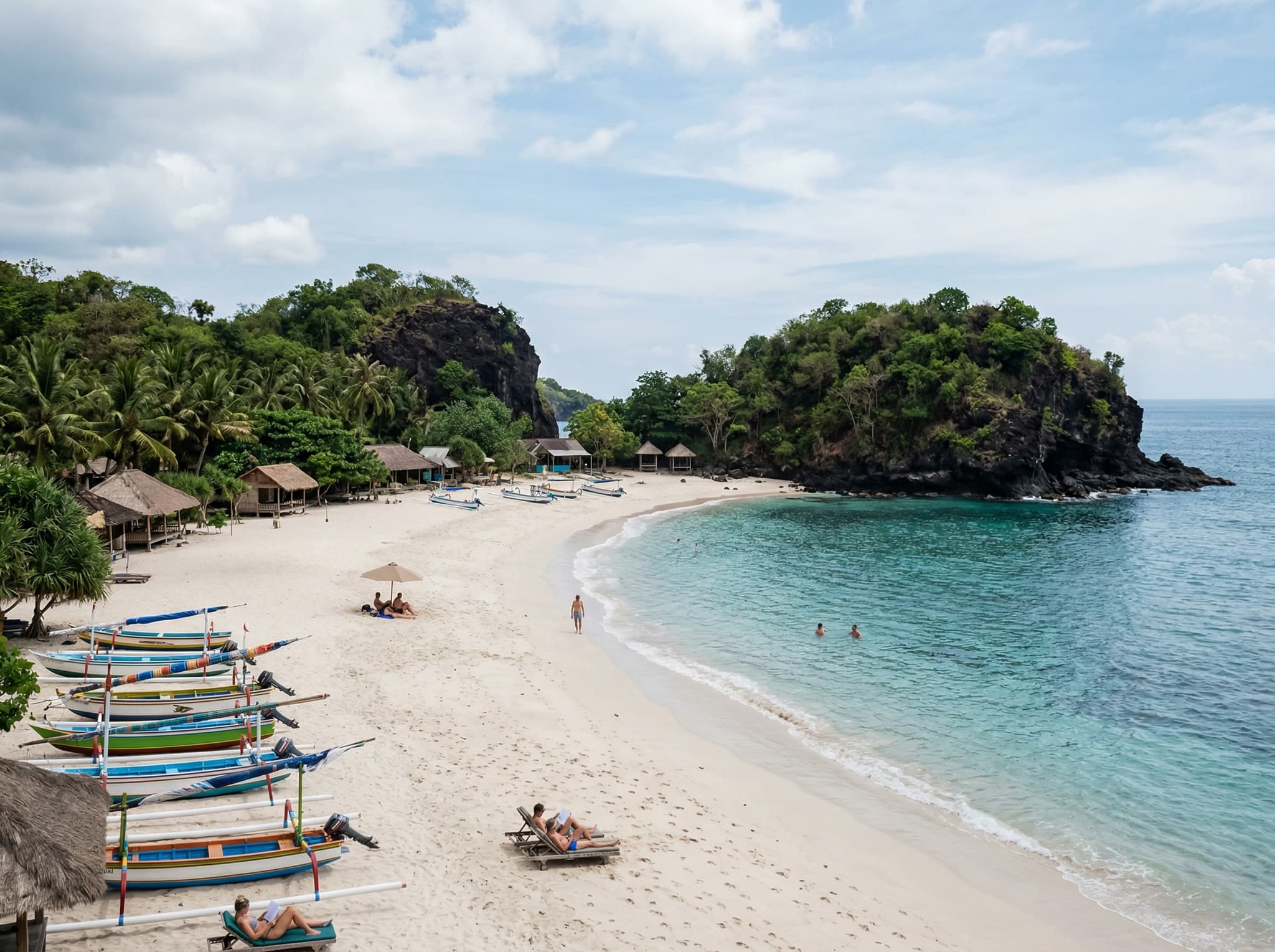
You see the water before you reach the sand. Coming down the path from the parking area, the bay opens below you — a pale strip hemmed by dark volcanic rock on both sides, the water shifting between green and blue depending on the hour. The headlands block most of the swell, which is why Pasir Putih stays calm when beaches on the west coast are churning.
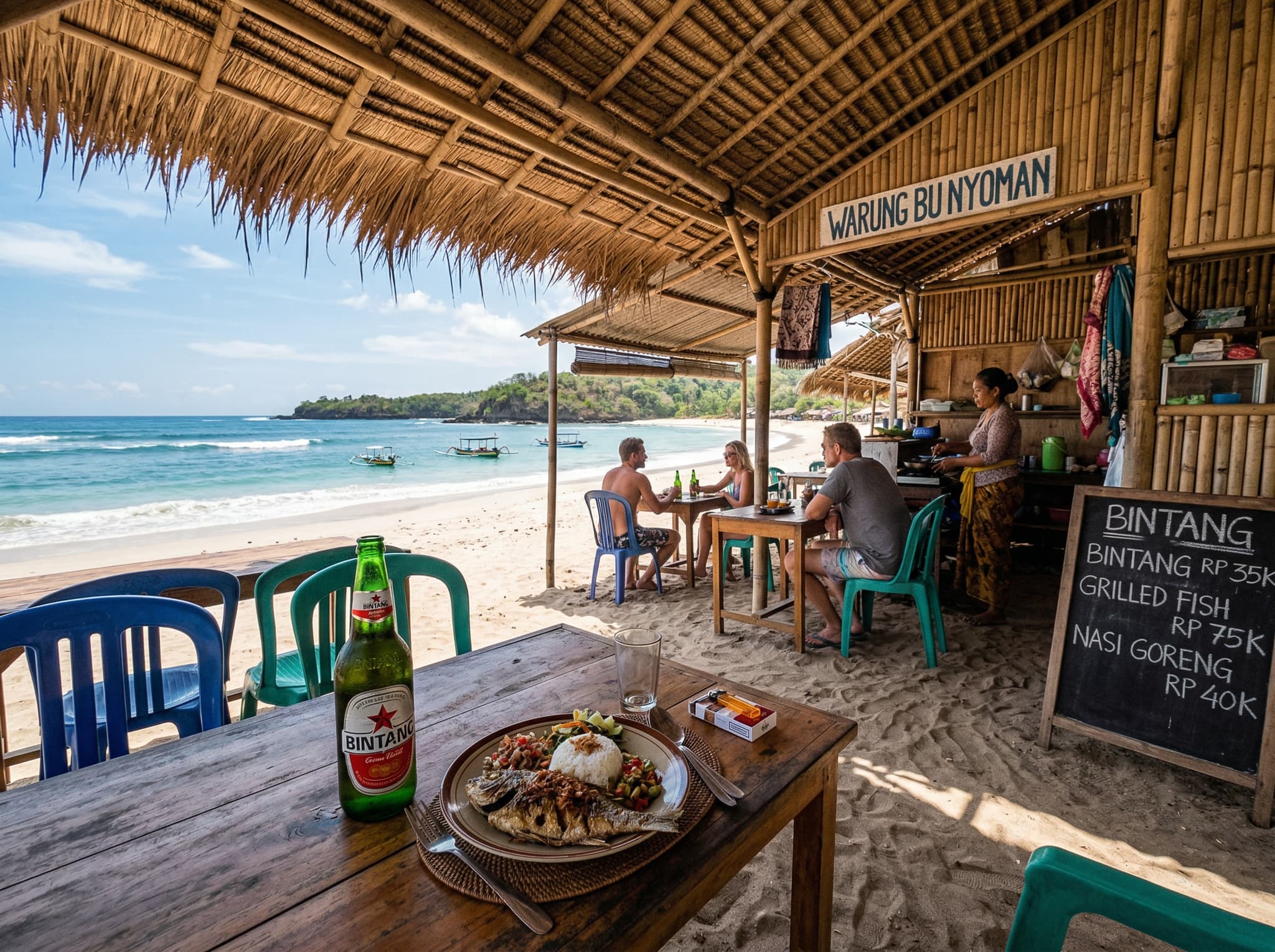
The sand is coarse and genuinely white, unusual for Bali's east coast. A line of warungs runs along the back of the beach under thatched roofs and shade cloth, with plastic chairs and sun loungers facing the water. It's not polished. The tables are simple, the menus are handwritten, and the cold Bintang arrives in the bottle. That's the appeal.
Morning — before 8:00 — is the quietest window. The water is glassy, the sand is cool enough to walk on barefoot, and you might share the beach with a handful of people. By midday, more visitors arrive, though the crowd never approaches anything like Seminyak or even Sanur. Weekends bring local and domestic visitors, especially around Indonesian holidays, but the beach's distance from the tourist hubs keeps it from tipping into chaos.
What You Can Do
Swimming is the main draw. The sheltered bay means calm, wadeable water most days, particularly during the dry season (April–September). Waves pick up slightly in the afternoon and during wet season months, but the bay's shape keeps conditions manageable.
Activities and Costs
Sun lounger rental
IDR 50,000–100,000/day
Snorkeling gear
IDR 25,000–50,000
Beachside massage
IDR 50,000/30 minutes
Fishing boat hire
From IDR 200,000
Warung meal
IDR 50,000–100,000
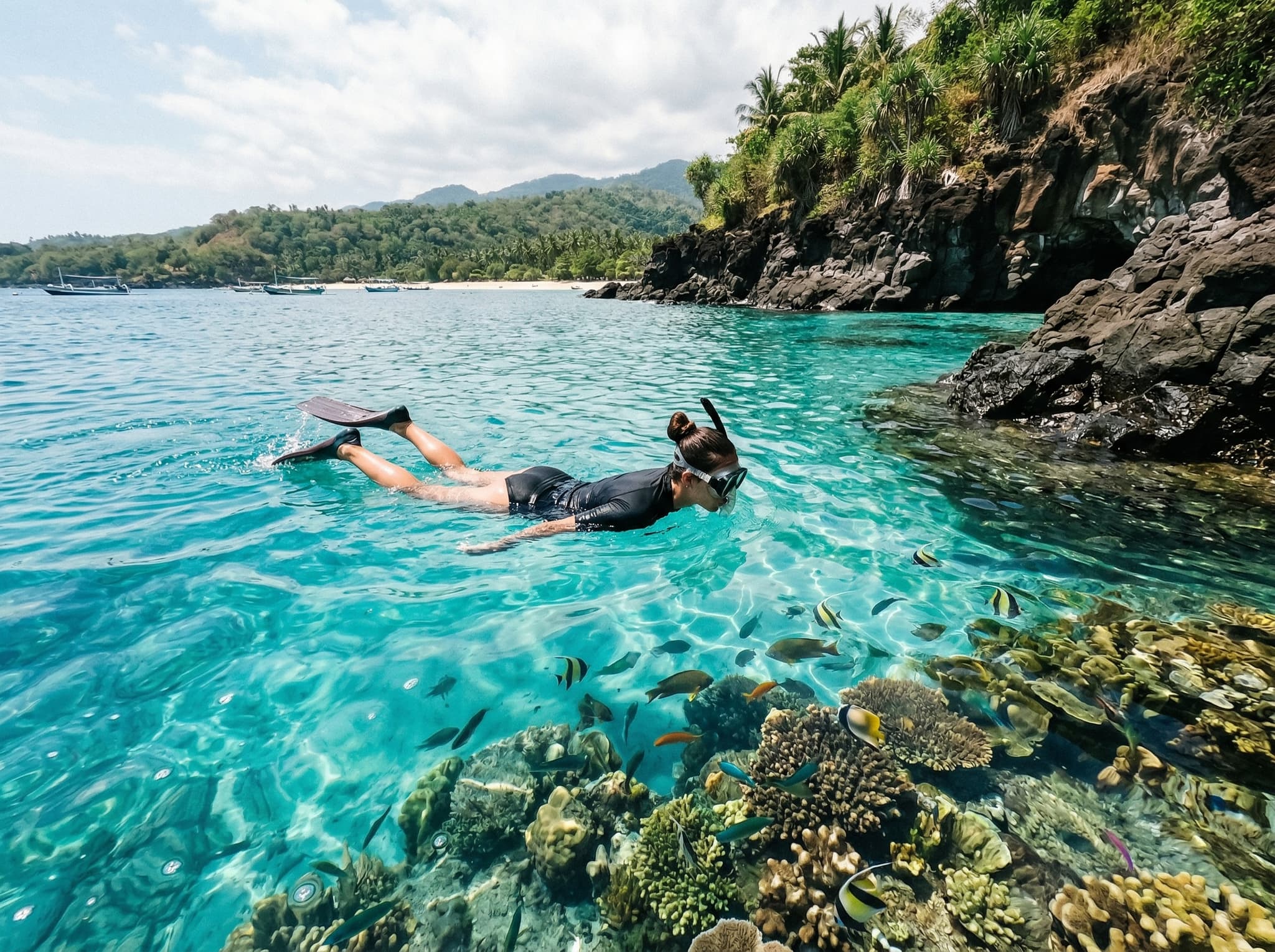
Snorkeling is decent near the headlands where the rocky edges meet the sand. Don't expect Raja Ampat — the coral is modest — but you'll see reef fish and the visibility is good in dry season. Vendors rent gear on the beach. You can also hire a traditional fishing boat (jukung) from IDR 200,000 to explore the coastline or reach slightly deeper water.
The warungs serve what you'd expect: nasi goreng, grilled fish, fresh coconut water. Prices are slightly marked up for a beach setting but still reasonable at IDR 50,000–100,000 for a full meal. The Seaside Cafe and Virgin Bar are the most established spots, both basic but functional.
Facilities include toilets, changing rooms, and free showers — rudimentary but they exist. Some warung areas offer free WiFi, though the connection is unreliable.
When to Visit
Seasonal Guide
Best overall
May–June, September–October (dry, uncrowded)
Peak season
July–August, December–January (busier island-wide)
Wet season
November–March (rain likely, still swimmable)
Best time of day
Before 8:00 AM
The shoulder months — May to June and September to October — offer the clearest water, the driest weather, and the lightest crowds. July and August bring more visitors to Bali generally, though Pasir Putih stays relatively quiet compared to the south. Wet season doesn't close the beach, but expect afternoon rain and slightly choppier water.
What's Changing
Two resort developments have been announced near Pasir Putih. Virgin Hotel Bali, a five-star property by Big Waves Development, has a stated summer 2025 opening. SALT of Virgin Beach, a luxury resort by The Lux Collective, is planned for Q1 2028. As of mid-2025, no large-scale construction has been completed, and the beach retains its low-key character.
Whether it stays that way is an open question. The pattern is familiar across Bali: a quiet beach gets noticed, development follows, and the thing that made it worth visiting erodes. For now, Pasir Putih is still in the early stage of that arc — worth visiting precisely because it hasn't tipped yet.