Kuta Art Market sits steps from the beach with 14-hour daily hours and every Bali souvenir you'd expect. Here's what to buy, what to skip, and how to haggle.
Let's get the honest version out of the way first: Kuta Art Market is not where you go for authentic Balinese craftsmanship. It's where you go when you're staying in Kuta, you need a dozen sarongs and some fridge magnets before your flight tomorrow, and you don't want to spend two hours in traffic getting to Ubud. For that specific purpose, it does the job.
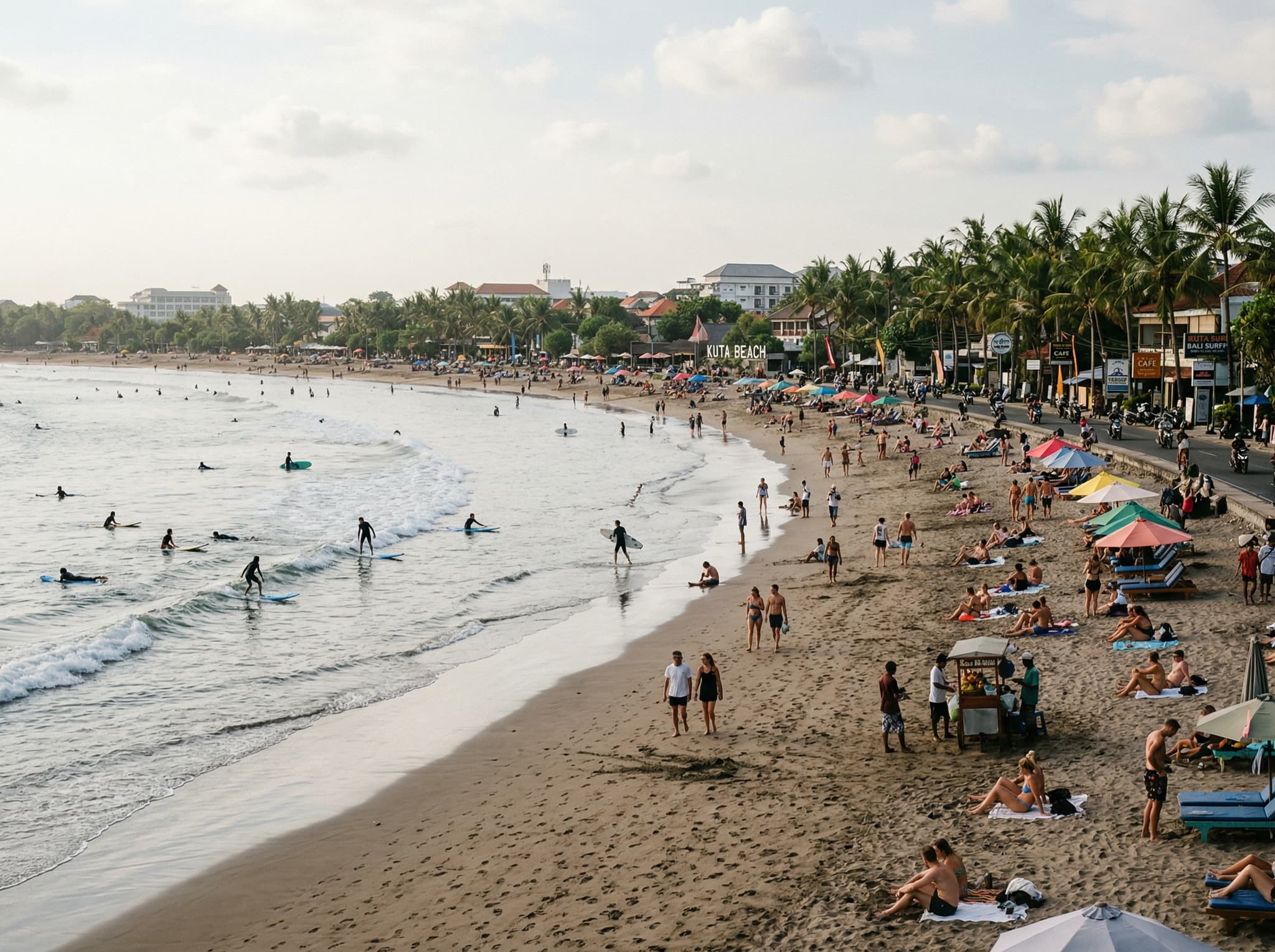
The market sits at the beachside end of Jalan Bakung Sari, roughly 100 meters from Kuta Beach and within walking distance of Discovery Mall and [Waterbom Bali](/places/bali/waterbom-bali-what-to-know-before-you-go-and-whether-it-s-worth-the-price)-bali-what-to-know-before-you-go-and-whether-it-s-worth-the-price). It's an open-air sprawl of shophouses and booths, packed tight enough that you'll brush shoulders with other shoppers in the narrower aisles.
What You'll Actually Find

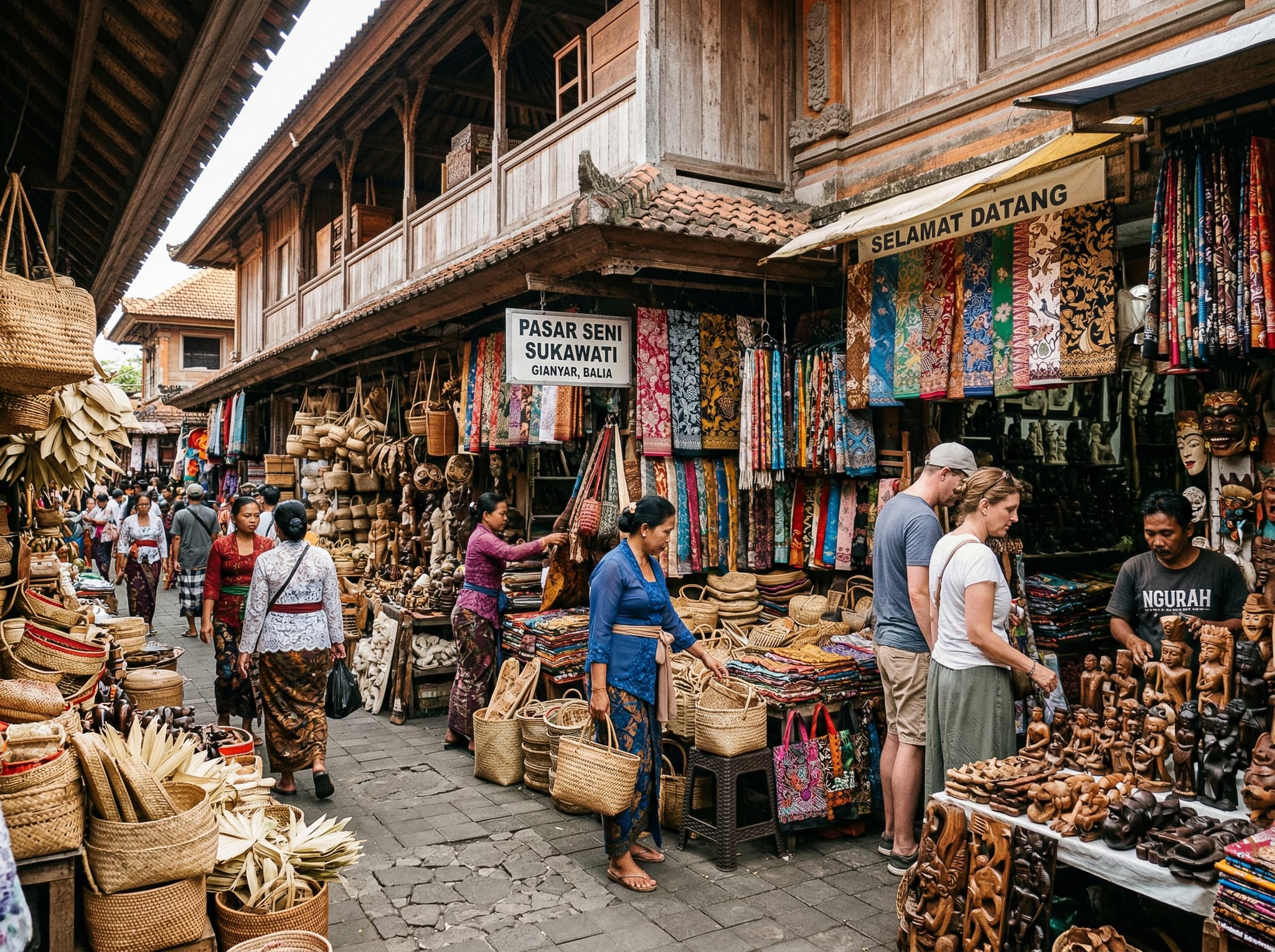
The inventory here is almost entirely mass-produced tourist goods. That's not a judgment — it's a category description. Stall after stall carries the same rotation:
Common Products
Textiles
Sarongs, batik fabrics, beachwear, T-shirts
Accessories
Jewelry, sandals, hats, bags
Souvenirs
Wooden carvings, masks, keychains, surfboard magnets
Misc
Beer holders, handmade soap, paintings
If you've been to any tourist market in Southeast Asia, you know the aesthetic. The wooden masks are factory-carved, the "handmade" bracelets come in identical batches, and the batik is printed rather than hand-waxed. None of this is a scandal — it's a souvenir market priced for souvenirs. The problem is when visitors arrive expecting artisan-level work and leave disappointed.
For genuinely handcrafted Balinese goods — hand-carved sculptures, authentic batik textiles, woven baskets made by local artisans — Ubud Art Market and Sukawati Art Market are in a different league entirely. Sukawati in particular has a wholesale character and less tourist markup. But both require a real trip: Ubud is roughly 35 km away (about two hours by car in typical traffic), and even Sukawati is a solid 45-minute drive.
Kuta Art Market's advantage is pure convenience. If you're staying in the Kuta–Legian–Tuban corridor, it's right there.
The Bargaining Game

Every price here is an opening offer, and every opening offer is inflated. This is understood by both sides. Vendors expect negotiation, and walking away without haggling would be like ordering at a restaurant without reading the menu — technically possible, but you'll overpay.
A few practical notes: cash is king here. Don't expect card readers. Bring small denominations — breaking a IDR 100,000 note at a stall selling IDR 15,000 keychains creates unnecessary friction. And be prepared for assertive sales approaches. Vendors will call out to you, sometimes physically gesture you toward their stall. It's not hostile, but if you're conflict-averse, it can feel intense. A polite "no, thank you" and continued walking works fine.
When to Go

The market runs 8 AM to 10 PM daily, which is a wide window. Mornings before 10 AM are the least crowded and the most comfortable temperature-wise — Kuta's heat builds fast. Some travelers report that vendors are more willing to negotiate early in the day, especially for a first sale (there's a Balinese belief that the first transaction sets the tone for the day's business).
Late afternoon into evening has a different energy. The adjacent Kuta Night Market kicks in around 5–5:30 PM, adding food stalls and a more social atmosphere to the area. If you want to combine souvenir shopping with a cheap dinner of nasi goreng or satay, timing your visit for late afternoon makes sense.
Getting There
Transport Options
From Kuta Beach
~100m walk
From Seminyak
5 km, 20–30 min by car
From Ubud
35 km, ~2 hours by car
Private driver (round trip)
IDR 300,000–500,000
If you're already in Kuta, you walk. From Seminyak, a ride-hail (Grab or Gojek) is the most cost-effective option — significantly cheaper than the IDR 300,000–500,000 quoted for private drivers. From Ubud, the market alone doesn't justify the trip; combine it with other Kuta-area activities if you're making the drive.
The Honest Assessment
Kuta Art Market is a C+ souvenir market in an A+ location. It's not a destination — it's an errand you can knock out between the beach and dinner. The goods are generic, the prices require negotiation, and the sales pressure is real. But it's free to enter, open 14 hours a day, steps from the beach, and stocked with every standard Bali souvenir category.
For travelers staying in Kuta who want quick, affordable gifts without a logistics operation, it delivers exactly that. For anyone seeking something with genuine craft behind it, budget the time for Ubud or Sukawati instead. The difference in quality is immediately obvious, and the extra travel time pays for itself in what you bring home.