Green Bowl Beach hides below 300 steep steps on Bali's Bukit Peninsula. Limestone caves, clear water, and resident monkeys — but only at low tide.
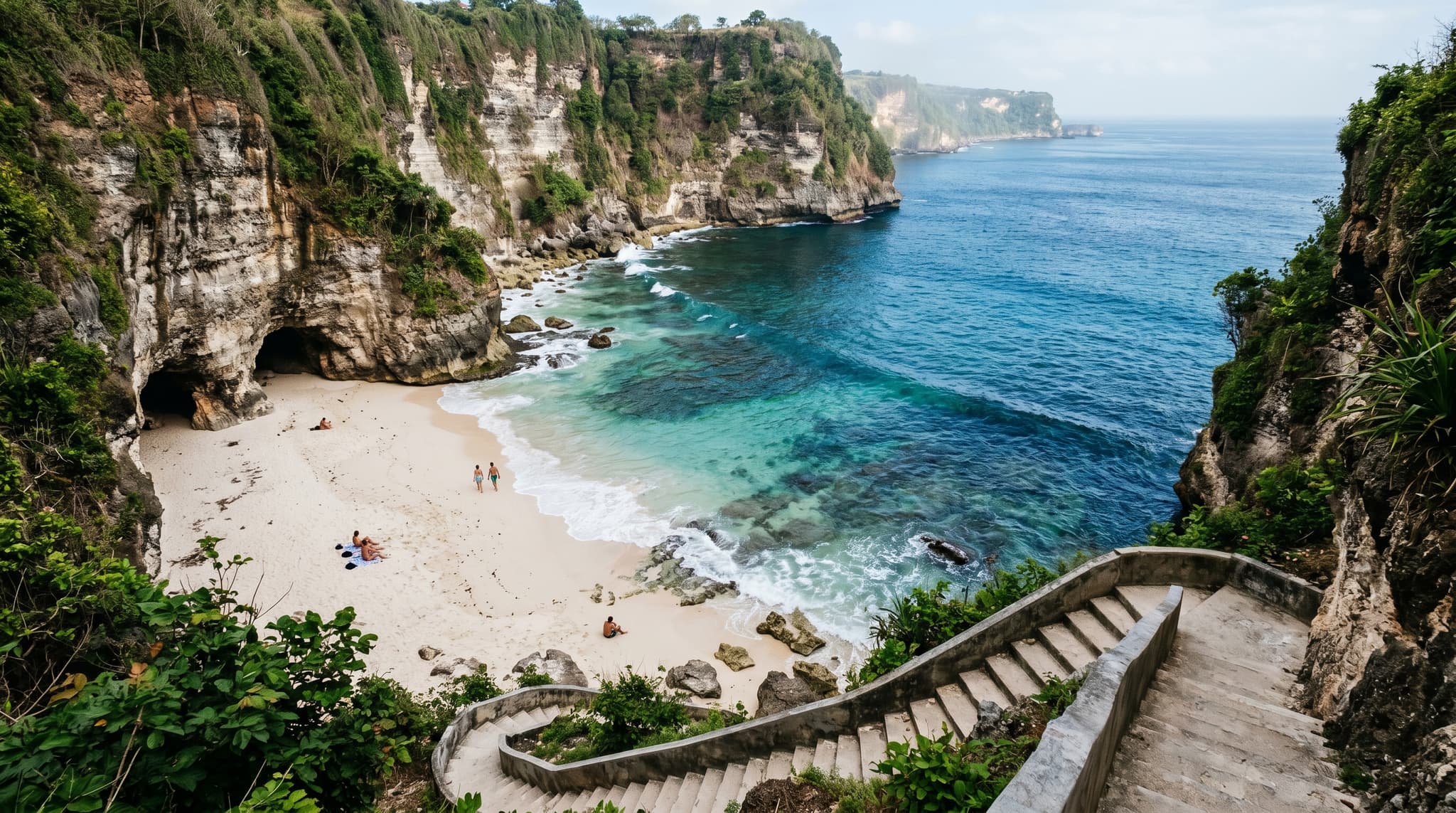
The staircase announces what kind of beach this is before you reach the sand. Around 300 steps cut into the cliff face, steep and unshaded for most of the descent, dropping you from the dry scrubland of the Bukit Peninsula down to a cove that feels disconnected from the rest of Bali. There are no beach clubs at the bottom. No loungers for rent. What's waiting is a strip of white sand, a pair of shallow caves, limestone walls that curve overhead, and water so clear it looks like someone adjusted the saturation.
Green Bowl Beach is one of the Bukit's hidden-staircase beaches — the kind that rewards effort and punishes poor timing. It's not hidden in any real sense anymore; it appears on every Bali beach list. But the stairs still function as a filter. Most visitors who make it down stay for a while, because nobody wants to climb back up twice.
Getting There
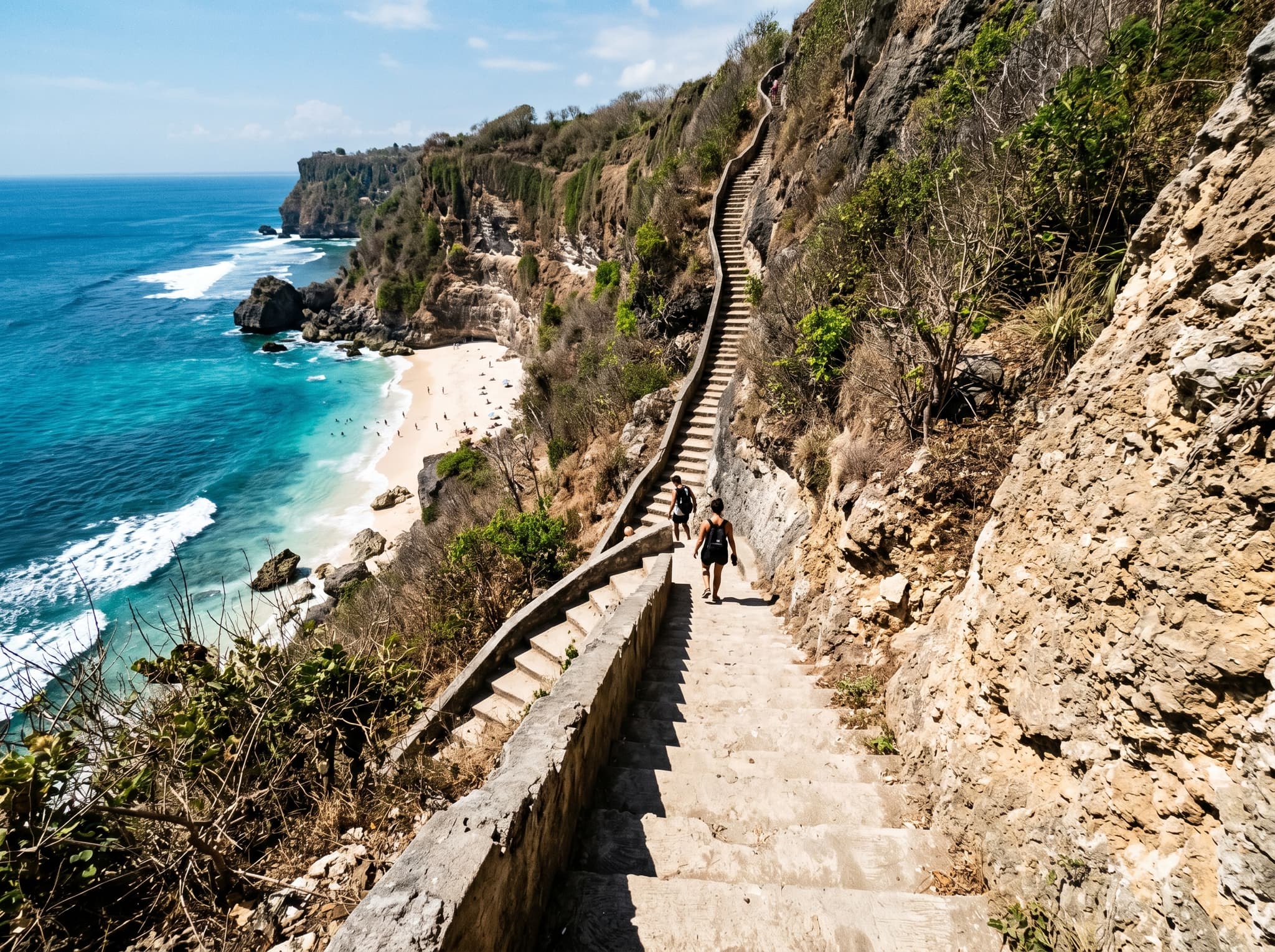
Green Bowl Beach is on the southern tip of the Bukit Peninsula, roughly 30–40 minutes by scooter from Uluwatu and about an hour from Seminyak or Canggu, depending on traffic. From Jimbaran, it's closer to 20 minutes.
There's a small parking area at the top of the cliff. If you're arriving by scooter, parking is straightforward. By car, you may need to negotiate with whoever is managing the lot that day. The entrance fee is modest — expect to pay somewhere in the range of IDR 10,000–20,000, though prices at sites like this can shift without notice.
The staircase itself is concrete, in reasonable condition, but steep enough that you'll feel it in your legs on the way back up. There's no shade for most of the descent. Bring water. Wear shoes you trust on uneven steps — flip-flops work for some people, but the climb back up in the heat is easier with something that grips.
The Beach and the Caves

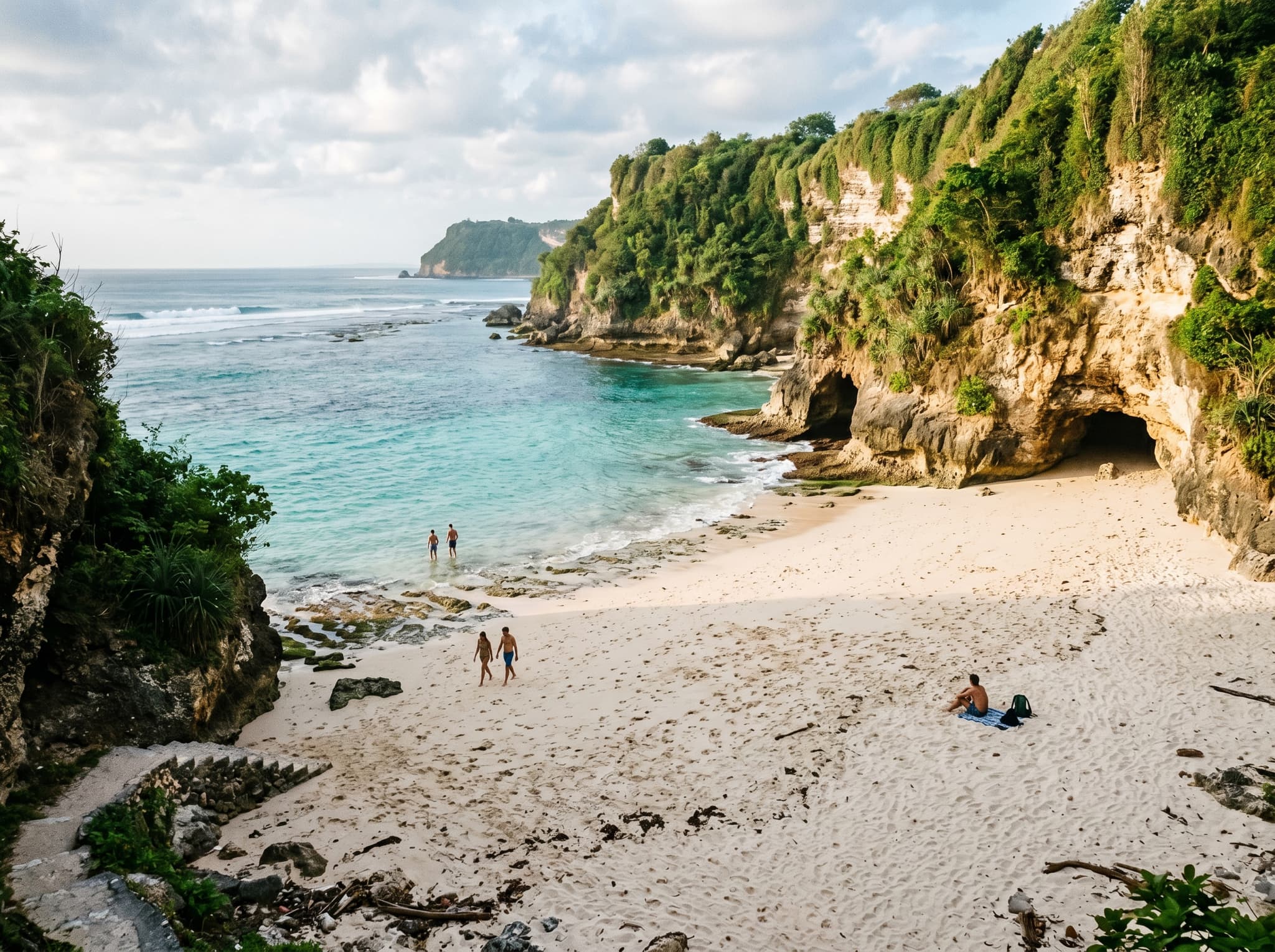
At the bottom, the beach is small — maybe 100 meters of sand at low tide, narrowing significantly as the water rises. At high tide, the beach can shrink to almost nothing, with waves pushing up against the cave walls. This is the single most important practical detail about Green Bowl: check the tide before you go. A low-tide morning visit gives you the full experience — open sand, accessible caves, calm water for swimming. A high-tide arrival can mean there's barely anywhere to sit.
The caves are what give Green Bowl its character. Two limestone caverns sit at the base of the cliff, large enough to walk into, with ceilings that arch overhead and walls streaked with mineral deposits. They provide the only natural shade on the beach. Inside, there are small shrines — this is a place with spiritual significance, not just a swimming spot. The offerings you'll see aren't decorative. Treat them accordingly.
Tide Planning
Best Conditions
Low tide, morning
Worst Conditions
High tide — beach may be inaccessible
Tide Info
Check magicseaweed.com or tides4fishing.com for Bali south coast
The water off Green Bowl is clear and calm during the dry season, particularly in the morning before wind picks up. Snorkeling is possible close to the reef — there's coral visible from the surface in several spots. If you bring a mask, you'll see enough to make it worthwhile. The reef is shallow in places, so be careful not to stand on it or kick coral.
The Monkeys
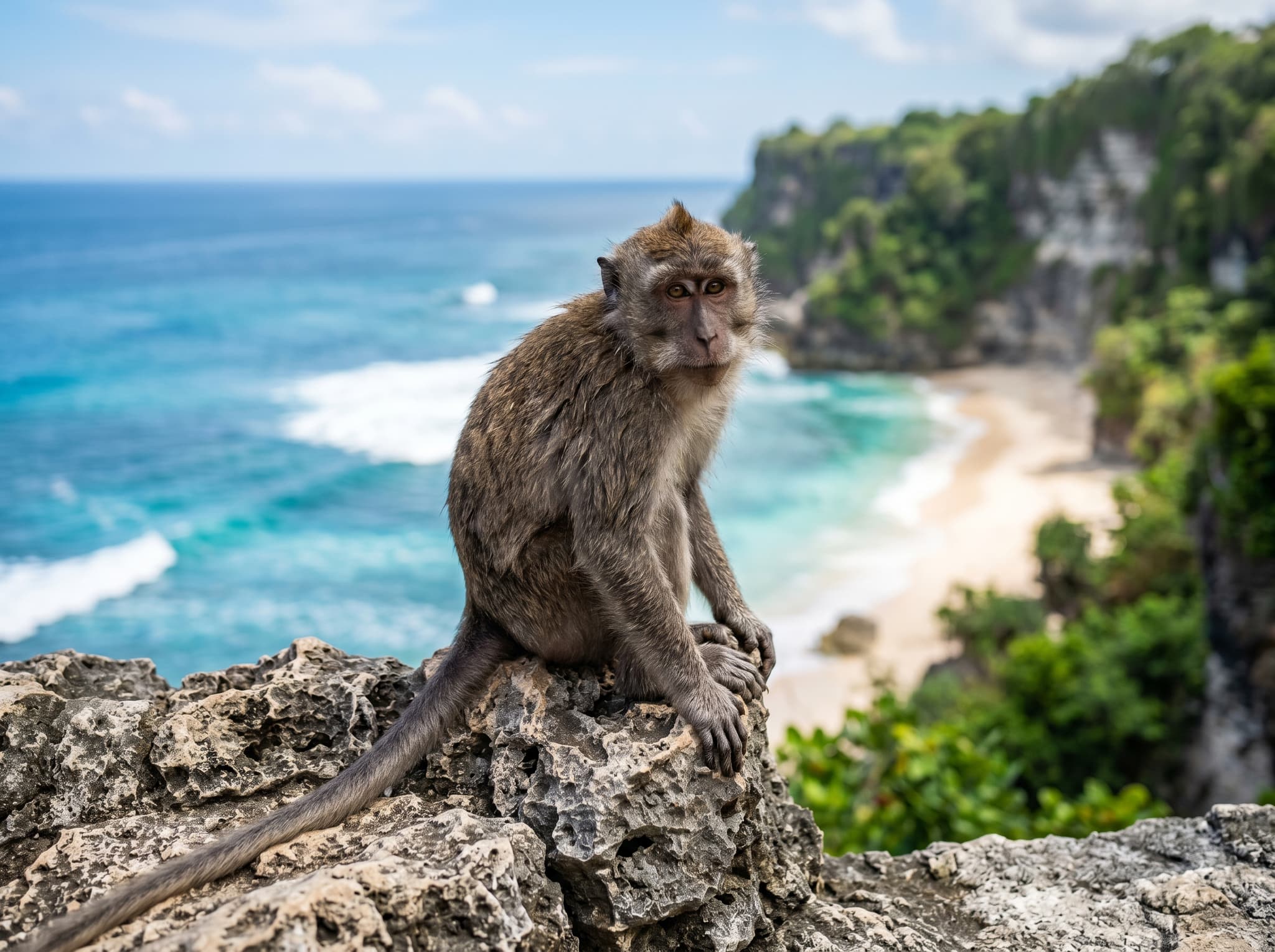
Green Bowl has a resident population of long-tailed macaques. They live in and around the caves and along the staircase, and they are not shy. If you've been to Ubud's Monkey Forest, the dynamic is familiar: these are animals that have learned exactly what tourists carry and how to get it.
Keep bags closed. Don't leave food unattended. Sunglasses on your head are an invitation. The monkeys here are generally less aggressive than the ones at more heavily trafficked sites, but they're opportunistic. Treat them like you'd treat any wild animal that has lost its fear of humans — with respect and a bit of distance.
Surfing
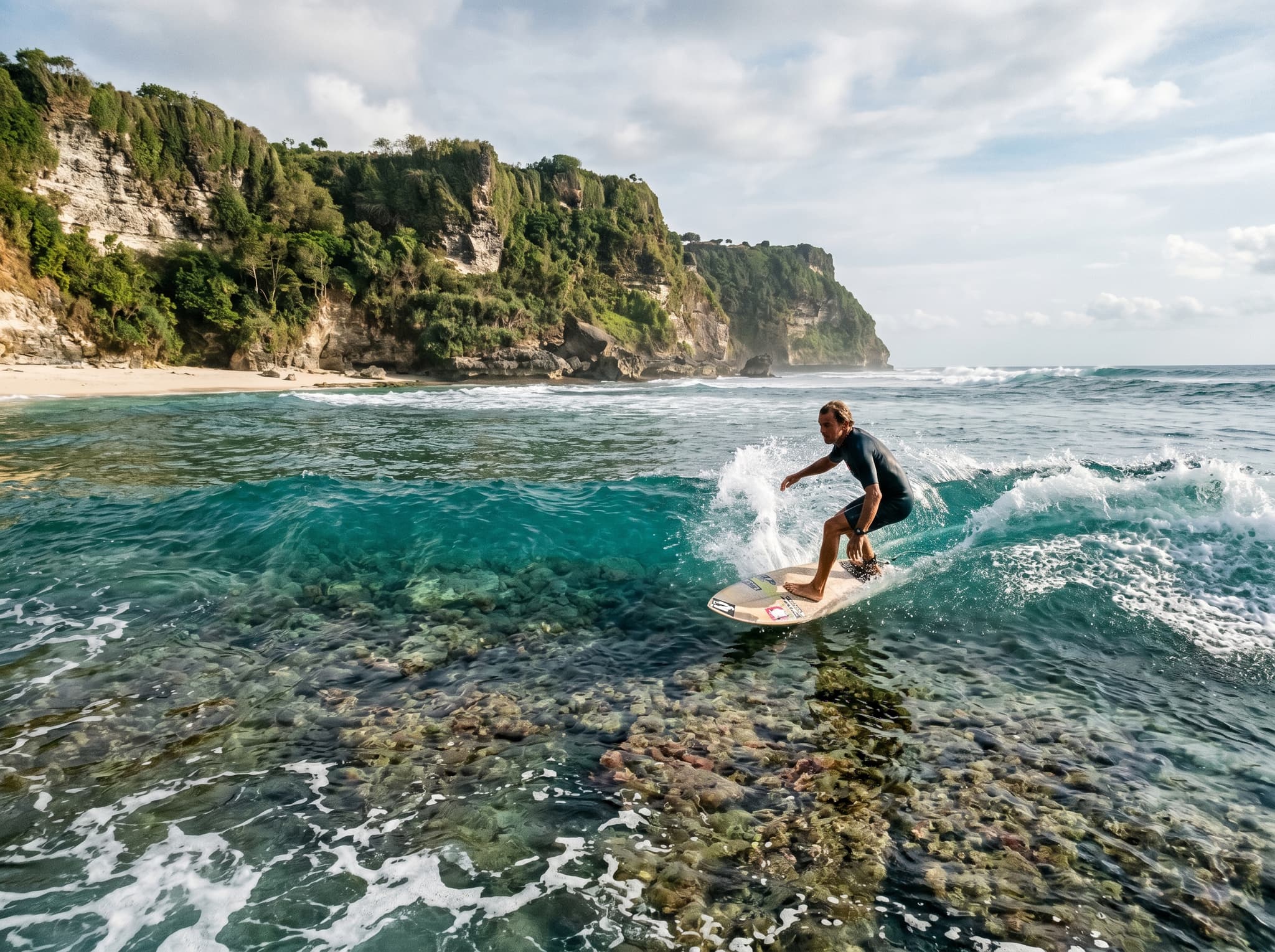
Green Bowl is a known surf break, though it's not a beginner spot. The reef break works best on a mid to high tide with a southwest swell — the same conditions that make the beach less accessible for swimming. If you're an experienced surfer, it's worth checking conditions. If you're learning, this isn't the place. The reef break works best on a mid to high tide with a southwest swell — the same conditions that make the beach less accessible for swimming. If you're an experienced surfer, it's worth checking conditions. If you're learning, this isn't the place.
The paddle out can be tricky over shallow reef, and there's no lifeguard presence. This is a self-rescue beach in every sense.
What to Bring
There are no warungs or vendors at the bottom of the stairs. Whatever you need — water, snacks, sunscreen, a towel — you carry down yourself and carry back up. This is part of what keeps the beach relatively uncrowded, and part of what makes it feel like more than just another Bali beach.
Packing Essentials
Water
At least 1–2 liters per person
Sun Protection
Reef-safe sunscreen, hat, rash guard
Snorkel Gear
Bring your own — none for rent
Footwear
Sturdy sandals or shoes for the stairs
Bag
Zippered or dry bag (monkey-proof)
When to Go
The dry season — roughly April through October — offers the calmest water and the most reliable conditions. Morning visits are best Morning visits are best for two reasons: the tide is more likely to be low (check beforehand), and the staircase is slightly less punishing before the midday heat sets in.
Weekday mornings are the quietest. Weekends and holidays bring more visitors, though the stairs still keep numbers manageable compared to Bali's more accessible beaches.
Avoid arriving in the late afternoon unless you're confident about the tide and comfortable climbing the stairs in fading light. There's no lighting on the staircase.
Green Bowl in Context
The Bukit Peninsula has a handful of these cliff-access beaches — Gunung Payung, Pandawa, Melasti — each with a different personality. Green Bowl's is the most enclosed. The caves, the narrow cove, the monkeys watching from the rocks — it feels less like arriving at a beach and more like descending into a place that existed before anyone thought to build stairs to it.
That feeling is worth the climb. Both of them.