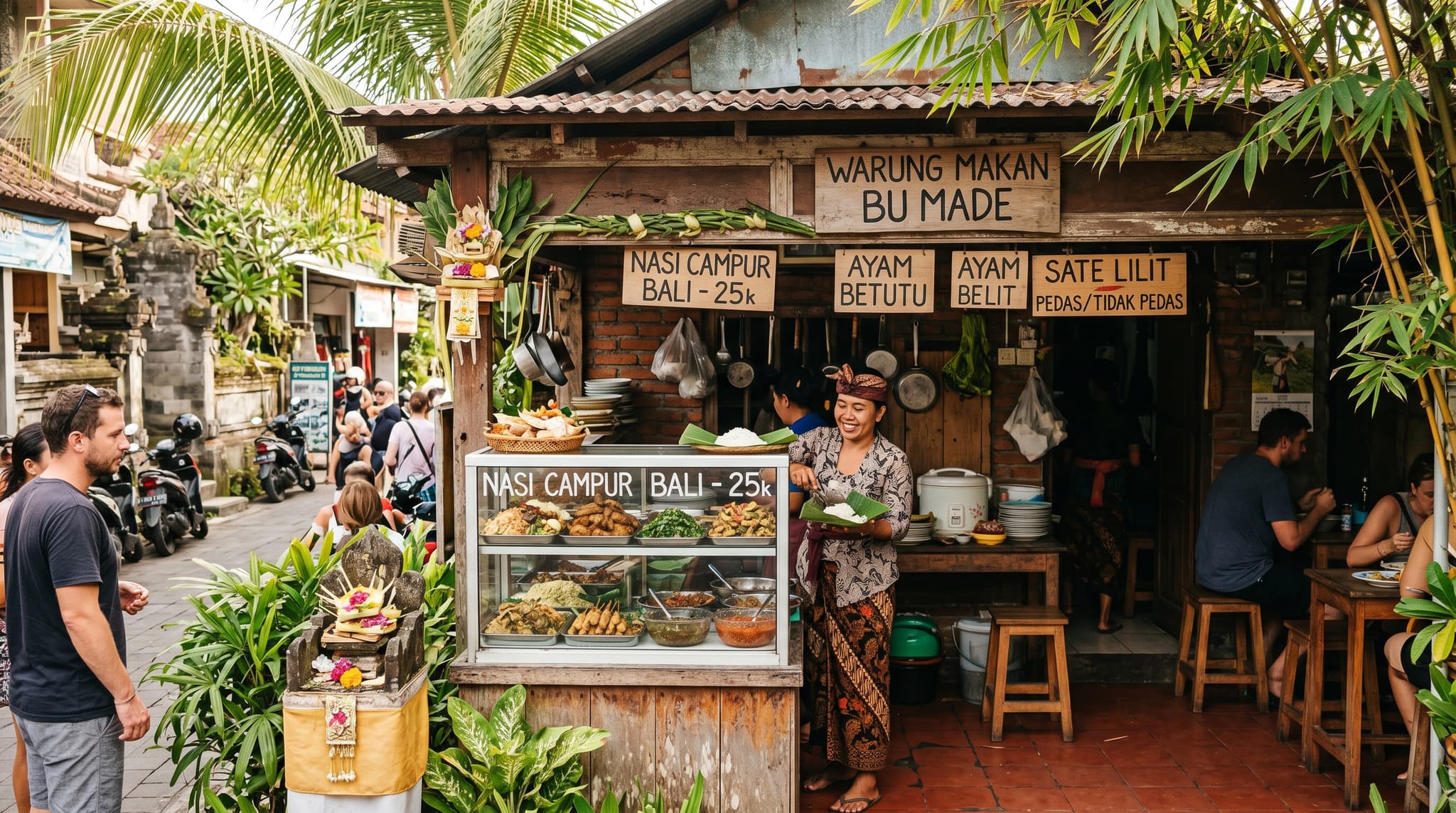
Within a ten-minute walk in Ubud, you can move from a restaurant with a months-long waitlist to a warung where the owner's grandmother still makes the sambal by hand each morning. The sambal might be the better meal. That range — from tasting menus that have earned recognition across Asia to plates of nasi campur that cost less than a dollar — is what makes restaurants in Ubud, Bali unlike anywhere else on the island.
Most Ubud restaurant guides either focus on the photogenic end of the spectrum or list thirty places with two sentences each. This one covers the full range with equal seriousness and equal practical detail, because a reader who only eats at one end of it is missing the point.
What Makes Ubud's Food Scene Different
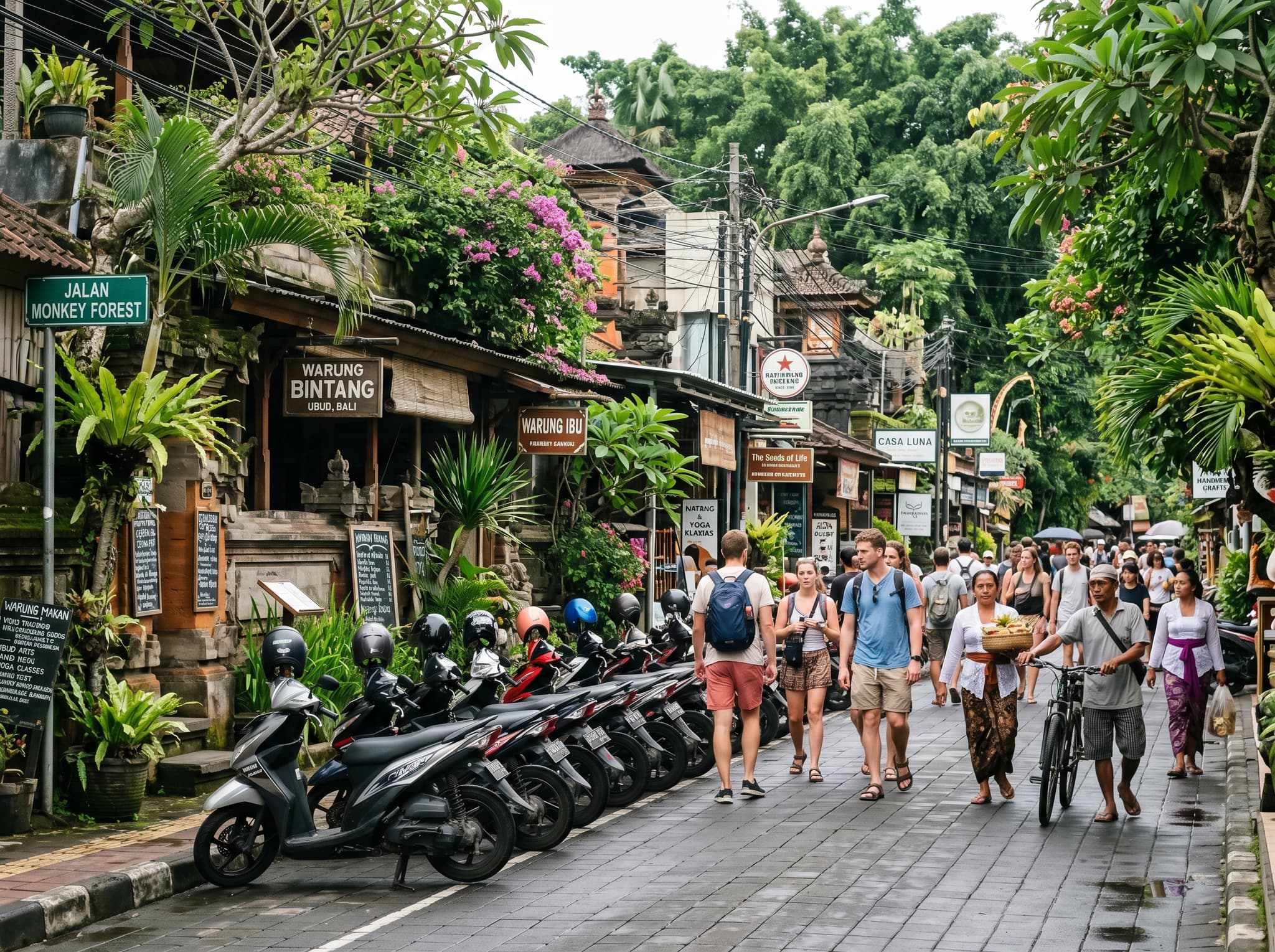
Seminyak's dining identity leans toward cocktail-driven restaurants and beachfront seafood. Canggu runs on brunch culture — avocado toast, smoothie bowls, surf-adjacent energy. Ubud is different. The cooking here is ingredient-driven, rooted in Balinese tradition, and supported by a health-food ecosystem that goes deeper than trend.
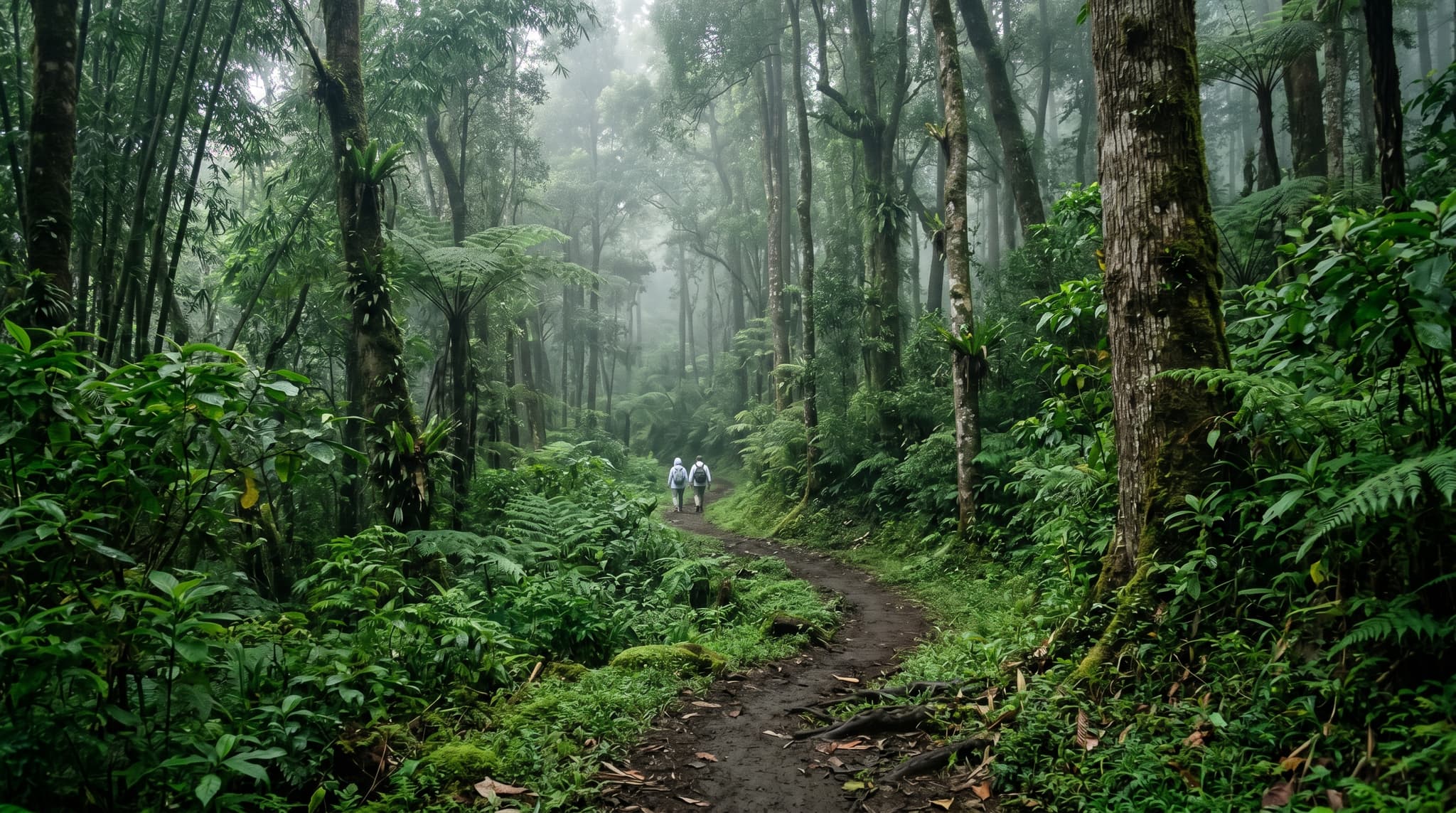
The farm-to-table language that gets thrown around in food cities worldwide is closer to literal reality in Ubud than in most places. The volcanic soil in Bali's central highlands is exceptionally fertile. Highland vegetable farms sit within an hour's drive. Supply chains are short enough that a restaurant can serve produce harvested that morning without it being a marketing claim. Ingredients like Balinese long pepper, local cacao, and highland greens give the cooking here a flavor profile that's distinct from the same concepts executed elsewhere.
What defines Ubud most clearly is the coexistence of international fine dining and deeply local Balinese food, often on the same street. A warung serving babi guling might share a wall with a restaurant plating fermented cassava on handmade ceramics. Neither is pretending to be the other. Both are serious about what they do.
The wellness dining culture is real here too — Ubud has more raw vegan restaurants per square kilometer than almost anywhere in Southeast Asia. Some are excellent. Some are mediocre açaí in a coconut shell. The distinction matters, and this guide will help you make it.
Ubud Price Spectrum
Warung Meal
IDR 15,000–35,000 (~$1–2.50)
Mid-Range Restaurant
IDR 80,000–200,000 (~$5–13)
Farm-to-Table Dinner
IDR 150,000–400,000 (~$10–26)
Fine Dining Tasting Menu
IDR 1,000,000–1,500,000+ (~$65–95+)
Fine Dining and Tasting Menus
Locavore
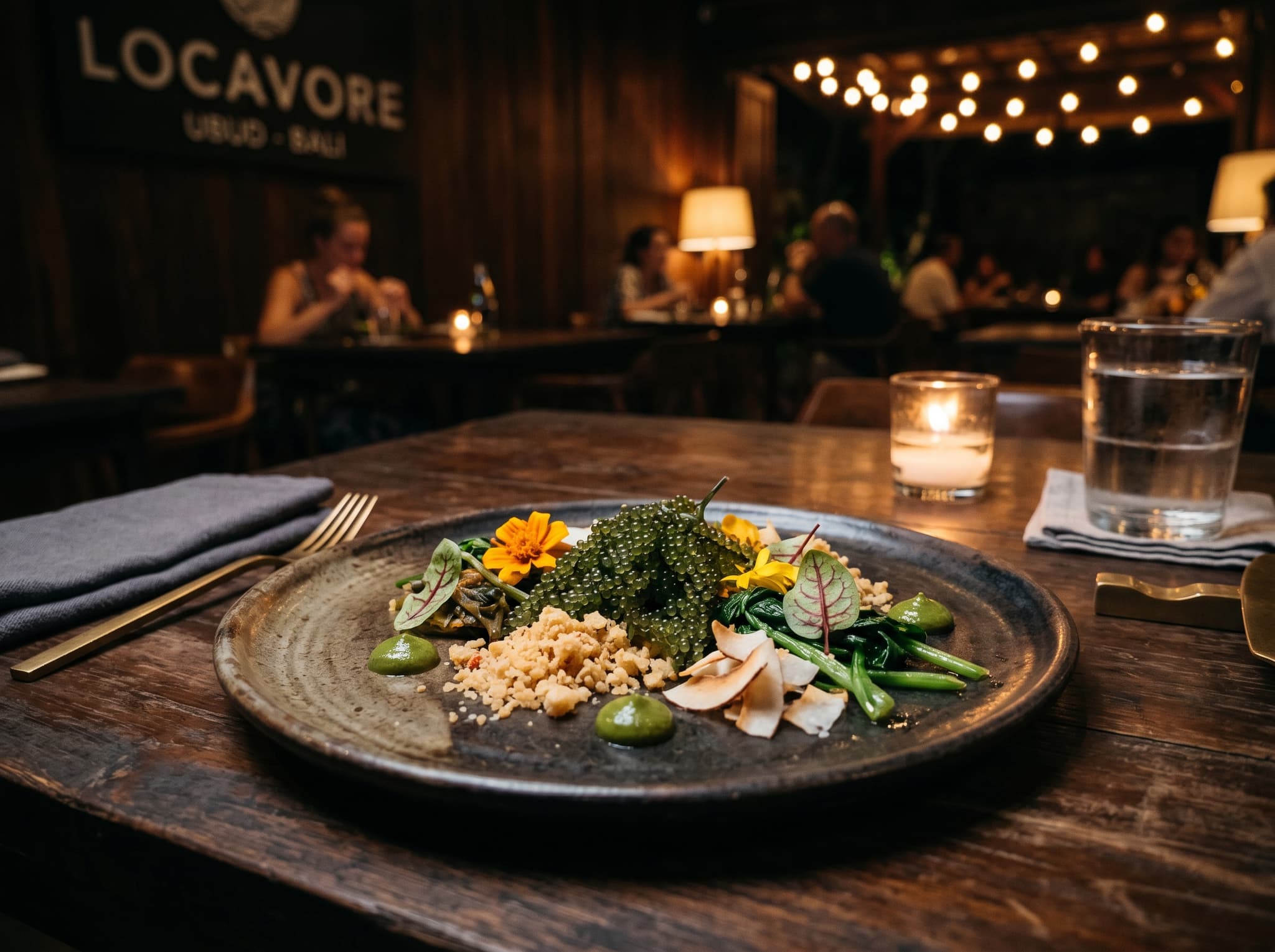
Locavore is the anchor of Ubud's fine dining reputation and one of the most recognized restaurants in Southeast Asia, with consistent placement on the Asia's 50 Best Restaurants list. The concept — a tasting menu built entirely from Indonesian-sourced ingredients — sounds simple until you see what it means on the plate. The kitchen doesn't import. No French butter, no Japanese wagyu, no European cheese. Everything comes from Indonesian producers, many of them small-scale farmers and foragers the restaurant has spent years developing relationships with.
What this produces isn't restriction — it's specificity. A course might feature a sea grape from eastern Indonesia prepared in a way that references Balinese ceremonial food but uses techniques from contemporary fine dining. Another might center on a variety of sweet potato you've never encountered, fermented and layered with a sambal that's been refined into something you'd recognize as a condiment but wouldn't recognize as sambal. The menu changes frequently based on what's available, which means repeat visits don't repeat.
The tasting menu typically runs in the range of IDR 1,200,000–1,500,000 per person, though prices shift with the menu and the restaurant's evolution — confirm directly when booking. Wine pairings and non-alcoholic pairings add to the total. Reservations are essential and often need to be made weeks in advance, sometimes longer during high season (July–August, December–January). Book through their website as early as your travel dates are confirmed.
Dress expectations at Locavore are relaxed by global fine dining standards — Ubud is casual — but this isn't a place to show up in swimwear and flip-flops. Clean, considered clothing. Think of it as the one restaurant in Ubud where you might change your shirt before dinner.
Luma Restaurant
Luma is a newer entrant in Ubud's elevated dining space, positioned slightly differently from Locavore. Where Locavore is built on a strict sourcing philosophy, Luma leans into the visual and spatial experience — the setting, the plating, the theatrical elements of a multi-course meal. The food is creative and well-executed, drawing on Indonesian ingredients without the same all-or-nothing local sourcing commitment.
For someone choosing between the two: Locavore is the meal you book for the food itself, for the intellectual and culinary ambition. Luma is the meal you book when you want the full evening — the atmosphere, the presentation, the sense of occasion. Both are good. They're serving different needs.
Luma's tasting menu pricing tends to sit in a similar range to Locavore, though specific pricing should be confirmed directly. Reservations are recommended but generally easier to secure on shorter notice. Dietary restrictions are accommodated at both restaurants — given Ubud's audience, the kitchens are accustomed to the full range of requests.
Farm-to-Table and New Indonesian Cooking
This is the tier that defines Ubud's identity most clearly — restaurants doing creative, ingredient-forward work priced between the tasting menu world and the warung corner. It's also where Ubud most visibly separates from Canggu and Seminyak. The restaurants here aren't chasing trends imported from Melbourne or Los Angeles. They're working with what grows in the volcanic soil an hour north of town and finding ways to make it interesting.
Moksa
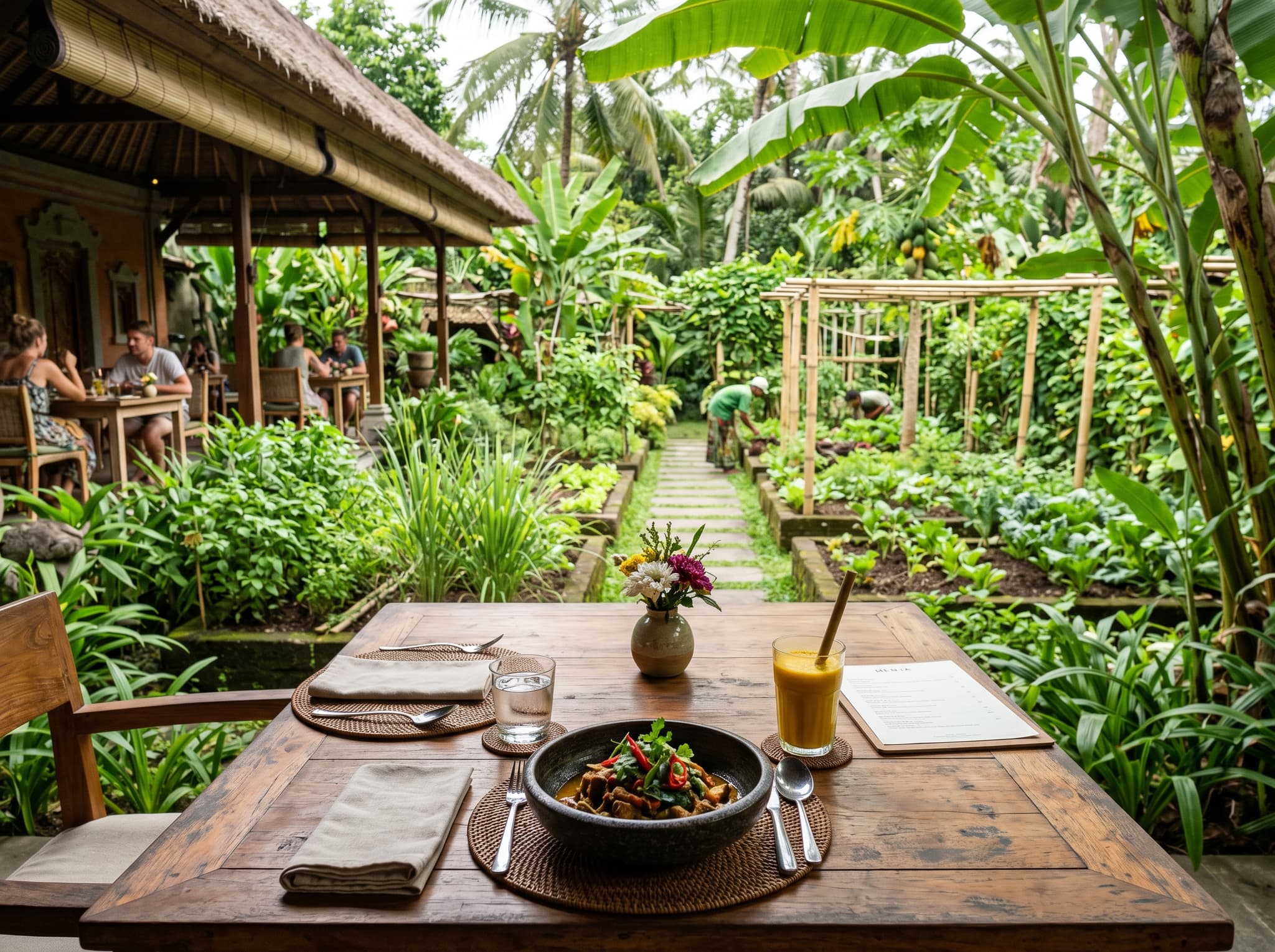
Moksa operates its own permaculture garden on-site, which is either a gimmick or the whole point depending on how it's executed. At Moksa, it's the whole point. The garden is visible from the dining area, and much of what appears on the plate was growing there that morning. The menu is plant-based, but this isn't health food in the restrictive sense — dishes have depth, richness, and enough technique to hold the attention of someone who doesn't usually seek out vegan restaurants.
Order the mushroom rendang if it's available — it takes the coconut-and-spice architecture of a traditional rendang and builds it around locally grown mushrooms that have enough texture to carry the sauce. The raw lasagna, made with thinly sliced vegetables and cashew-based fillings, is more convincing than it has any right to be.
Moksa
Price Range
IDR 60,000–150,000 per person (~$4–10)
Reservations
Walk-in usually fine, except weekend dinners
Best Time
Lunch — the garden is lit by daylight and the produce is freshest
Hujan Locale
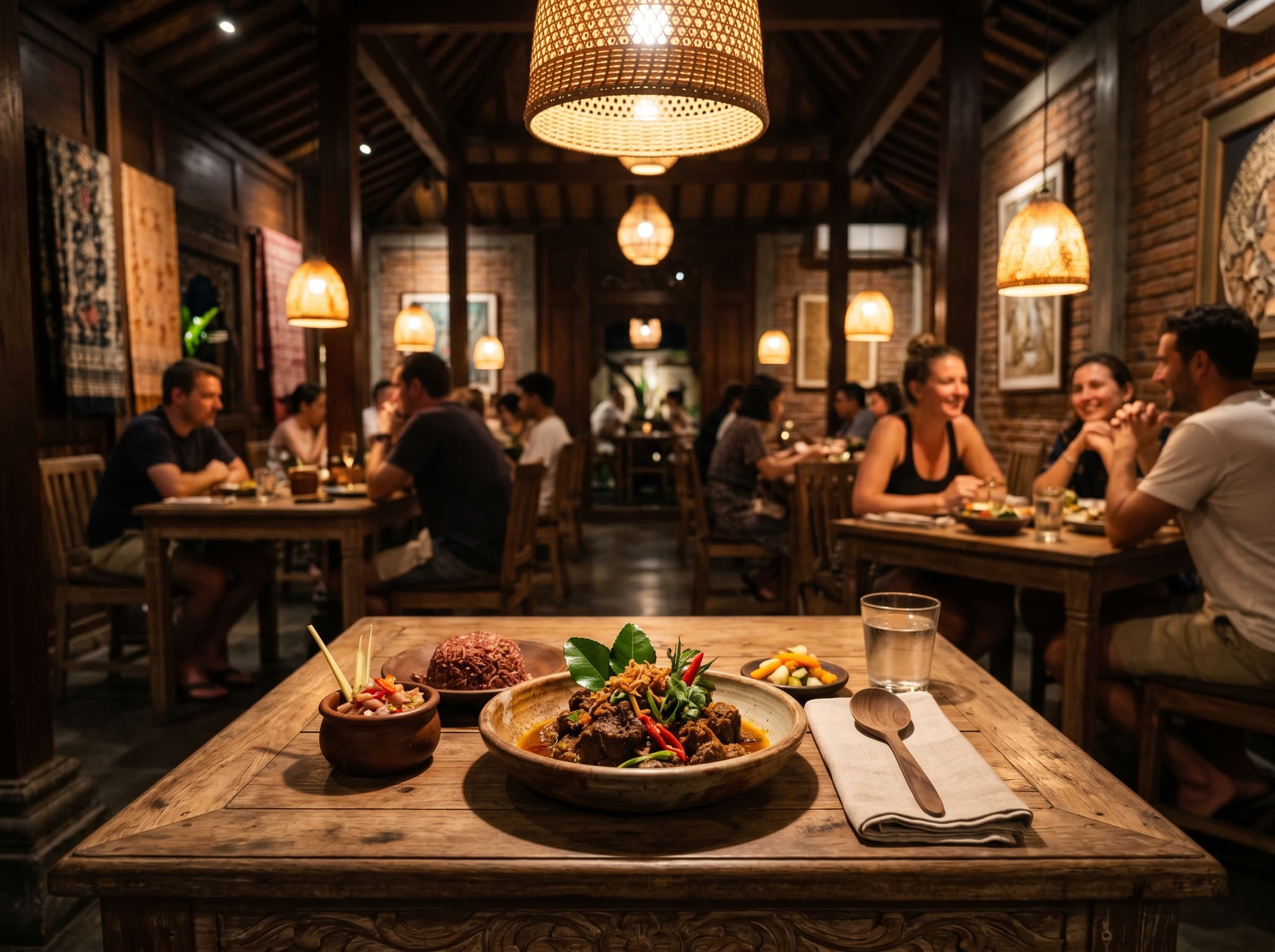
The name means "rain" in Indonesian, and the restaurant focuses on regional Indonesian dishes — not just Balinese, but drawn from across the archipelago — prepared with care and presented without fuss. This is the place to try dishes you won't find at a warung: things like slow-cooked beef cheek with Javanese spices, or a sambal matah made with ingredients sourced from specific farms rather than the market's general supply.
The menu rotates, but the approach stays consistent: traditional Indonesian flavors, local ingredients, slightly elevated technique. It's the kind of restaurant where the rice matters — and here, it does.
Hujan Locale
Price Range
IDR 100,000–250,000 per person (~$6.50–16)
Reservations
Recommended for dinner, especially on weekends
Best Time
Dinner — the atmosphere shifts toward something quieter and more intentional
Dumbo
Dumbo occupies a space between café and restaurant, serving dishes that pull from Italian, Indonesian, and pan-Asian influences without losing coherence. The handmade pasta is good — genuinely good, not just good-for-Ubud — and the kitchen uses local produce in ways that feel natural rather than forced. The duck ragù, when available, benefits from Bali's strong duck-farming tradition.
It's a useful spot for the meal where not everyone at the table wants Indonesian food. The menu is broad enough to accommodate different appetites without feeling like a compromise.
Dumbo
Price Range
IDR 80,000–200,000 per person (~$5–13)
Reservations
Walk-in generally fine at lunch; book for dinner
Best Time
Early evening, when the space is warm but not yet crowded
Health Food, Smoothie Bowls, and the Wellness Kitchen
Ubud's wellness dining scene is inseparable from its yoga and retreat culture. For many visitors, these aren't secondary options — they're the reason for the trip. The challenge is distinguishing the places that take the food seriously from the ones trading on the aesthetic.
Alchemy Bali
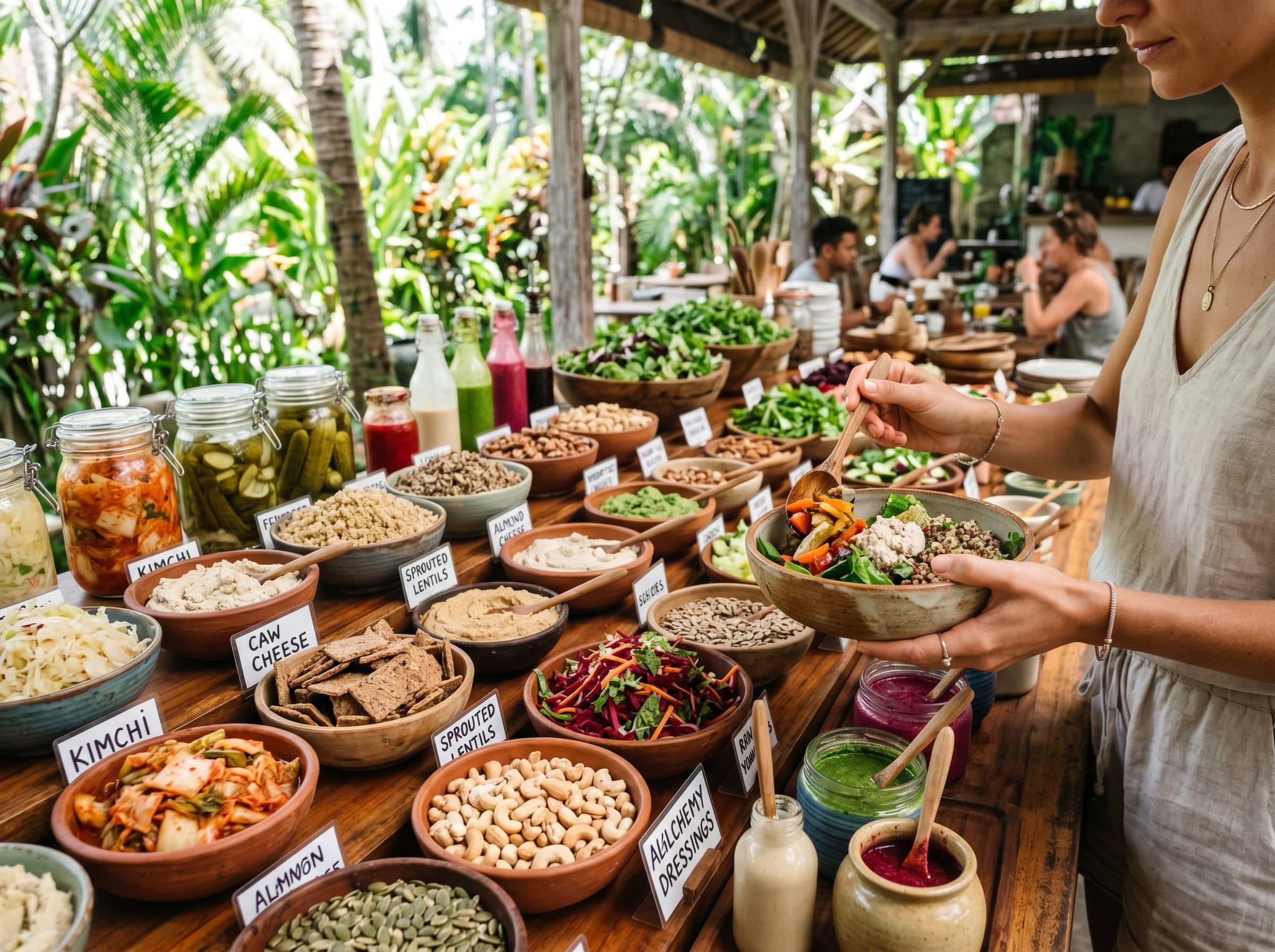
Alchemy Bali (also searched as Alchemy Ubud — same place) is the flagship of Ubud's raw and plant-based dining scene. It's built around a salad bar and raw food counter where you assemble your own meal from a spread of prepared components: sprouted grains, fermented vegetables, raw nut cheeses, dehydrated crackers, dressings made from cold-pressed ingredients. The quality of individual components is high. The flavors are clean and distinct — this isn't bland health food.
The experience works best if you approach it on its own terms. If you're looking for a cooked meal with richness and warmth, this isn't the place. If you want a meal that's genuinely nourishing, built from ingredients you can identify, and assembled to your own specifications, Alchemy does it better than anywhere else in Ubud. The raw desserts — particularly anything involving their house-made cacao preparations — are worth trying regardless of your dietary position.
Alchemy Bali
Price Range
IDR 70,000–150,000 per person (~$4.50–10)
Format
Build-your-own salad bar plus menu items
Peak Hours
Mid-morning post-yoga rush (8:30–10:30 AM) — go earlier or after 11
Dietary
Fully raw, vegan, gluten-free; clearly labeled
Nalu Bowls
Nalu Bowls operates in the smoothie bowl space that dozens of Ubud cafés compete in, but it's earned a specific reputation for consistency and ingredient quality. The bowls are thick — built on frozen açaí or pitaya blended dense enough that a spoon stands up in them — and topped with fresh fruit, house-made granola, and local honey or coconut.
The peanut butter açaí bowl is the signature and the most reliable order. The portions are generous enough to function as a full breakfast. The space itself is small and casual — this is a grab-and-eat spot, not a linger-for-hours café.
Nalu Bowls
Price Range
IDR 55,000–85,000 (~$3.50–5.50)
What to Order
Peanut butter açaí bowl
Best Time
Early morning before the post-yoga crowd arrives
Warungs and Balinese Home Cooking
A warung is a small, family-run food stall or simple restaurant — the foundation of daily eating in Bali. In Ubud, warungs range from tourist-facing operations with English menus and Instagram accounts to places where the food is displayed behind glass, you point at what you want, and the total comes to less than the cost of a bottled water at a hotel restaurant. Both have value. They're different experiences.
The format at most traditional warungs: dishes are prepared in the morning and displayed in a glass case or on a counter. You point, they plate. Rice is the base. Everything else — curried vegetables, sambal, fried tempeh, shredded chicken, egg — gets arranged around it. The best selection is available from late morning through early afternoon. By 2 or 3 PM, popular warungs have often sold through their best dishes.
Warung Babi Guling Ibu Oka
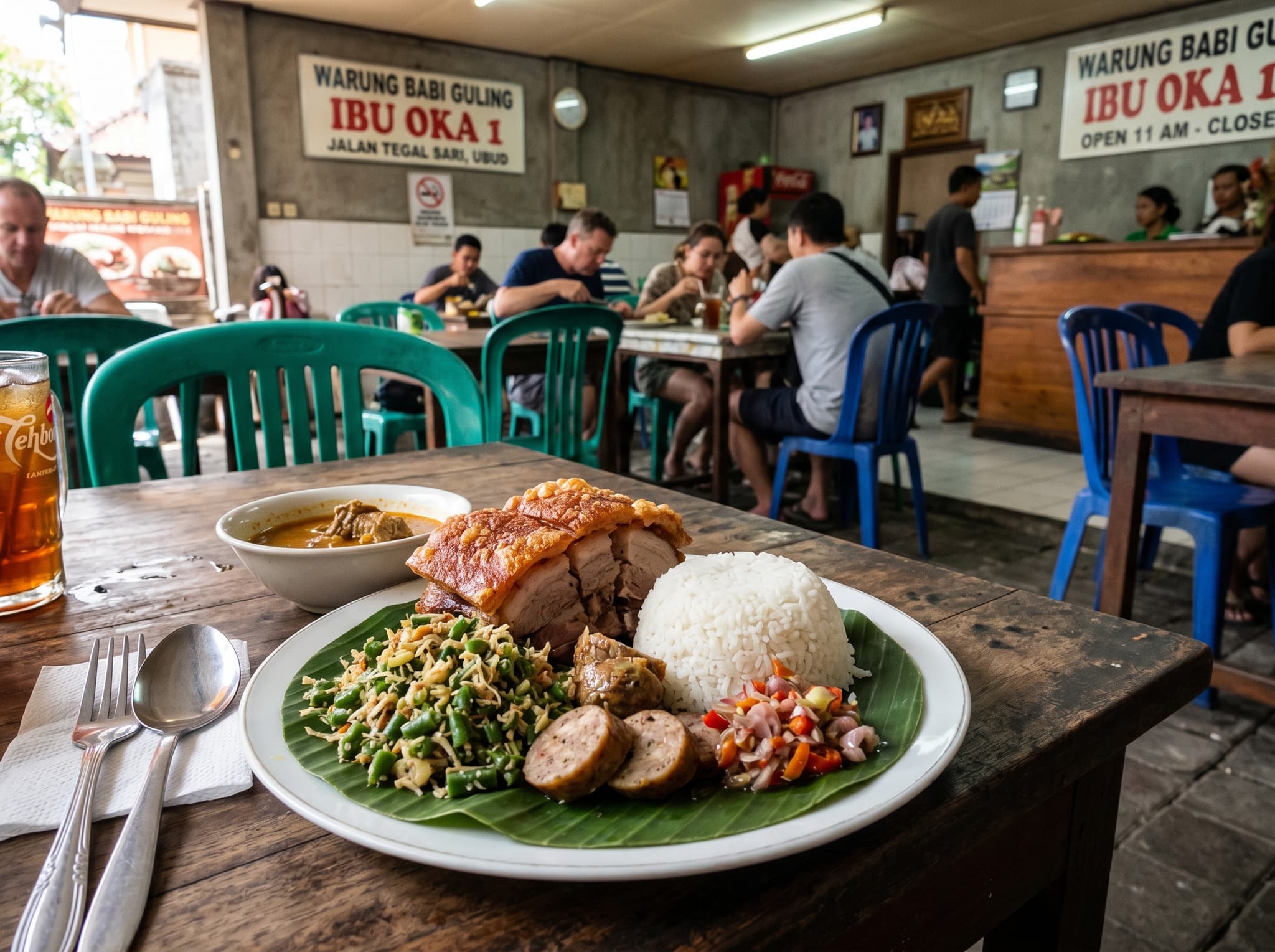
The most famous warung in Ubud, and famous for a reason. Babi guling — Balinese spit-roast suckling pig — is the only thing on the menu, served with rice, lawar (a traditional mixed vegetable and coconut dish), crispy skin, sausage, and a sambal that carries real heat. The pork is slow-roasted over wood and seasoned with a spice paste built on turmeric, coriander, lemongrass, and chili.
Ibu Oka draws tourists and locals in roughly equal measure, which is the best endorsement a warung can get. The line moves quickly. Go before noon for the best cuts and crispiest skin.
Warung Babi Guling Ibu Oka
Price
IDR 30,000–60,000 (~$2–4)
What to Order
Babi guling special (the full plate with all components)
Hours
Opens around 11 AM, often sold out by mid-afternoon
Note
Pork only — not suitable for visitors who don't eat pork
Warung Makan Bu Rus
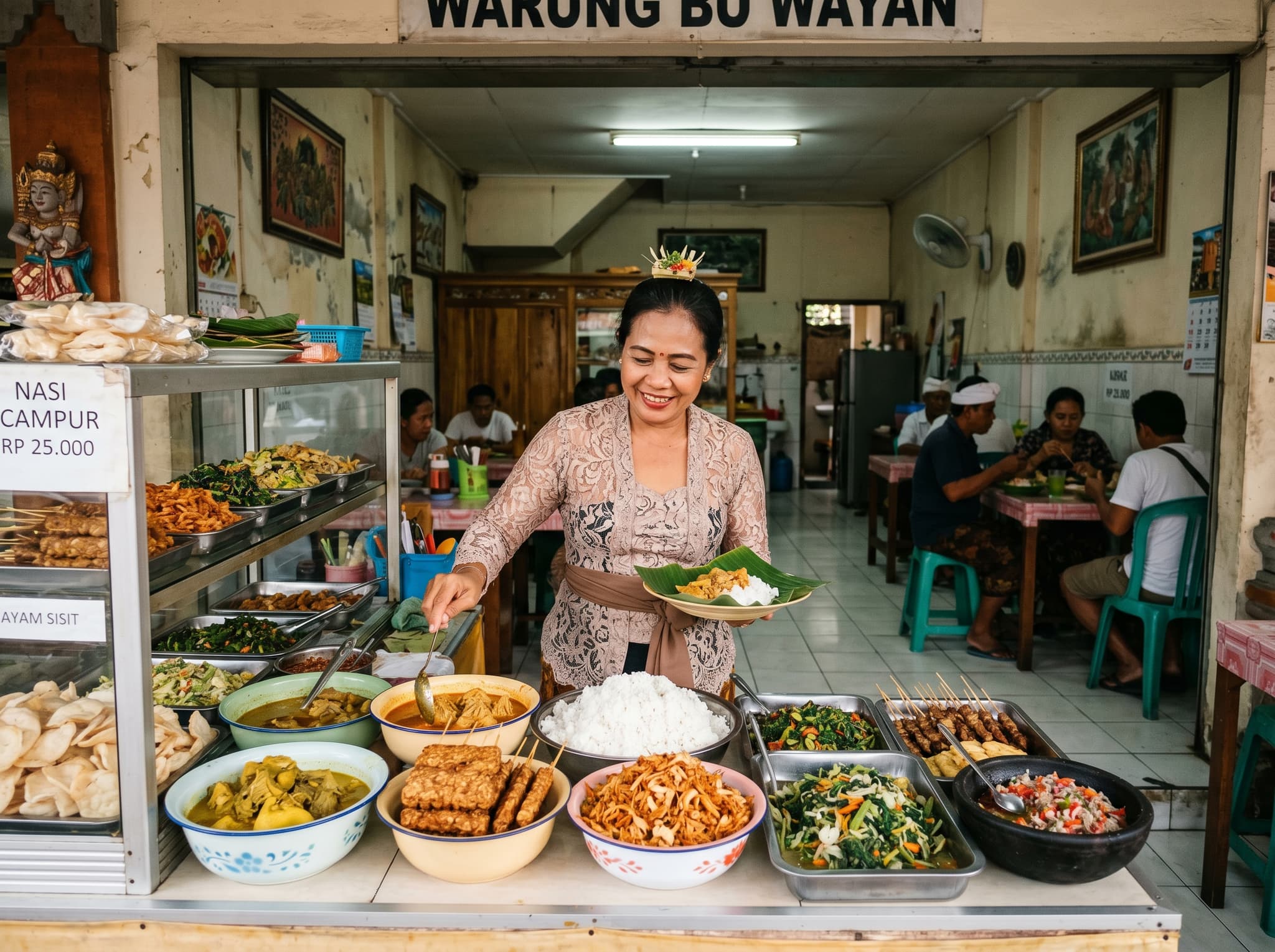
Less known to tourists, Bu Rus serves nasi campur — the mixed rice plate that's the daily staple of Balinese eating. The version here is built with care: the sambal is made fresh, the vegetables change with what's available, and the portions are honest. The jackfruit curry, when it's on the counter, is worth building your plate around — tender, slightly sweet, thick with coconut and turmeric.
This is the kind of warung where you eat alongside construction workers and motorbike drivers on their lunch break. The food is priced for daily eating, not for tourists.
Warung Makan Bu Rus
Price
IDR 15,000–25,000 (~$1–1.70)
What to Order
Nasi campur with jackfruit curry and extra sambal
Best Time
11 AM–1 PM for full selection
Warung Sate Lilit
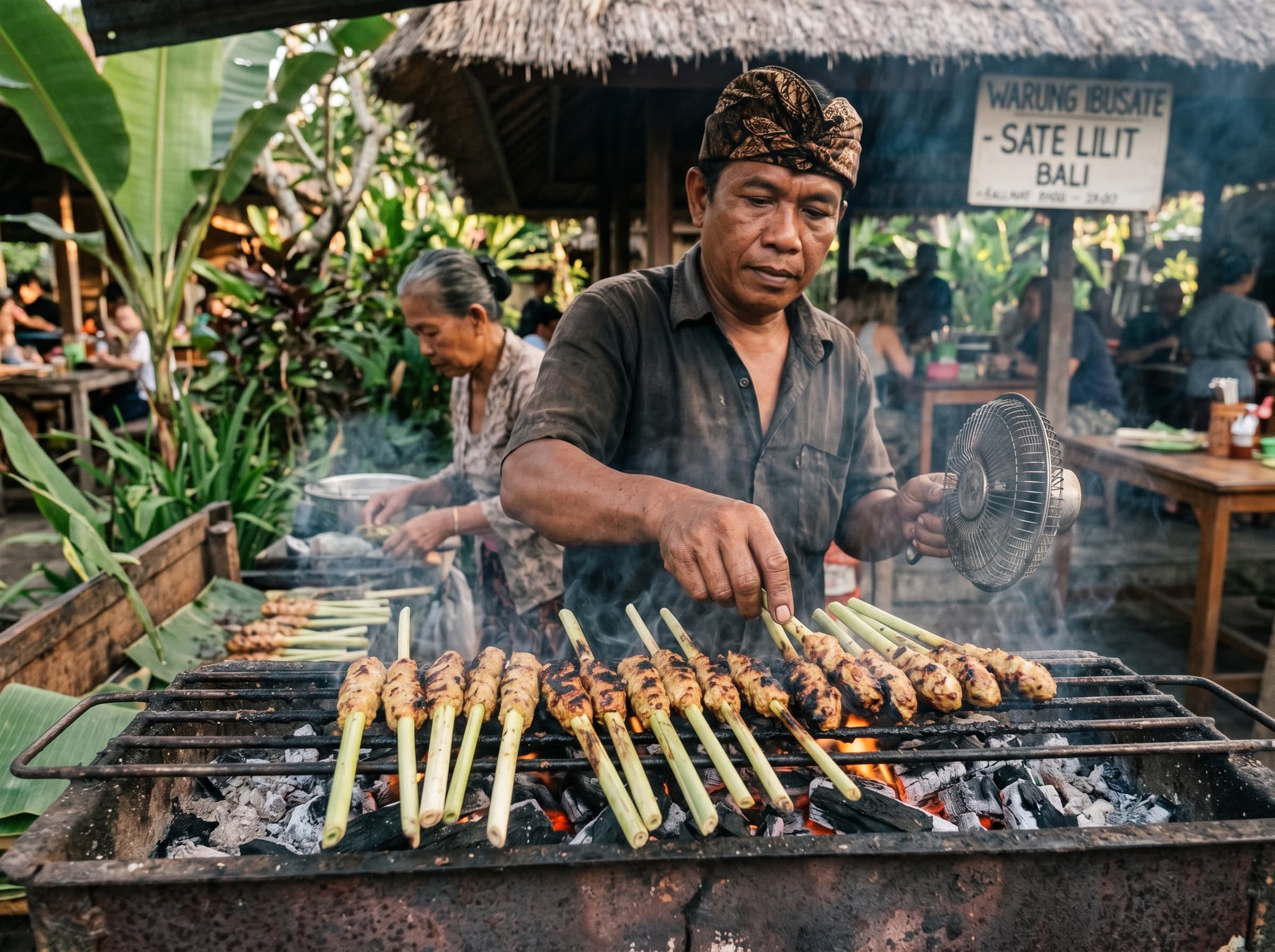
Sate lilit is distinctly Balinese — minced meat (often fish, sometimes pork or chicken) mixed with grated coconut, lime leaves, and shallots, then pressed around a lemongrass stalk and grilled. It's different from the skewered sate you find across Indonesia, more fragrant and less reliant on peanut sauce. Several warungs along Jalan Suweta and the streets branching off the main market area serve good versions. Ask at your accommodation for the current best — these small operations shift in quality and consistency.
Sate Lilit
Price
IDR 15,000–30,000 for a plate (~$1–2)
What to Look For
Lemongrass stalk as the skewer, not bamboo — that's the traditional preparation
Warung Nasi Ayam Kedewatan
Slightly outside central Ubud on the road toward Kedewatan, this warung specializes in nasi ayam — chicken rice, prepared in the Balinese style with shredded chicken, a clear broth, and a sambal that's heavy on raw shallot and chili. It's a simple dish done well, and the slight distance from the tourist center means the prices and the crowd reflect local patronage.
Warung Nasi Ayam Kedewatan
Price
IDR 15,000–25,000 (~$1–1.70)
Location
Kedewatan road, ~10 minutes by scooter from central Ubud
Best Time
Late morning
Balinese Dishes to Seek Out
If you're unfamiliar with Balinese food specifically (as opposed to general Indonesian cuisine), these are the dishes that define Ubud's warung scene:
- Babi guling — Spit-roast suckling pig, the ceremonial dish that's become Ubud's signature food
- Lawar — Finely chopped vegetables, coconut, and spices, sometimes mixed with minced meat or blood (lawar merah)
- Nasi campur — Mixed rice with an assortment of side dishes; every warung's version is different
- Sate lilit — Minced meat pressed on lemongrass stalks and grilled
- Bebek betutu — Slow-cooked duck wrapped in banana leaves, seasoned with a complex spice paste; harder to find as a daily warung dish, more often served at restaurants or for ceremonies
Cafés Worth Sitting In
Ubud's café culture is distinct from Canggu's laptop-and-coworking energy. The pace here is slower — more reading and journaling than deadline-grinding, though remote workers are present too. The best cafés serve coffee and food that are both worth recommending, not just an atmosphere to sit in.
Seniman Coffee Studio
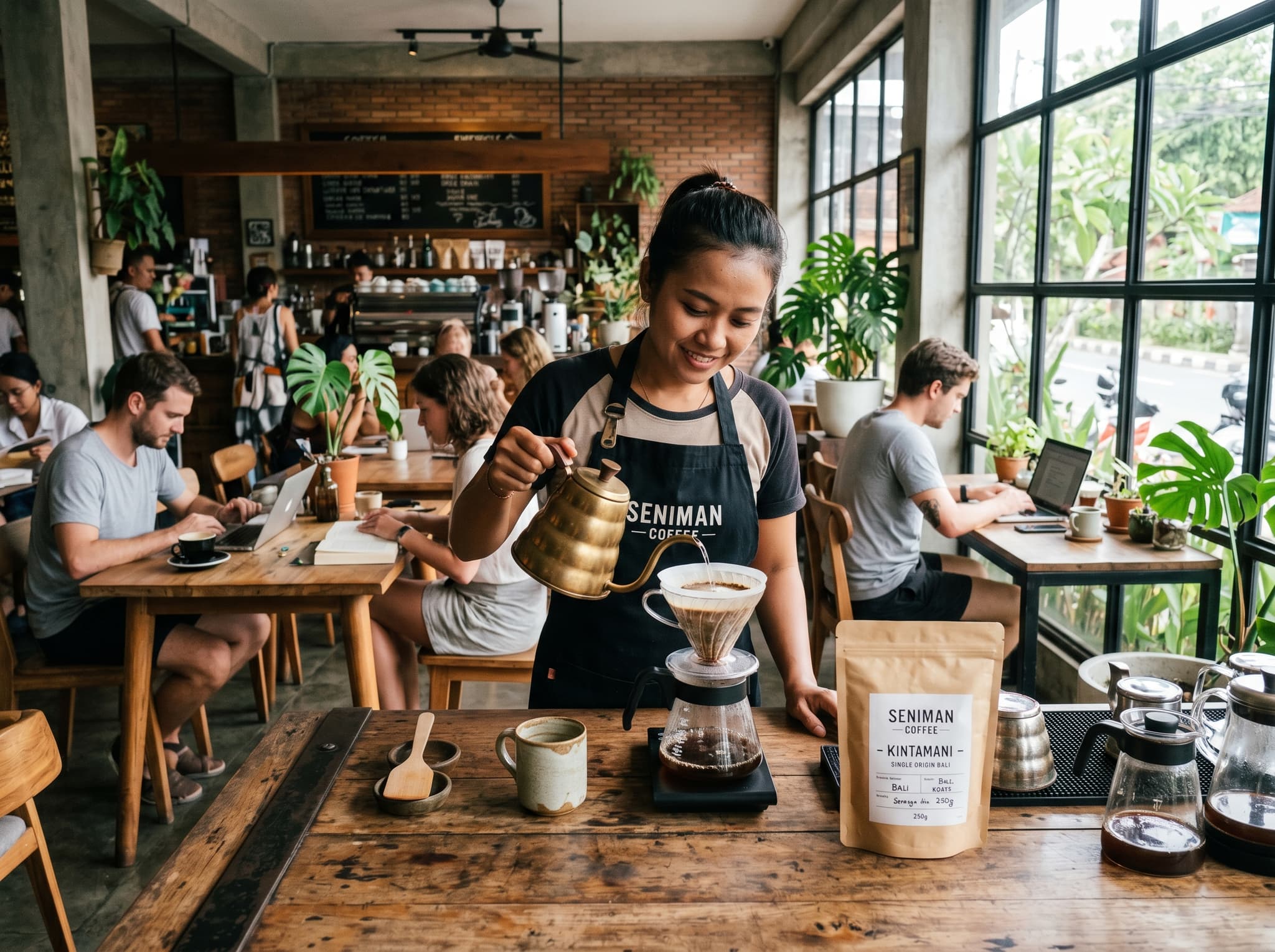
Seniman takes coffee seriously in a way that goes beyond latte art. They roast their own beans, sourced from Balinese highland farms in the Kintamani region, and the baristas can talk you through the differences between their single-origin options with genuine knowledge. The pour-over is the way to experience what Balinese coffee tastes like when it's treated with the same care as specialty coffee anywhere in the world — clean, bright, with a sweetness that reflects the volcanic soil the beans grew in.
The food menu is secondary but competent. The space itself is designed for sitting — good light, reasonable acoustics, tables spaced far enough apart that you don't feel crowded.
Seniman Coffee Studio
Coffee Price
IDR 30,000–55,000 (~$2–3.50)
Wi-Fi
Available, generally reliable
Best Time
Mid-morning, after the breakfast rush clears
Kopi Luwak and the Tourist Trap Note
You'll see "kopi luwak" (civet coffee) marketed heavily in the Ubud area. The ethical concerns around this product are well-documented — most kopi luwak production involves caged civets in poor conditions. Specialty coffee professionals in Bali generally discourage supporting it. Stick to the highland-grown single-origin beans, which are better coffee anyway.
Other Cafés Worth the Sit
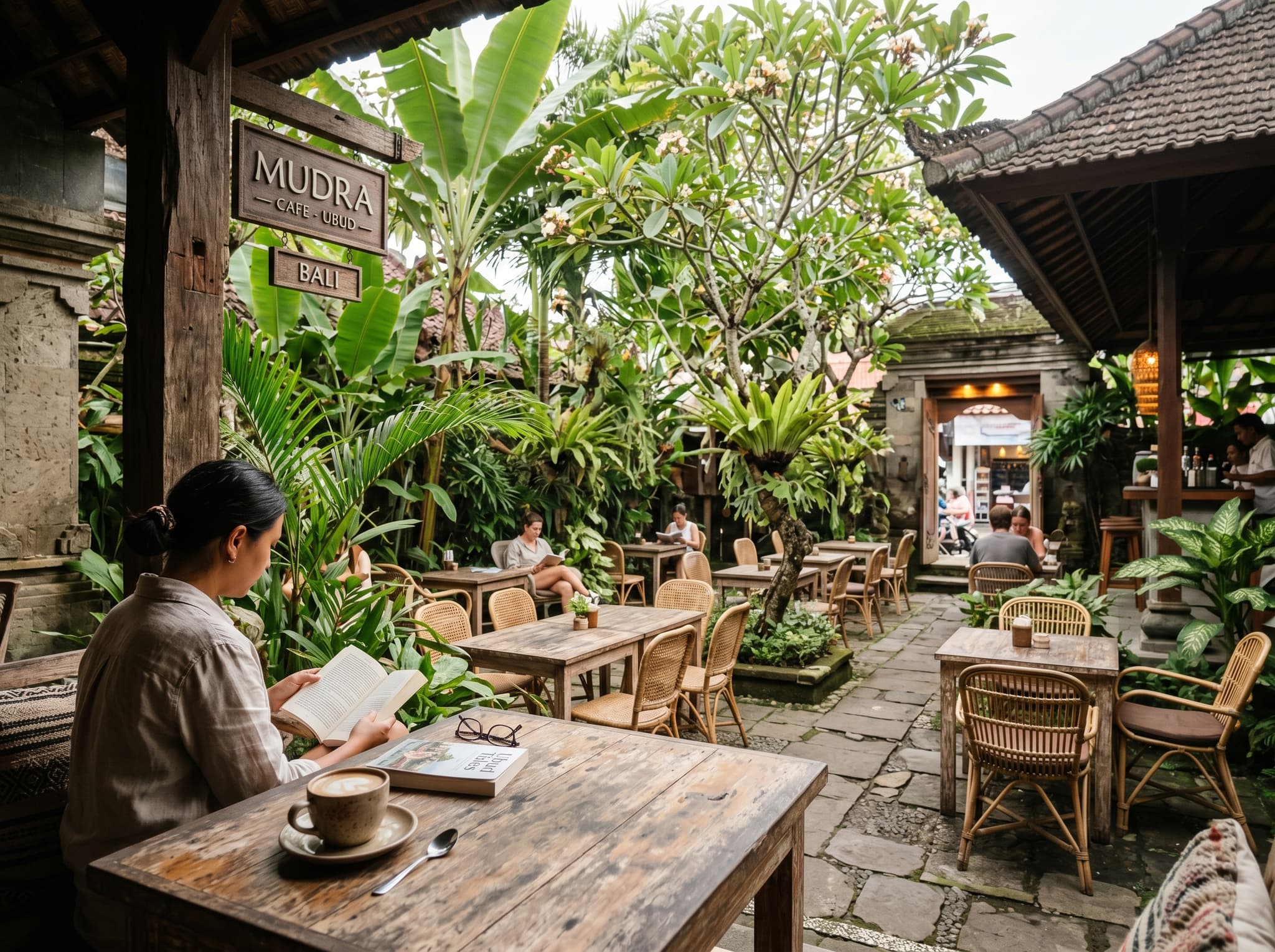
Mudra Café draws the post-yoga crowd with a menu that bridges the wellness kitchen and a proper café — the coffee is good, the food leans healthy without being exclusively so, and the courtyard seating catches morning light well. F.R.E.A.K. Coffee (on Jalan Goutama) is a smaller operation focused on the coffee itself — less atmosphere, better espresso. Both are walkable from central Ubud.
Ubud Café Prices
Espresso Drinks
IDR 25,000–50,000 (~$1.60–3.30)
Pour-Over / Single Origin
IDR 35,000–60,000 (~$2.30–4)
When and How to Eat in Ubud
The Daily Rhythm
Ubud has a natural eating rhythm that's worth following. Warungs are a lunch affair — arrive between 11 AM and 1 PM for the best selection. Cafés peak mid-morning, especially after the 7–9 AM yoga class cycle. Farm-to-table restaurants are good at both lunch and dinner, but the atmosphere shifts toward something quieter after dark. Fine dining is an evening commitment — book for 7 or 7:30 PM.
Payment and Tipping
Warungs are cash-only. Bring small bills — IDR 10,000 and 20,000 notes. Mid-range restaurants and cafés increasingly accept cards, but don't count on it at every place. Fine dining restaurants accept cards and typically add a service charge of 5–10% plus government tax, which will appear on the bill. At warungs, there's no expectation of tipping. At sit-down restaurants without a service charge, rounding up or leaving 5–10% is appreciated but not obligatory.
Practical Details
Service Charge
5–10% at mid-range and fine dining (check the bill)
Tax
Government tax often added separately (10–11%)
Cash Needed
Essential for warungs; ATMs available throughout central Ubud
Delivery
Grab and GoFood operate in Ubud — useful for low-energy evenings
Weather and Seating
During rainy season (roughly November through March), afternoon downpours are common and can be heavy. Many of Ubud's most appealing restaurants have open-air or semi-outdoor seating — beautiful in dry weather, less so during a tropical rain. If you're eating dinner during rainy season, choose a place with covered seating or be prepared to wait out a shower. It rarely lasts more than an hour.
Getting Around
Central Ubud is walkable — the main restaurant and warung concentration along Jalan Monkey Forest, Jalan Dewi Sita, Jalan Hanoman, and Jalan Goutama can all be covered on foot. Some of the best spots (Kedewatan-area warungs, Moksa, certain farm-to-table restaurants) are a short scooter ride outside the center. If you don't ride a scooter, Grab works in Ubud, though availability is thinner than in southern Bali.
Food Safety
Warungs are generally safe. The standard advice applies: eat at busy places with high turnover, which means the food hasn't been sitting for hours. If a warung's display case is full at 2 PM and no one's eating there, that's a signal. If it's crowded and the food is moving, you're fine. Drink bottled or filtered water — this applies everywhere in Bali, not just at warungs.
Frequently Asked Questions
Ubud rewards eating across the full spectrum in a single day. A warung breakfast of nasi campur while the morning is still cool. A farm-to-table lunch where the greens were picked from the garden you can see from your table. A tasting menu dinner that reframes Indonesian ingredients into something you didn't know they could become. The range itself is the point — and the best meal of the day won't always be the most expensive one. Sometimes it's the sambal, ground by hand that morning in a stone mortar, spooned over rice that costs less than the tip you'd leave somewhere else.