Bali National Golf Club in Nusa Dua offers the most consistent playing surfaces on the island. Green fees, course comparison, booking tips, and honest assessment.
Bali National Golf Club is the course most golfers end up playing when they visit the island — and for good reason. Located in the Nusa Dua resort enclave on Bali's southern Bukit Peninsula, it's the most accessible, most consistently maintained, and most complete golf facility on the island. Whether that makes it the best depends on what you're optimizing for, but if you want reliable playing surfaces, solid infrastructure, and a round that doesn't require a two-hour drive from your hotel, this is where you start.
The Course: What You're Actually Playing

The layout is 18 holes, par 72, designed by Robin Nelson and Rodney Wright — names that won't mean much unless you follow Pacific Rim course architecture, but the short version is: they designed courses that work with tropical terrain rather than fighting it. Bali National sits on gently undulating land between the Indian Ocean coastline and the Nusa Dua resort strip. Several holes offer direct ocean views, particularly the back nine, where the 13th and 14th run along elevated ground with sightlines to the water.
The design leans links-influenced — open fairways, strategic bunkering, wind as a genuine factor on the exposed holes. It's not a links course in the Scottish sense, but the wind off the ocean (especially in the dry season) adds a layer of shot-shaping that most tropical resort courses don't offer. The front nine is more sheltered, tree-lined, with tighter landing areas. The back nine opens up and lets the coastal wind do its work.
Course Details
Holes
18, par 72
Total Yardage
6,817 yards (championship tees)
Designers
Robin Nelson & Rodney Wright
Terrain
Gently undulating, coastal
Signature Holes
13th and 14th (ocean views)
Playing Surfaces: The Real Differentiator
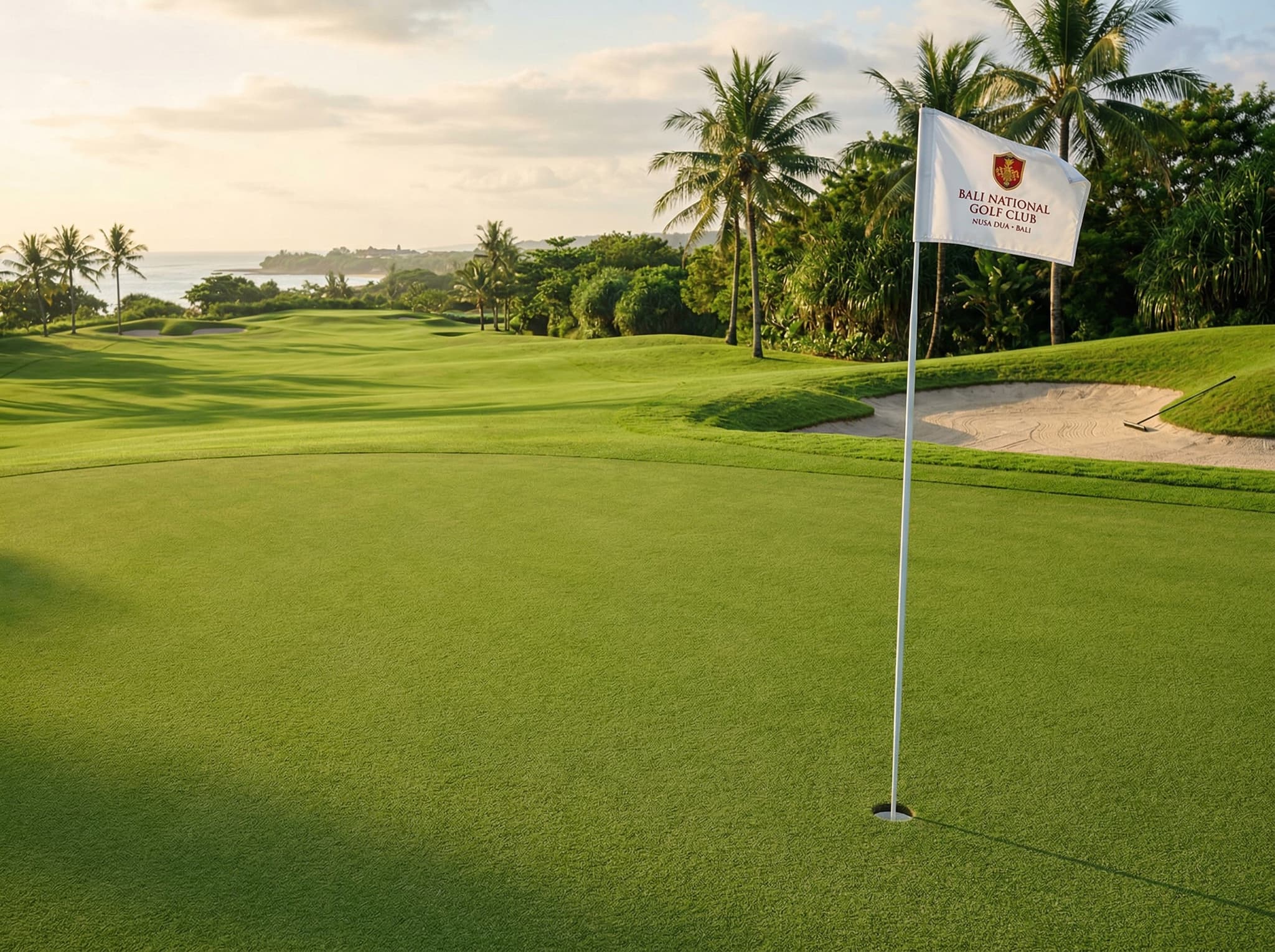
Here's where Bali National earns its reputation, and where the comparison with other Bali courses matters most.
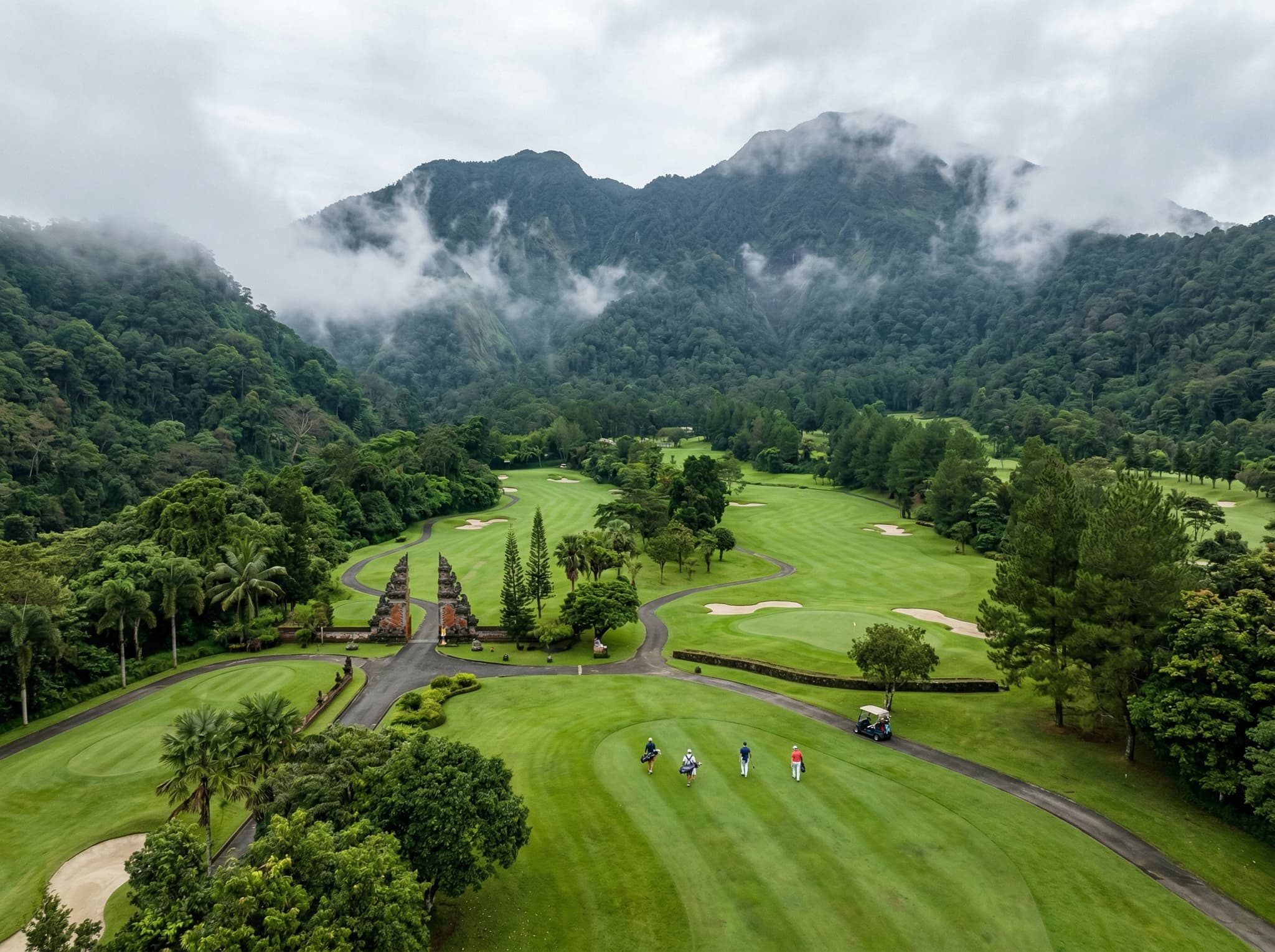
The greens are Bermuda grass — specifically TifEagle, a dwarf Bermuda variety that holds up well in tropical heat and rolls consistently. This is the single biggest advantage over Bali's other options. Handara Golf & Resort up in Bedugul has a beautiful mountain setting at 1,400 meters elevation, but the greens can be inconsistent, particularly during the wet season when drainage becomes an issue. New Kuta Golf on the Bukit cliffs is a more dramatic visual experience — limestone cliffs, ocean panoramas — but the exposed clifftop location means the turf takes a beating from salt spray and wind, and the fairway conditions can vary hole to hole.
Bali National's fairways are maintained to a standard that's noticeably more uniform. The irrigation system is modern, the drainage handles wet-season downpours better than most courses on the island, and the greens staff is large enough to keep the course in tournament-ready condition year-round. During the dry season (April–October), the surfaces are genuinely excellent — fast greens, tight lies on the fairways, consistent bunker sand. During the wet season (November–March), conditions are still playable but expect softer greens and occasional casual water on lower-lying fairways after morning rain.
How It Compares
The honest comparison for golfers trying to decide:
Bali Golf Course Comparison
Bali National Golf Club
Best surfaces, most consistent, resort-convenient. Less visually dramatic.
New Kuta Golf
Stunning clifftop setting, links-style. Turf quality less consistent, more exposed.
Handara Golf & Resort
Cool mountain climate, beautiful volcanic backdrop. Older course, greens less reliable in wet season.
If you're playing one round and want the most reliable experience, play Bali National. If you're playing two or three rounds and want variety, add New Kuta for the scenery and Handara for the mountain air. But if the question is purely about playing surfaces and course conditioning, Bali National wins clearly.
Costs and Booking

Green fees vary by season and by whether you're a guest at a Nusa Dua resort with a partnership arrangement.
Green Fee Structure
Peak Season (Jul–Aug, Dec–Jan)
$140–$160 USD including caddie and cart
High Season (Apr–Jun, Sep–Nov)
$110–$140 USD including caddie and cart
Low Season (Feb–Mar)
$90–$110 USD including caddie and cart
Twilight Rate (after 2:30 PM)
$70–$90 USD, varies by season
Club Rental
$35–$55 USD for a decent set
Caddies are mandatory and included in the green fee. Tips are expected — 150,000–200,000 IDR ($10–$13 USD) is standard for a good caddie. The caddies here are experienced and most speak enough English to give useful yardage advice and read greens. If you get a caddie who knows the back nine wind patterns, listen to them — they'll save you strokes.
Booking is straightforward: the club's own website accepts online reservations, or your hotel concierge can arrange it. During peak season, book at least 48 hours ahead. Outside peak, same-day bookings are often possible but morning tee times still fill up.
Facilities Beyond the Course
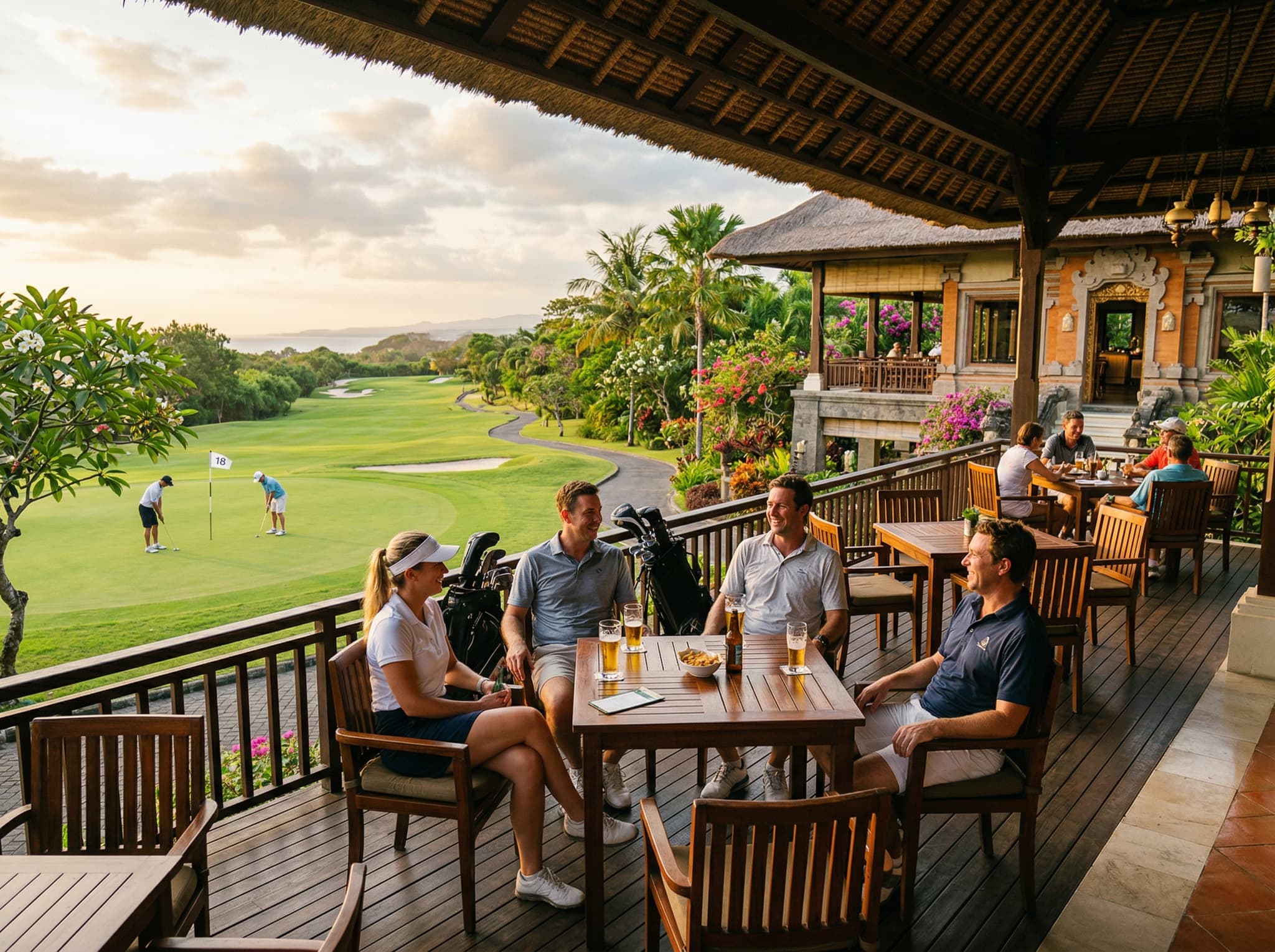
The clubhouse is large, air-conditioned, and has a restaurant that's better than it needs to be — the nasi goreng is solid, the cold Bintangs are cold, and the terrace overlooking the 18th green is a good place to sit after a round. There's a pro shop with rental equipment, a driving range, and a short game practice area. The locker rooms are clean and well-maintained with showers.
It's a resort golf facility, not a private members' club — the atmosphere is welcoming to visitors, the staff is efficient, and the whole operation runs smoothly. No pretension, no dress code drama beyond collared shirts and proper golf shoes.
Getting There
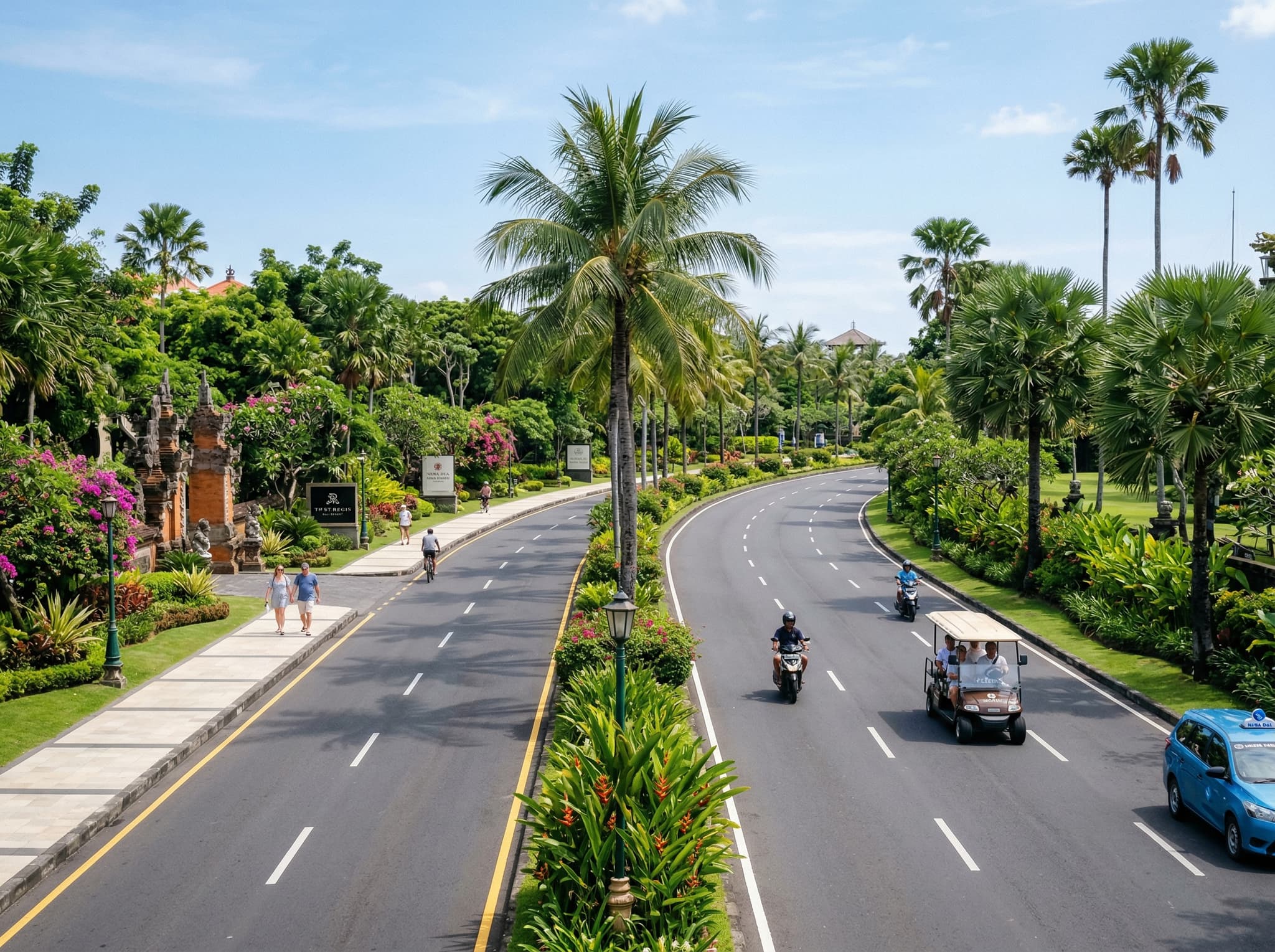
From central Nusa Dua hotels, it's a 5–10 minute drive. From Seminyak or Kuta, expect 30–45 minutes depending on traffic. From Ubud, it's a solid 90 minutes — doable for a day trip, but you'll feel the drive. Grab or Gojek will get you there for 80,000–150,000 IDR ($5–$10) from anywhere in the Nusa Dua/Jimbaran area. The club has ample parking if you're renting a car.
The Bottom Line
Bali National Golf Club isn't the most photogenic course on the island — New Kuta wins that easily. It's not the most unique setting — Handara's volcanic mountain bowl is hard to beat. But it's the course where everything works: the greens roll true, the fairways are consistent, the facilities are professional, and the logistics are simple. For most visiting golfers, that's exactly what matters.