Medewi Beach is a black-sand surf spot on Bali's remote western coast, known for its long left-hand wave, minimal crowds, and a pace the south lost years ago.
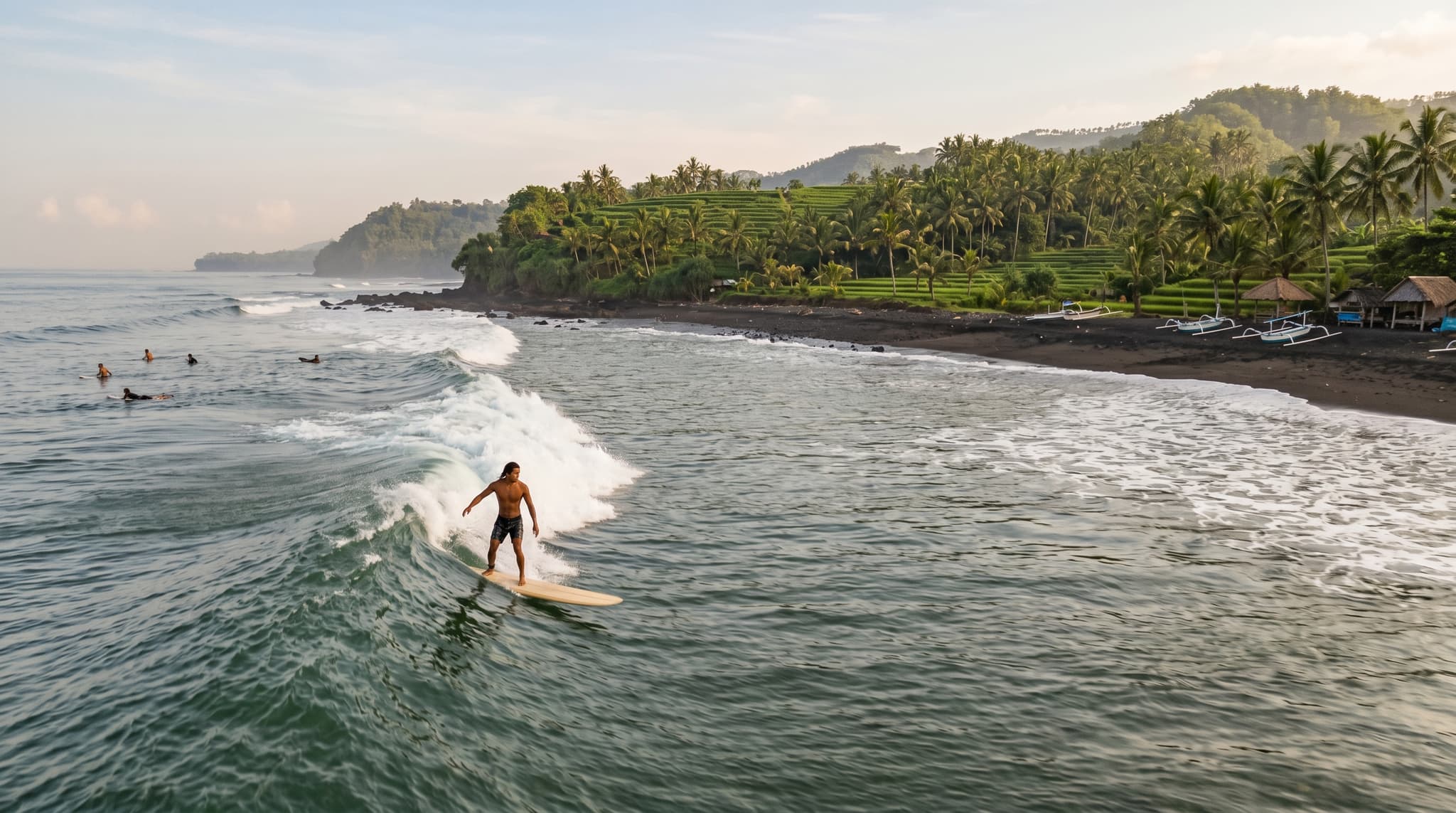
Medewi Beach sits on Bali's western coast, about three hours by road from the airport and even further, in every other sense, from the Bali most visitors encounter. It's a black-sand beach backed by rice terraces and coconut palms, known primarily for a long, slow left-hand wave that draws longboarders and surfers who aren't in a hurry. There are no beach clubs. No influencer-friendly swing sets. What's here is a stretch of volcanic coast, a handful of warungs, and the kind of quiet that Bali's south hasn't offered in years.
This is not a place for everyone. That's the point.
The Wave
Medewi's reputation rests almost entirely on its surf break — a left-hand point break that peels over a rocky reef and can run for 200 meters or more on a good day. It's not a powerful wave. It's not a fast wave. It's a long, gentle wall that rewards patience and smooth turns over aggressive shortboarding. Longboarders and single-fin riders treat this place with something close to reverence.
The break works best on a southwest swell during the dry season, roughly April through October. Mornings tend to be cleaner before the onshore wind picks up. The takeoff zone is over rocks — reef booties are worth considering, especially at lower tides — and the paddle out is short but requires navigating a rocky shoreline rather than a sandy entry.
On smaller days, the wave is forgiving and mellow — the kind of session where you can ride for a long time and not feel exhausted afterward. On bigger swells, it picks up speed and the sections connect in a way that makes the whole ride feel like one continuous, unhurried conversation with the water. The crowd is usually thin compared to Canggu or Uluwatu, though Medewi has started appearing on more surf-trip itineraries in recent years, and weekend mornings can get busier than they once were.
Board rentals are available from a few shops and guesthouses near the beach. Expect to pay somewhere in the range of IDR 50,000–100,000 per hour for a longboard, though prices vary and aren't always posted. Bringing your own board is the better option if you're driving from the south.
The Beach Itself
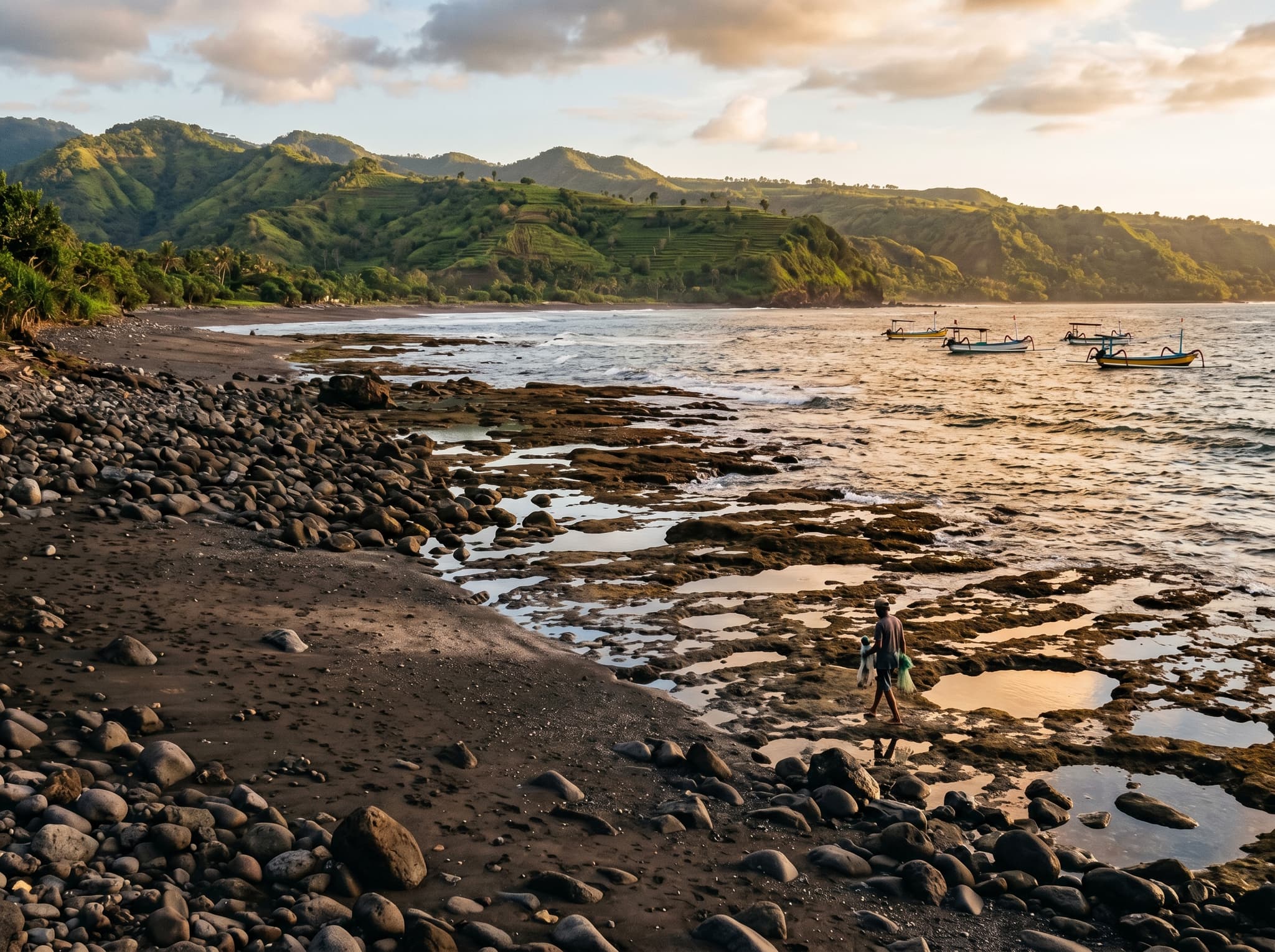
Medewi's sand is dark grey to black — volcanic, coarse, and nothing like the white-sand postcards from Nusa Dua. The shoreline is mixed with smooth rocks, especially near the point where the wave breaks. It's not a lounging beach. There are no sunbeds for rent, no vendors walking the sand with sarongs and cold drinks. At low tide, the rock shelf is exposed and tidepools form along the edges.
What makes it worth visiting beyond the surf is the setting. The coast here curves gently, and the hills behind it are green and terraced. In the late afternoon, the light turns the water a deep bronze and the silhouettes of fishing boats appear offshore. It's a quiet, slightly rough-edged landscape — the Bali that existed before the southern coast became a construction site.
Beach Details
Sand Type
Black volcanic sand and rock
Swimming
Possible but rocky; not ideal
Lifeguards
None
Facilities
Basic warungs and a few guesthouses nearby
What's There (and What Isn't)

Medewi village is small. The main road runs along the coast and a few guesthouses, surf camps, and warungs cluster near the beach access point. You can eat well for very little — nasi campur, grilled fish, cold Bintang — but the options are limited and most places close early by Bali standards.
There are a couple of surf-oriented accommodations with pools and basic amenities, and a few homestays that offer rooms for under IDR 300,000 per night (roughly USD 18–20). Don't expect boutique hotels or co-working spaces. The nearest ATM may require a short drive, and phone signal can be unreliable in spots.
What isn't here is equally important. There's no nightlife. No craft cocktail bars. No yoga studios with sunset views and a booking app. Medewi hasn't been developed in the way that Canggu was developed, or Uluwatu before it. Whether that lasts is an open question — there are signs of new construction along the road, and a few international surf brands have started running seasonal camps here. But for now, the village moves at its own pace.
Who This Place Is For

Medewi is for surfers who want uncrowded waves and don't need comfort infrastructure around them. It's for travelers who've already done southern Bali and want to understand what the rest of the island feels like. It's for people who are comfortable with a slower pace, fewer choices, and the kind of evening where the main activity is sitting on a warung terrace watching the light change.
It is not for travelers who want a curated Bali experience. It is not a day trip that justifies the three-hour drive unless you're specifically coming for the wave. And it's not a place that photographs well on a phone screen — the beauty here is in duration, in the accumulation of quiet hours, not in a single frame.
Getting There

Most visitors reach Medewi by motorbike or car from southern Bali. The drive takes roughly 2.5 to 3 hours depending on traffic through Tabanan. The road is paved and in reasonable condition, winding through rice fields and small towns once you pass Tanah Lot. There's no public transport that serves Medewi conveniently — a private driver or rental motorbike is the practical option.
Getting to Medewi
From Ngurah Rai Airport
Approximately 3 hours by car
From Seminyak/Canggu
Approximately 2.5 hours
From Tanah Lot
Approximately 1.5 hours
Road Condition
Paved, two-lane, mostly good
The drive itself is part of the experience. West Bali thins out quickly once you leave the tourist belt — the road narrows, the traffic drops, and the landscape opens into the kind of rural scenery that reminds you the island is more than its southern tip. Travelers continuing further into the region can also visit West Bali National Park.
Staying or Passing Through
A single night is enough to surf the morning session and feel the place. Two or three nights is where Medewi starts to settle in — where the rhythm of the tides becomes your schedule and the village stops feeling like a detour and starts feeling like a destination. Beyond that, it depends on how much quiet you can sit with.
Medewi doesn't try to hold your attention. It just offers a version of Bali that's becoming harder to find — unhurried, unpolished, and still mostly itself.