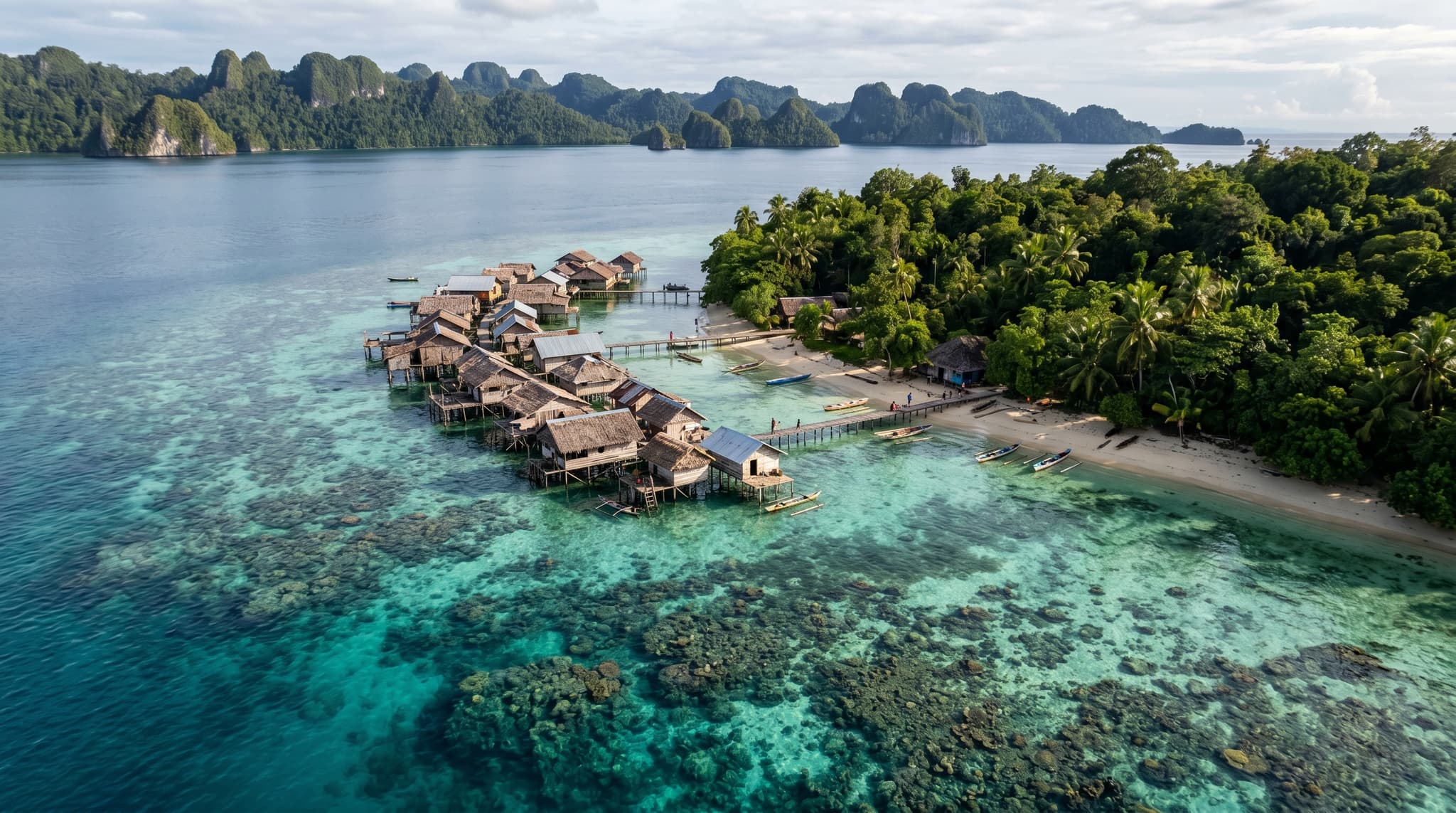
An honest breakdown of Agusta Eco Resort in Raja Ampat — real pricing by room type, what 258 TripAdvisor reviews reveal, dive value math, and who it suits best.
Agusta Eco Resort sits on a private island off Waigeo in central Raja Ampat, a 16-cottage property with a PADI dive center, an 800-meter beach, and what it claims is the only freshwater swimming pool in the archipelago. For travelers researching Raja Ampat accommodation, the name surfaces quickly — it occupies a middle tier between bare-bones homestays and the $500+/night luxury resorts like Misool Eco Resort. The question is whether that middle position represents genuine value or just a compromise.
The short answer: for divers, it is genuinely competitive. For non-divers, the calculus gets more complicated.
What You Get
The resort offers two room categories. Deluxe Cottages are 60–65 square meters with an octagonal design, king bed, air conditioning, minibar, safe, and a sea-view terrace. Superior Cottages (also called Raja Cottages on some booking platforms) are 45–46 square meters, rectangular, with double or twin bed configurations — these can accommodate families of up to six in multi-bedroom setups.
Room Comparison
Deluxe Cottage (65 sqm)
€2,505 double / €3,105 single — 7 nights
Raja Cottage (46 sqm)
€1,965 double / €2,280 single — 7 nights
What's Included
Full board, 11 dives, Sorong transfers
Children 4–9
30% accommodation discount with extra bed
Both categories include lava stone sinks, hot/cold showers with open-air elements, and beachfront loungers. Every cottage has a camera table — a small detail that signals who the core audience is. Divers and underwater photographers.
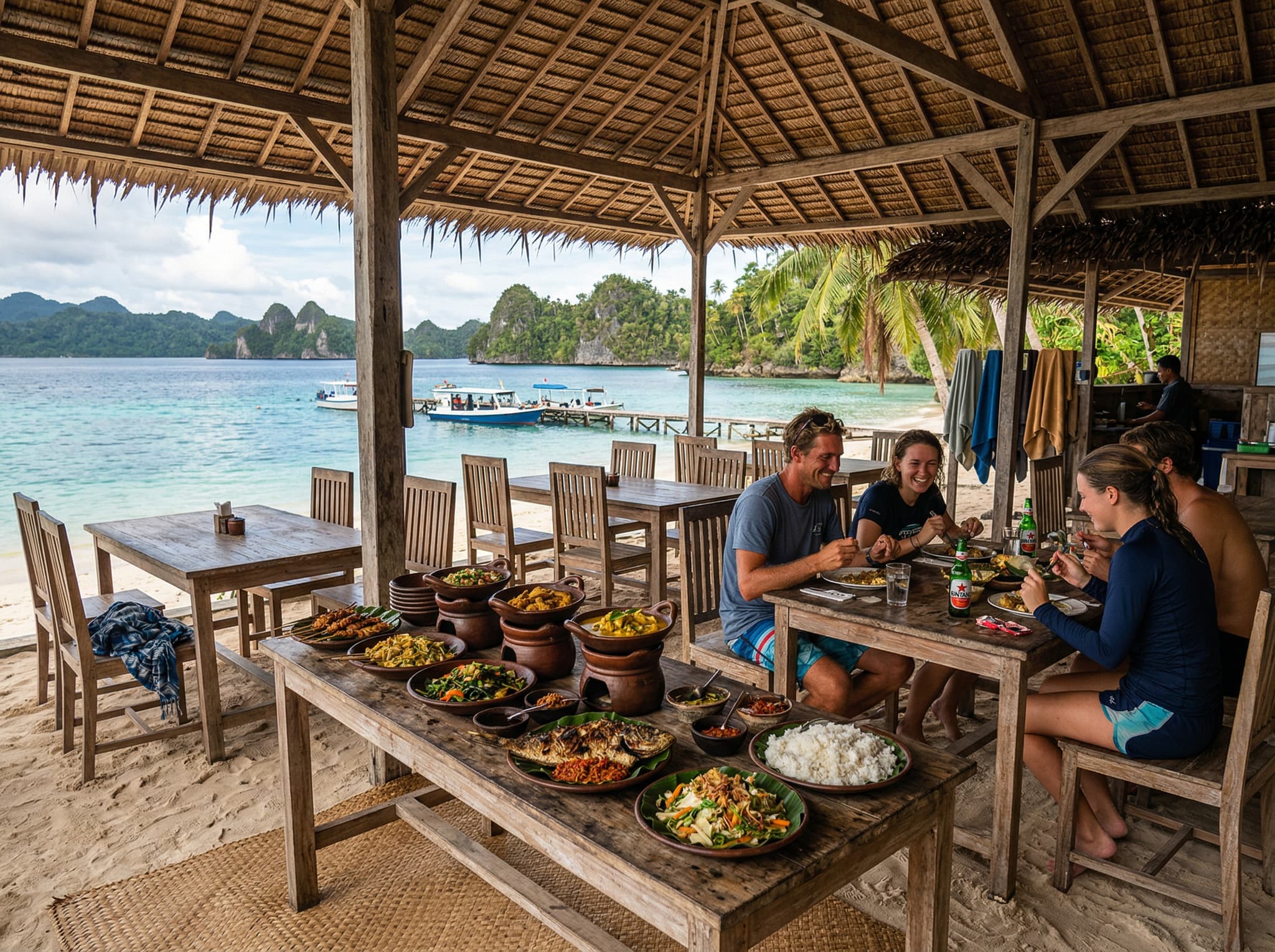
With only 16 cottages, the property feels intimate even at full capacity — you are unlikely to share the beach with more than 30 guests at any given time. The restaurant serves buffet-style meals three times daily, heavy on fresh fish, Indonesian staples, and whatever the on-site vegetable garden and henhouse are producing. It is not fine dining, but portions are generous, and the variety is reasonable for a remote island kitchen with limited supply chains. Expect communal seating — this is the kind of place where you end up swapping dive stories over dinner whether you planned to or not.
Beyond the rooms: a spa with sea views, outdoor gym, kayaks, kitesurfing equipment, archery, a small souvenir shop, and WiFi. The eco credentials are tangible rather than performative — solar power, waste composting, a vegetable garden, a henhouse, and sustainable wood construction. This is not a concrete hotel with a "green" sticker. The infrastructure reflects actual design choices around sustainability.
The Diving — Where the Value Lives

The on-site PADI dive center sits at the pier, with showers, rinse tanks, gear storage and rental, and courses up to divemaster level. Two fast boats carry 10–16 divers each (one has a toilet — worth noting for the longer trips). At full occupancy, the resort can accommodate all certified divers across both boats for a single morning departure, though in practice dive groups are often split by experience level or site preference, keeping group sizes manageable. Dive sites range from 15 minutes to 1.5 hours away, with 2–3 tank dives hitting central Raja Ampat highlights: Mios Kon for striped snappers and bats, The Passage for its plankton-rich biodiversity corridor, Blue Magic for pelagics, and various sites for macro life including pygmy seahorses and nudibranchs.
Free unguided jetty dives are available — a genuine perk for experienced divers who want extra bottom time without extra cost.
Now, the pricing math — because you will see different numbers depending on where you look, and they are all technically correct.
Run the numbers on the 7-night Raja Cottage package at €1,965 double occupancy: that breaks down to roughly €140 per person per night (~$155), covering accommodation, three meals daily, 11 guided dives, and roundtrip transfers from Sorong. The $195/person/night figure you may see cited elsewhere reflects the Deluxe Cottage at single occupancy — €3,105 for 7 nights works out to approximately €443/night or ~$195/person/night when converted at current rates. Same resort, different room, different occupancy. The gap is significant, so know which category you are pricing before you compare.
Dive-The-World lists rates from USD 102 per day full board (valid through December 2025), which is even more aggressive — though that figure reflects their lowest seasonal rate for the Raja Cottage at double occupancy and may not include all the same inclusions as the Diveplanit packages.
For context, a single guided dive in Raja Ampat typically costs €30–50 through independent operators, so 11 dives alone represent €330–550 in value. The full-board component at a remote island resort would easily run €40–60 per person per day elsewhere. At the Raja Cottage double-occupancy rate, the package pricing is genuinely strong for what it includes.
Price Per Person Per Night — By Category
Raja Cottage, double
~€140/pp/night (~$155)
Raja Cottage, single
~€326/night (~$360)
Deluxe Cottage, double
~€179/pp/night (~$195)
Deluxe Cottage, single
~€443/night (~$490)
What 258 TripAdvisor Reviews Actually Tell You
The resort holds 258 reviews on TripAdvisor as of early 2025, and the patterns are consistent enough to be useful.
What guests consistently praise: The dive operations get the most enthusiastic feedback — experienced divers highlight well-organized boat logistics, knowledgeable dive guides, and the sheer quality of central Raja Ampat sites accessible from the resort's location. The house reef and free jetty dives come up repeatedly as unexpected bonuses. Staff friendliness is the other recurring theme — multiple reviews single out individual staff members by name, which usually signals genuine hospitality rather than scripted service. The beach and island setting also draw consistent praise: guests describe it as peaceful, uncrowded, and visually stunning.
What guests flag as limitations: Food quality is the most common mixed note. It is not bad — most reviews call it adequate or good — but a subset of guests found it repetitive after a full week, particularly for those with dietary restrictions. For a remote island with limited supply logistics, this is understandable, but set expectations accordingly if you are a picky eater on a 7-night stay. Communication during the booking process comes up occasionally — the bank-transfer system and email-based coordination can feel slow or unclear, especially for first-time Raja Ampat visitors who are already anxious about logistics. A few reviews mention that WiFi is essentially nonfunctional for anything beyond basic messaging, which the resort does not hide but also does not emphasize.
The bottom line from reviews: Divers overwhelmingly rate the experience highly. The complaints tend to come from travelers who expected more resort-style polish — better food variety, faster communication, smoother payment processes. If you understand that this is a well-run dive lodge on a remote island (not a Bali beach resort), the reviews suggest you will be satisfied.
For Non-Divers
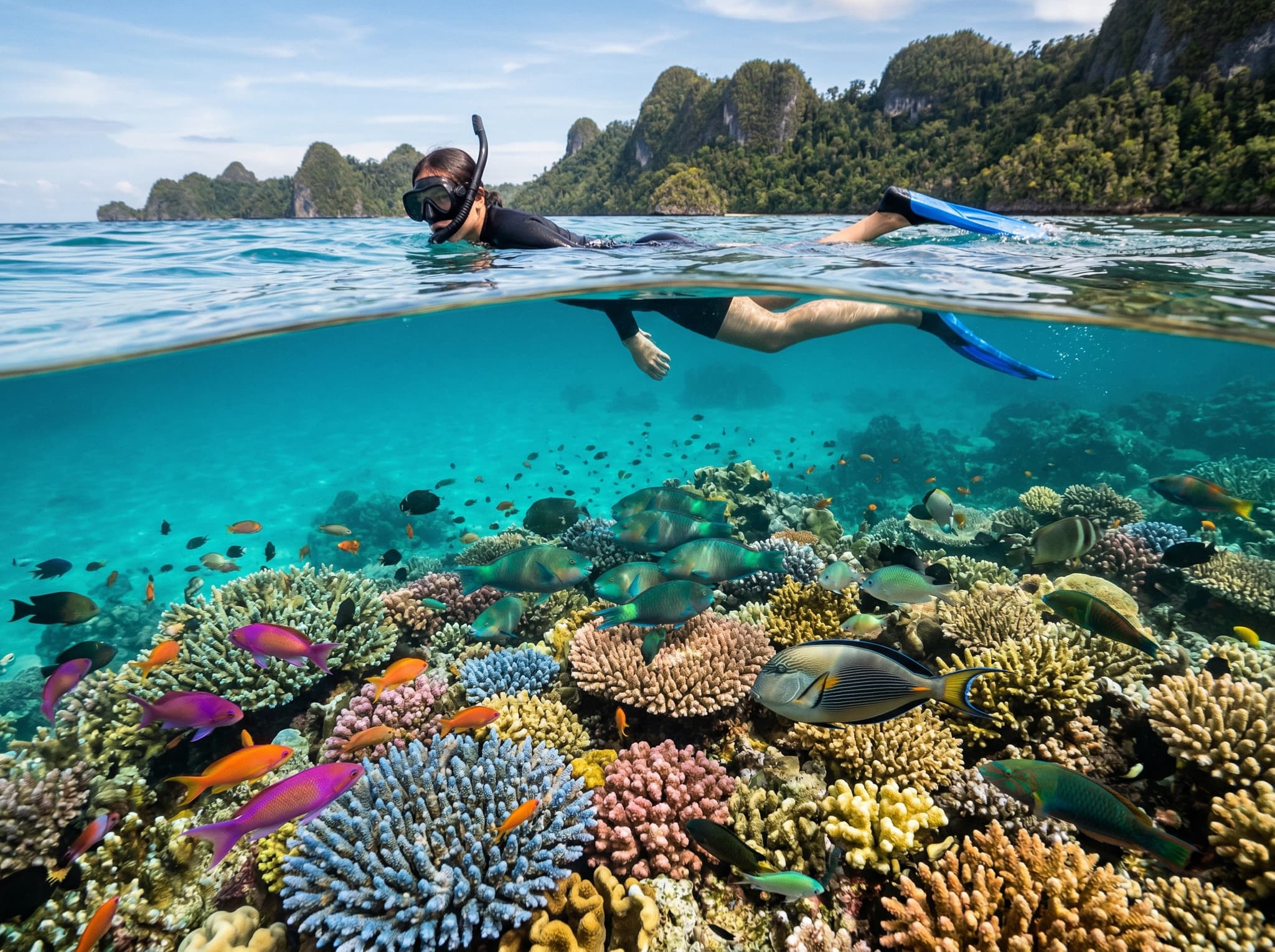
Snorkeling access to sites like Mios Kon, The Passage, Blue Magic, and Sardine's reefs is available, and the marine life — sharks, mantas, intact coral systems — is extraordinary even from the surface. But the resort's infrastructure, pricing, and programming are built around diving. Non-divers are welcome, not centered.
If snorkeling is the primary activity, compare the numbers carefully. Well-reviewed homestays on Arborek or Kri — places like Yenkoranu Homestay or Raja Ampat Dive Lodge's budget tier — run approximately €25–60 per person per night including full board, with snorkeling trips arranged for an additional €15–30 per outing. At Agusta's Raja Cottage double-occupancy rate of ~€140/person/night, you are paying roughly 3–5 times more. The comfort gap is real — private bathroom, air conditioning, pool, spa — but so is the price gap. Non-divers should ask themselves whether those amenities justify the premium, or whether the money is better spent extending the trip by a week at a simpler property with equally spectacular reefs.
The pool, spa, kayaks, and beach provide downtime options, but this is a remote island without nightlife, town access, or much to do beyond water activities. That is either the appeal or the limitation, depending on what you want.
Getting There
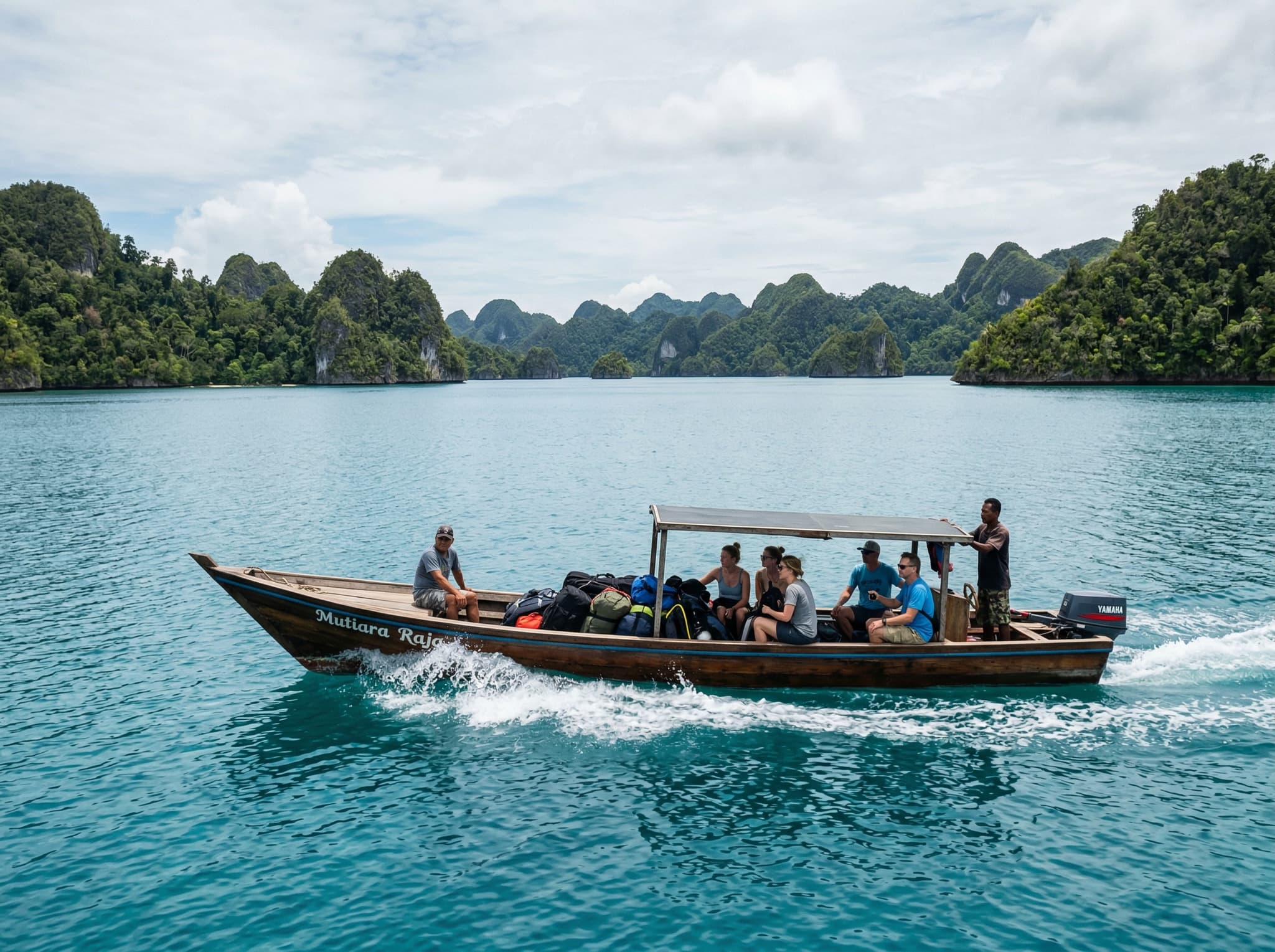
This is where Raja Ampat demands patience. The journey from Sorong to the resort takes roughly three hours in total, and the timing is rigid.
Transfer Logistics
Step 1
Fly to Sorong (SOQ) — arrive before 8:00 AM
Step 2
Taxi to ferry port — 10 min, IDR 100,000 fixed
Step 3
Ferry to Waisai — 2 hours
Step 4
Resort speedboat to Agusta — ~40 minutes
Ferry departures from Sorong: 9:00 AM and 2:00 PM on Sunday, Wednesday, and Friday. All other days: 2:00 PM only. Miss the morning ferry on a non-Sunday/Wednesday/Friday arrival, and you are waiting until the afternoon — or the resort can arrange alternatives, but expect additional cost.
Stays of four nights or more include complimentary Sorong roundtrip transfers (seven nights during peak periods). If you need a Sorong hotel for an overnight before the ferry, the resort arranges that for €50 per room.
Permits and Fees
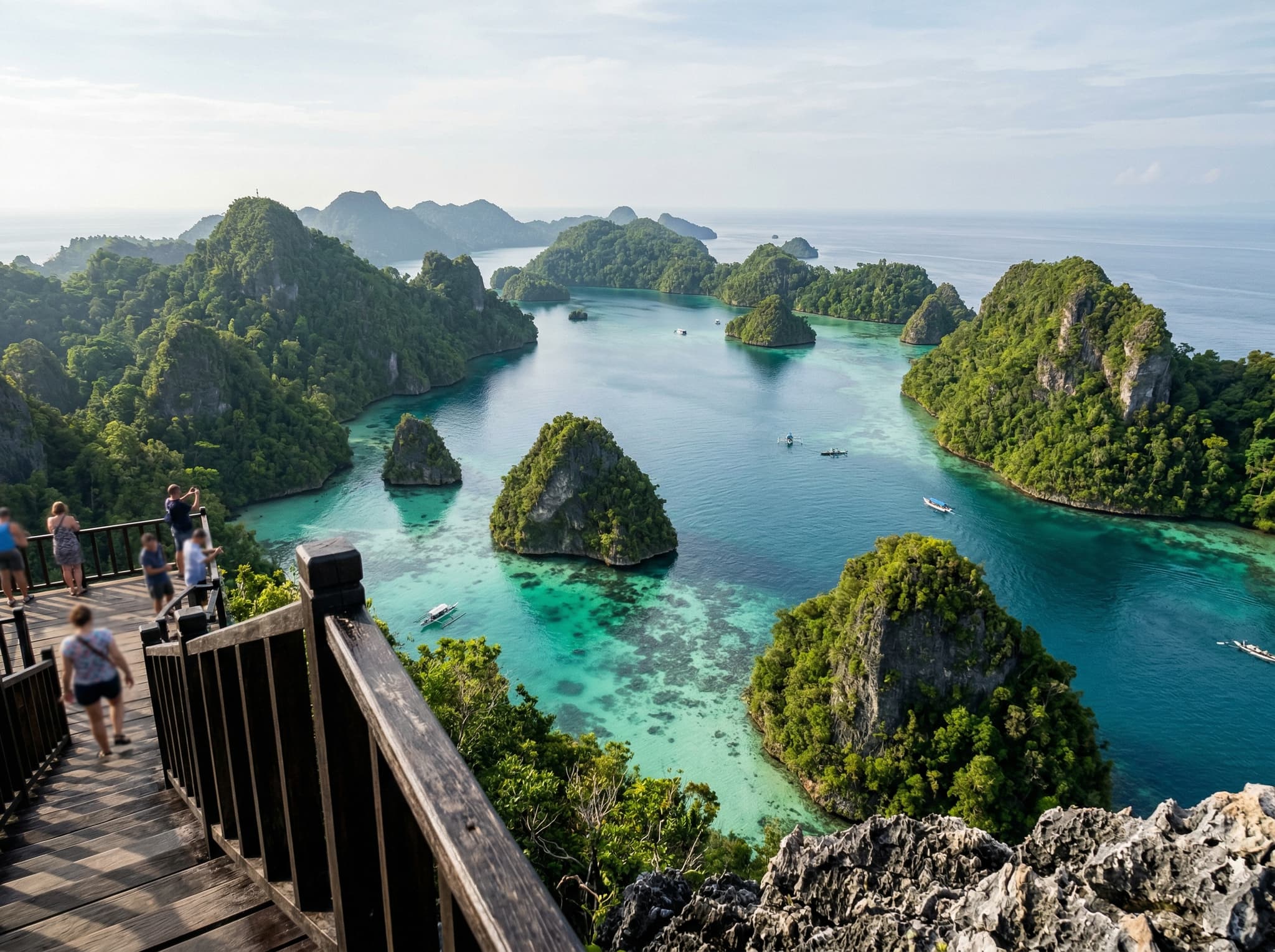
Every visitor to Raja Ampat's marine areas pays two mandatory fees in Waisai:
Entry Fees (2025–2026)
Marine Park Permit (international)
IDR 700,000 (~€35) — valid 12 months
Tourism Levy (all visitors)
IDR 300,000 (~€19) — one-time
Total (international adult)
IDR 1,000,000 (~€57)
Indonesian visitors
IDR 725,000 total
Children under 12
Exempt from Marine Park Permit
Purchase the Marine Park Permit online at kkprajaampat.com before arrival to avoid delays. As of March 2026, the permit is also available for purchase at Sorong harbor — previously it could only be obtained in Waisai. Verify current availability at kkprajaampat.com before travel, as purchase locations may change. Budget an additional IDR 300,000–1,000,000 per boat for unofficial village fees at popular excursion sites like Piaynemo and Wayag — these are charged at the site level, not by the resort.
Booking Practicalities
This is where things feel less polished than the resort itself. Payment is by bank transfer only — no credit cards. A 30% deposit is required at booking, with the full balance due 45 days before arrival. Book within 45 days of your trip and full payment is required upfront. You will need to provide passport copies, domestic flight details, and a billing address at reservation.
Currencies accepted: USD, EUR, and Indonesian Rupiah.
The Honest Assessment
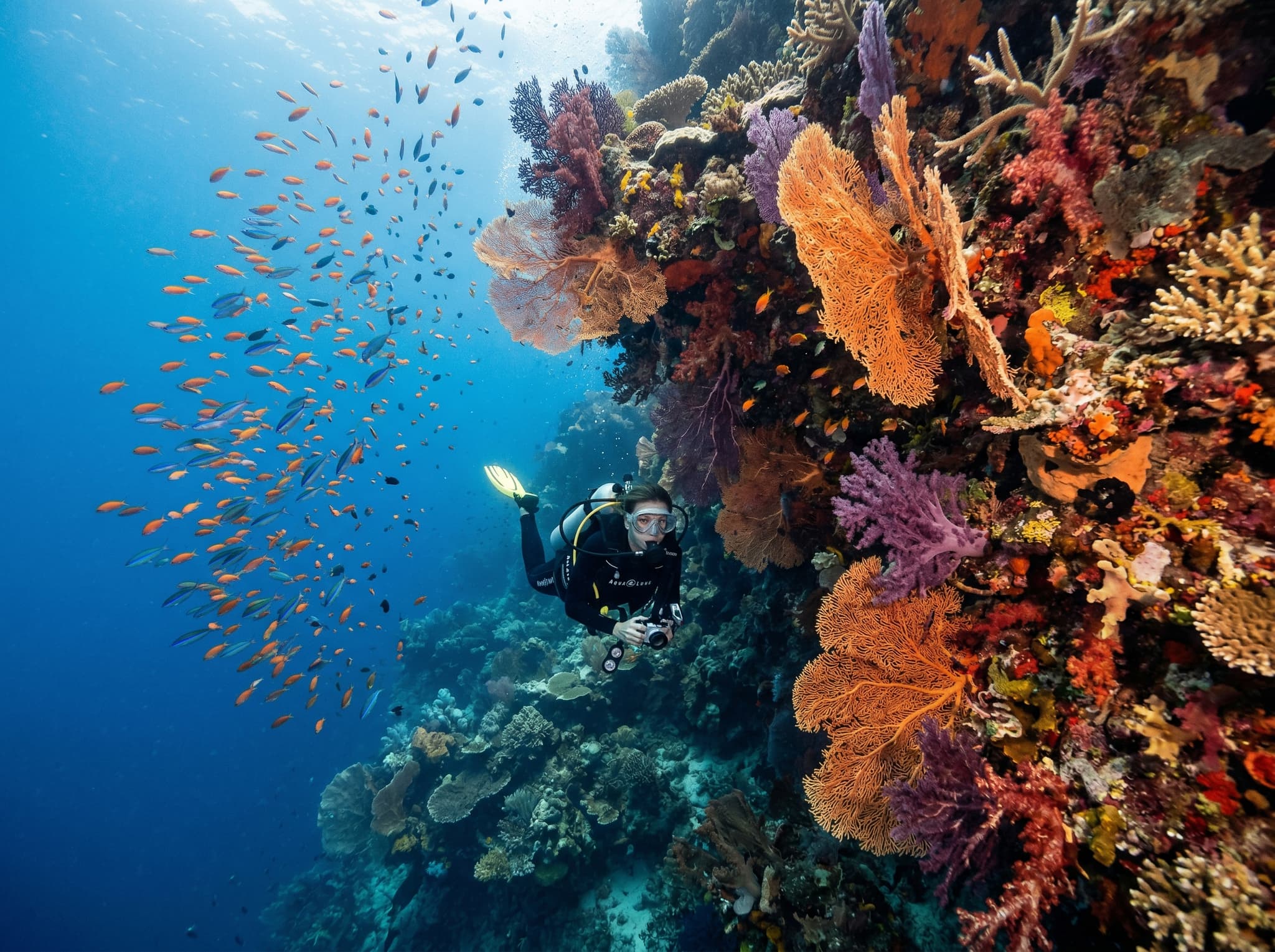
Agusta Eco Resort is a well-run mid-range dive resort with legitimate eco credentials and strong package value — particularly for divers booking the 7-night Raja Cottage at double occupancy. The price-per-dive-day math works out favorably against most Raja Ampat alternatives at this comfort level. The private island setting, 800-meter beach, and proximity to central dive sites (15 minutes to the nearest) are genuine advantages.
The 258 TripAdvisor reviews reinforce this picture: divers consistently rate it highly, praising the dive operations, staff, and setting. The recurring criticisms — food variety on longer stays, booking communication friction, the bank-transfer payment system — are real but manageable if you go in with calibrated expectations. This is a remote island dive lodge that punches above its weight on value, not a luxury resort that happens to have a dive center.
The trade-offs: bank-transfer-only payment adds friction and risk for international travelers, compounded by unclear cancellation terms. The remote location is a feature for some and a constraint for others. And non-divers should think carefully about whether the premium over a well-reviewed homestay (€25–60/person/night vs. €140+) is justified by the pool, spa, and room quality — or whether that money is better spent extending the trip.
For divers planning a dedicated Raja Ampat trip, Agusta delivers where it matters: reliable dive operations, comfortable rooms, full board that eliminates daily cost decisions, and a location that puts major sites within easy boat range. That combination, at the Raja Cottage double-occupancy rate, is hard to beat on Waigeo.