Bali is not one place. It's a collection of neighborhoods with radically different personalities, separated by traffic that can turn a 10-kilometer drive into an hour-long ordeal. Choose the wrong base and you'll spend half your trip on the back of a scooter, trying to reach the version of Bali you actually came for.
This matters more than most travelers expect. The island looks compact on a map — maybe 90 minutes coast to coast in theory. In practice, peak-hour traffic in south Bali reduces speeds to a walking pace. GoJek and Grab are everywhere, but ride-hailing doesn't solve congestion. A planned LRT line from the airport to Canggu is under construction as of 2026, but it's a future solution, not a current one.
The numbers tell part of the story: 7.05 million international arrivals in 2025, up 20% from two years prior, with nearly 80% of tourism activity concentrated in just four areas — Canggu, Seminyak, Ubud, and Uluwatu. This guide is honest about what that concentration does to each place.
Here's the quick version, before we go deep:
- Solo digital nomad → Canggu or Ubud
- Honeymooning couple → Seminyak or Uluwatu
- Family with young kids → Sanur or Nusa Dua
- Surfer → Canggu or Uluwatu
- First-timer wanting a bit of everything → Seminyak as a base
- Budget traveler → Kuta, though you'll understand the trade-offs once you read the section below
- Escaping the tourist belt → Lovina, Amed, or the emerging Seseh–Kedungu corridor
Now, neighborhood by neighborhood.
Ubud — Bali's Cultural and Spiritual Heart

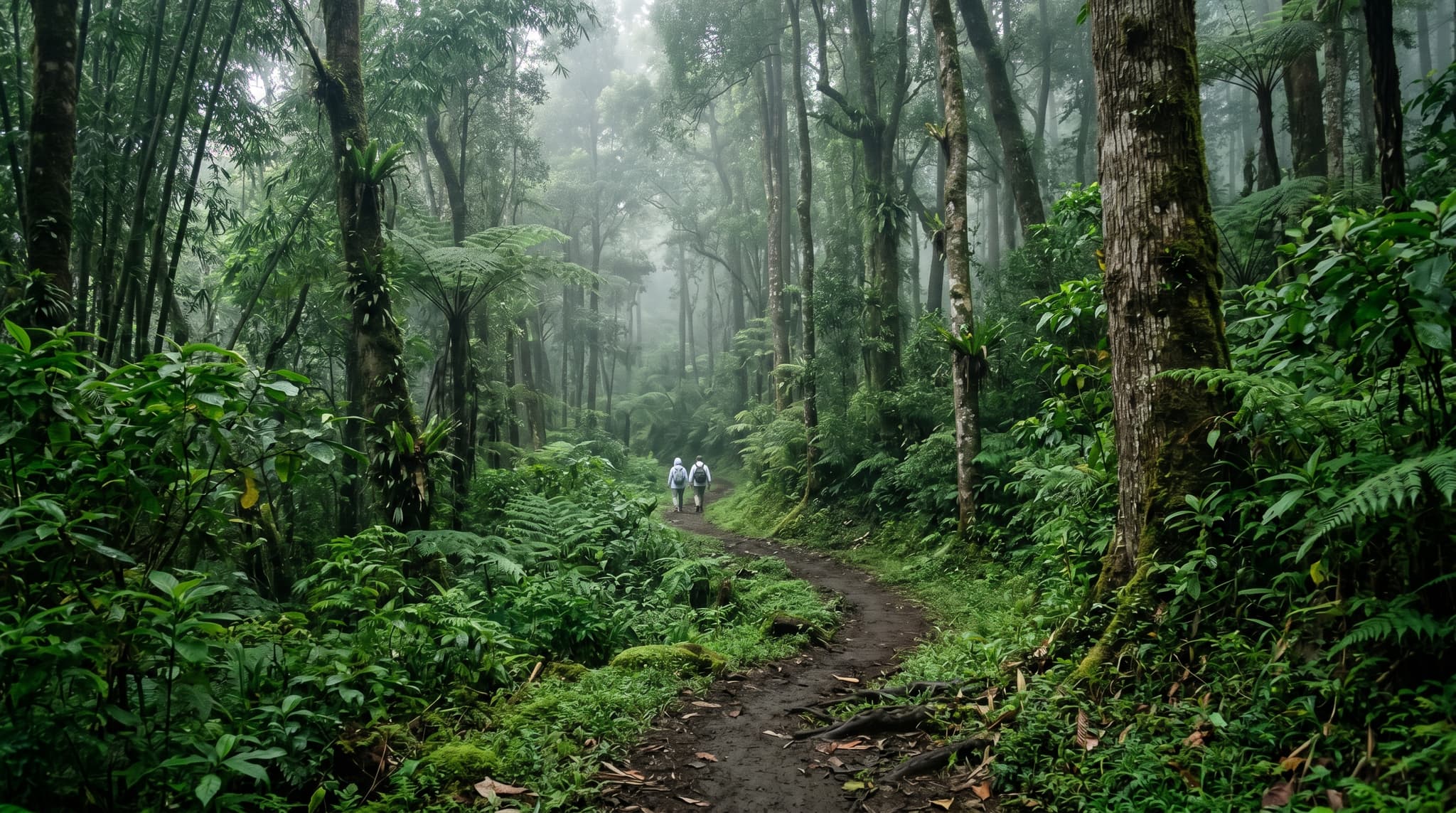
The morning starts before you're ready for it. Roosters first, then the soft scrape of brooms on stone as offerings — canang sari, small palm-leaf trays of flowers and incense — are placed on doorsteps. The air is cooler up here, noticeably so. Ubud sits at elevation, surrounded by river valleys and terraced rice fields, and the temperature difference from the coast is enough to make you reach for a light layer at breakfast.
This is inland Bali. Jungle, not beach. The rhythm is slower and quieter, and it shuts down early — by 9 PM most streets are empty. Mornings belong to the Campuhan Ridge Walk, a narrow path along a spine of land between two valleys where the light at 7 AM turns the grass gold. Afternoons dissolve into the Tegallalang rice terraces or a temple circuit. The restaurant scene is genuinely excellent — you can eat Locavore-caliber tasting menus or $3 nasi campur from a warung around the corner, and both will be memorable.
Ubud at a Glance
Best For
Wellness seekers, hikers, artists, long-stay travelers
Vibe
Cultural, spiritual, quiet after dark
Price Tier
Budget to mid-range — cheaper than south Bali
Airport Distance
60–90 minutes from DPS
Who it's for: Travelers who want to slow down. The Sacred Monkey Forest Sanctuary draws crowds, but Ubud's real appeal is for people staying longer than a weekend — yoga practitioners, writers, anyone doing a month of remote work somewhere cheaper and quieter than Canggu. The co-working scene here is smaller but more focused, with fewer distractions.
The honest trade-offs: There is no beach. The coast is a 1–2 hour drive depending on traffic, and that drive is rarely pleasant. Central Ubud itself — particularly along Jalan Raya Ubud — is increasingly congested with tour buses. The spiritual atmosphere that draws people here thins noticeably the closer you get to the main road. Walk ten minutes in any direction and it returns, but the center can feel like a different place entirely.
Who should skip it: Anyone who needs ocean access daily. Nightlife seekers. Families with very young kids who'd struggle with the steep, winding roads and limited sidewalks.
Canggu — The Digital Nomad and Surf Village (That Isn't Really a Village Anymore)
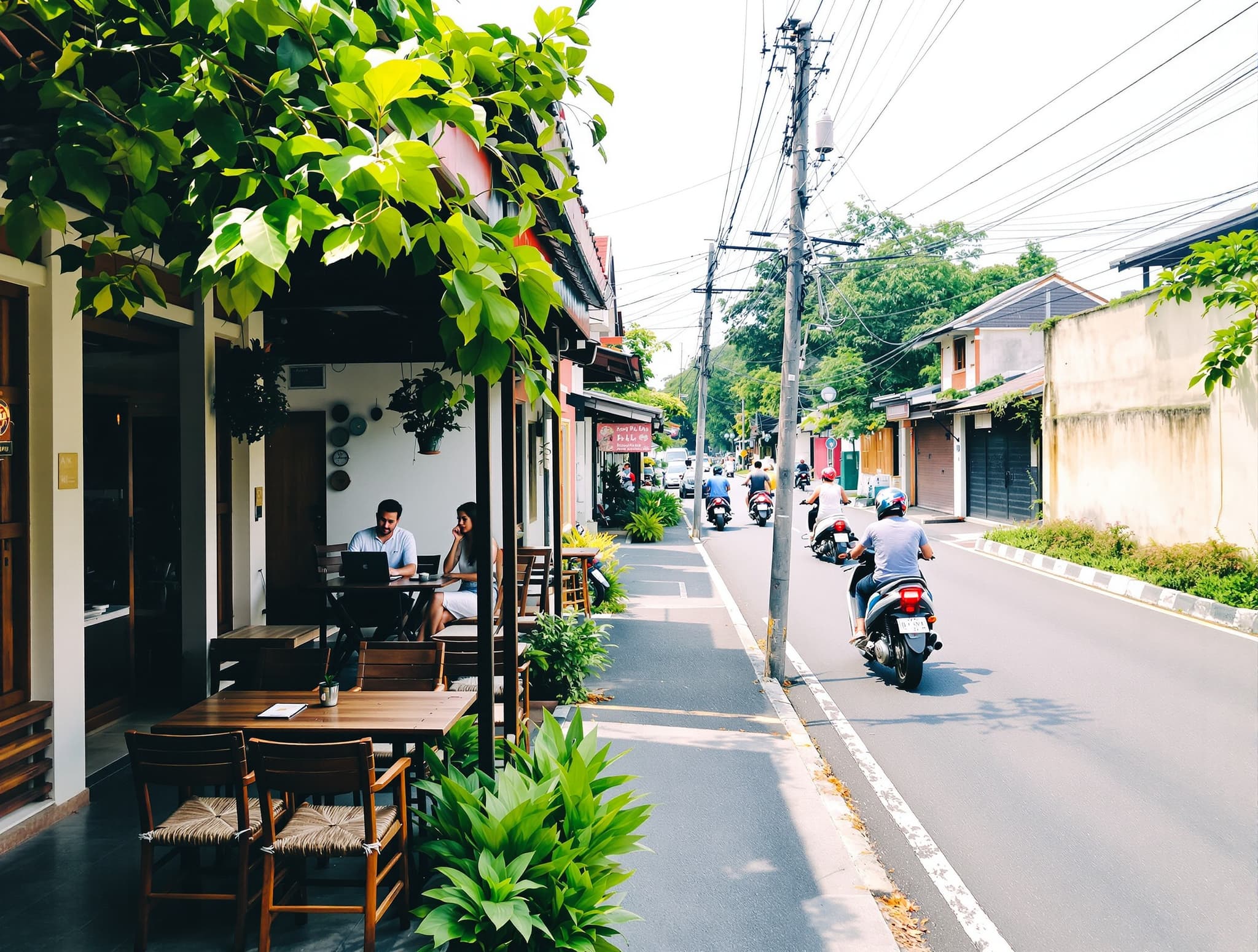
The daily loop goes something like this: morning at a laptop-friendly café with a $4 smoothie bowl and fast wifi, midday surf at Batu Bolong Beach or Echo Beach, afternoon in a co-working space, sunset at a beach club — Finn's or Atlas, depending on your tolerance for volume — and then either live music or an early night. Rice paddies are still visible between construction sites. For now.
Canggu built its reputation as a bohemian surf village, and the infrastructure that grew around that identity — the co-working spaces, the community, the reliable internet — remains the best on the island for remote workers. But the branding has outpaced the reality. This is no longer a village in any meaningful sense. It's a rapidly developing urban corridor with a surf break attached.
Canggu at a Glance
Best For
Digital nomads, surfers, solo travelers in their 20s–30s
Vibe
Social, youthful, laptop-and-longboard culture
Price Tier
20–30% cheaper than Seminyak
Airport Distance
45–75 minutes from DPS (longer in traffic)
The traffic problem needs naming directly. Peak-hour Canggu is genuinely unpleasant on a scooter. The roads weren't built for this volume. Drainage failures cause flooding during rainy season — not ankle-deep puddles, but road-closing water. The area is developing faster than its infrastructure can support, and the construction noise in some pockets is constant.
The honest trade-offs: The overdevelopment is real and accelerating. Construction noise, traffic, and the gap between the marketed "bohemian village" and the actual built environment are all widening. But if you're a remote worker who needs co-working spaces, community, fast wifi, and a surf break within walking distance, no other area in Bali matches this combination. You just have to accept the packaging it comes in.
Seminyak — Upscale Dining, Boutiques, and Beach Clubs
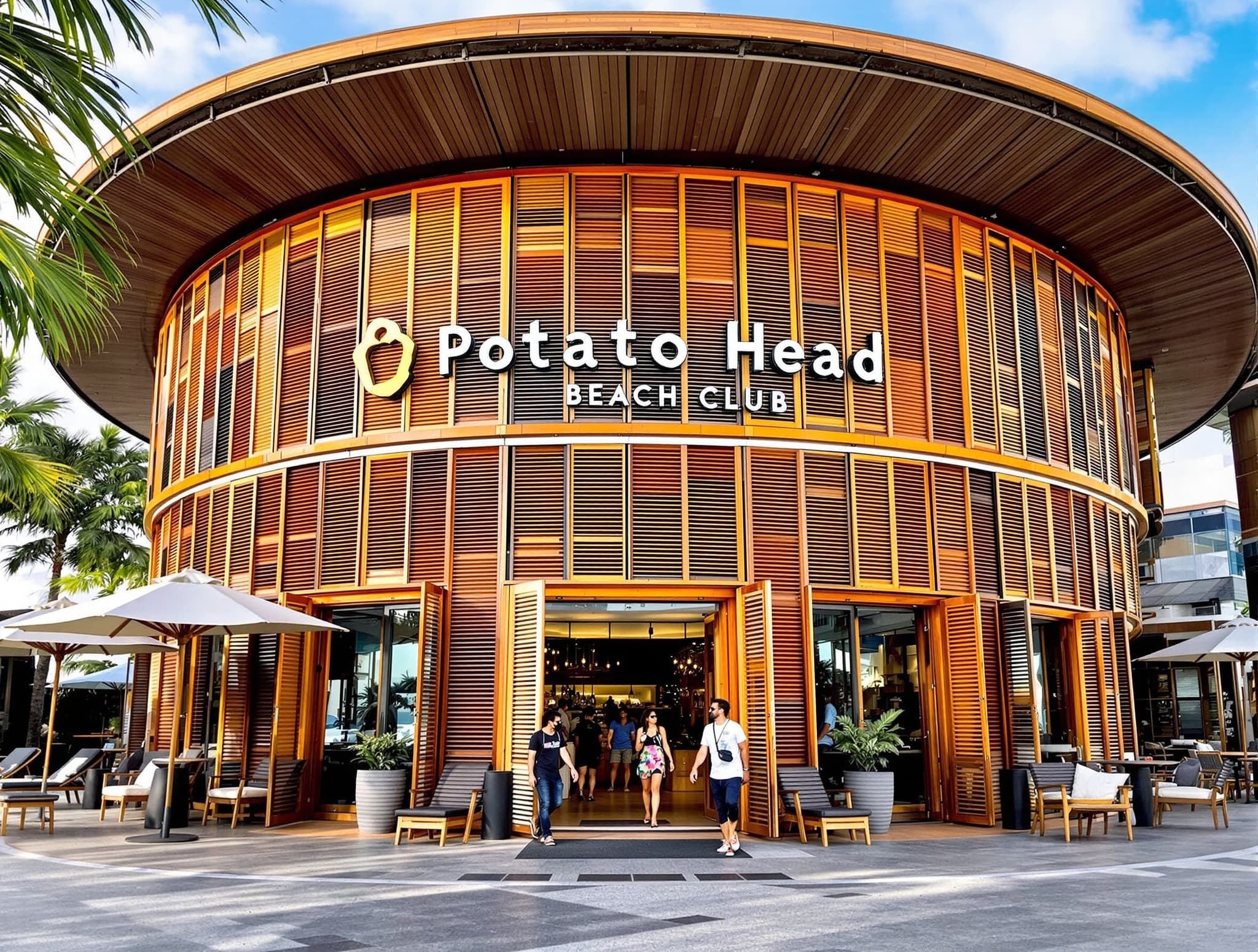
Seminyak is the most cosmopolitan stretch of Bali, and it knows it. The beach is wide and well-maintained, with neat rows of sunbeds and umbrellas that appear each morning like a daily act of civic pride. The sand is the same volcanic grey as everywhere else on this coast, but here it's raked. Behind the beach, the streets are lined with designer boutiques, concept stores, and restaurants that would hold their own in Melbourne or Bangkok — places where the plating is deliberate, the cocktail menu runs two pages, and nobody blinks at a $15 entrée.
The energy shifts through the day. Mornings are quiet — couples at breakfast, a few joggers on the sand. By late afternoon, the beach clubs fill. Potato Head Beach Club remains the anchor, its curved recycled-shutter facade now as much a Bali landmark as any temple. Sunset here is a social event, the sky turning copper while DJs ease the volume up gradually, the whole scene calibrated to feel effortless even though nothing about it is accidental.
Seminyak at a Glance
Best For
Couples, foodies, luxury seekers, first-timers wanting comfort
Vibe
Polished, cosmopolitan, curated
Price Tier
Mid-range to luxury
Airport Distance
30–45 minutes from DPS
Who it's for: Couples — especially honeymooners — who want quality without resort isolation. Foodies who came to eat well. First-timers who want a comfortable base with easy access to other areas: Canggu is 10 minutes north, Kuta 10 minutes south, and Ubud is reachable in about 90 minutes.
The distinction from Canggu matters. Seminyak is where you go when you want things to work smoothly — better roads, cleaner infrastructure, more reliable service. The nightlife is upscale rather than backpacker-rowdy. Canggu is where you go when you want to feel like you're discovering something, even if that feeling is increasingly manufactured. They're 7–10 kilometers apart and easily connected by scooter or taxi, so the choice is about daily rhythm, not access.
The honest trade-offs: This is the most expensive area for dining and accommodation on the island. It's crowded during peak season, and the beach — while wide and pleasant — isn't Bali's best for swimming due to currents. Budget stays exist ($15–$25/night for hostels) but you'd be swimming against the current of the neighborhood's identity. The south Bali traffic congestion applies here too.
Uluwatu — Clifftop Temples and World-Class Surf

The geography changes everything. Where south Bali is flat and increasingly built-up, the Bukit Peninsula rises into limestone cliffs that drop straight into the Indian Ocean. The beaches here — Padang Padang, Bingin, Impossibles — aren't walked to. They're descended to, down steep stone stairways cut into the rock, and that vertical barrier keeps things quieter than anywhere else this close to the airport.
Mornings in Uluwatu are different from anywhere else in tourist Bali. The dominant sound is birdsong, not scooter engines. The air smells like frangipani and salt. The clifftop warungs serve coffee with a view that drops 70 meters to whitewater, and there's a particular quality to eating breakfast at the edge of something.
Uluwatu at a Glance
Best For
Experienced surfers, couples seeking dramatic scenery, repeat visitors
Vibe
Dramatic, quiet, cliff-edge
Price Tier
Budget hostels exist; skews toward $200+/night clifftop villas
Airport Distance
30–45 minutes from DPS
Uluwatu Temple at sunset, with the Kecak fire dance performed against the sky and the ocean, is one of Bali's genuinely transcendent experiences — the kind of thing that resists description precisely because the setting does all the work. The surf breaks are serious: Padang Padang and Bingin are not beginner-friendly, and even getting to the water requires navigating cliff paths that would give a liability lawyer pause.
The development tension: Luxury clifftop villas and boutique hotels are transforming the peninsula. Prices are rising as the area gets trendier. What's peaceful now may not stay that way — the same pattern that reshaped Canggu is beginning here, just earlier in the cycle.

The honest trade-offs: You need a scooter or driver to get anywhere — this is remote by Bali standards. The dining scene is developing but thin compared to Seminyak or Canggu. The cliff access to beaches is genuinely steep and unsuitable for young children or anyone with mobility issues. The mid-range accommodation tier is thin — you're either in a $15–$25/night hostel or a $200+/night villa, with less in between.
Jimbaran, about 10 minutes away, offers a more accessible complement: seafood warungs line the beach there, and eating grilled fish on the sand at sunset, with planes descending into DPS overhead, is one of Bali's simplest and best experiences.
Kuta — Budget-Friendly and Close to the Airport
Kuta is loud, commercial, and heavily touristed. The beach is wide but crowded and not particularly clean. The bars are affordable. This is the Bali that Bali itself is trying to move past.
Kuta at a Glance
Best For
Budget travelers, airport proximity, cheap nightlife
Vibe
Loud, commercial, backpacker-oriented
Price Tier
Cheapest area in south Bali — hostels from $10–$15/night
Airport Distance
20–30 minutes from DPS
Who it's for: Travelers on a tight budget, or anyone who needs a first-night or last-night base near the airport. Young backpackers who want cheap drinks and don't mind the atmosphere.
Who should skip it: Most experienced Bali travelers do. If budget is your primary constraint, Kuta delivers on price. If it isn't, your time is better spent elsewhere.
A quick distinction: Legian, immediately north, is slightly calmer and slightly less commercial — the same price tier with marginally more breathing room. Tuban, south toward the airport, is essentially transit hotels. Neither warrants a special trip, but both serve the purpose if you need to be near DPS.
Sanur
— Calm, Family-Friendly, and Underrated
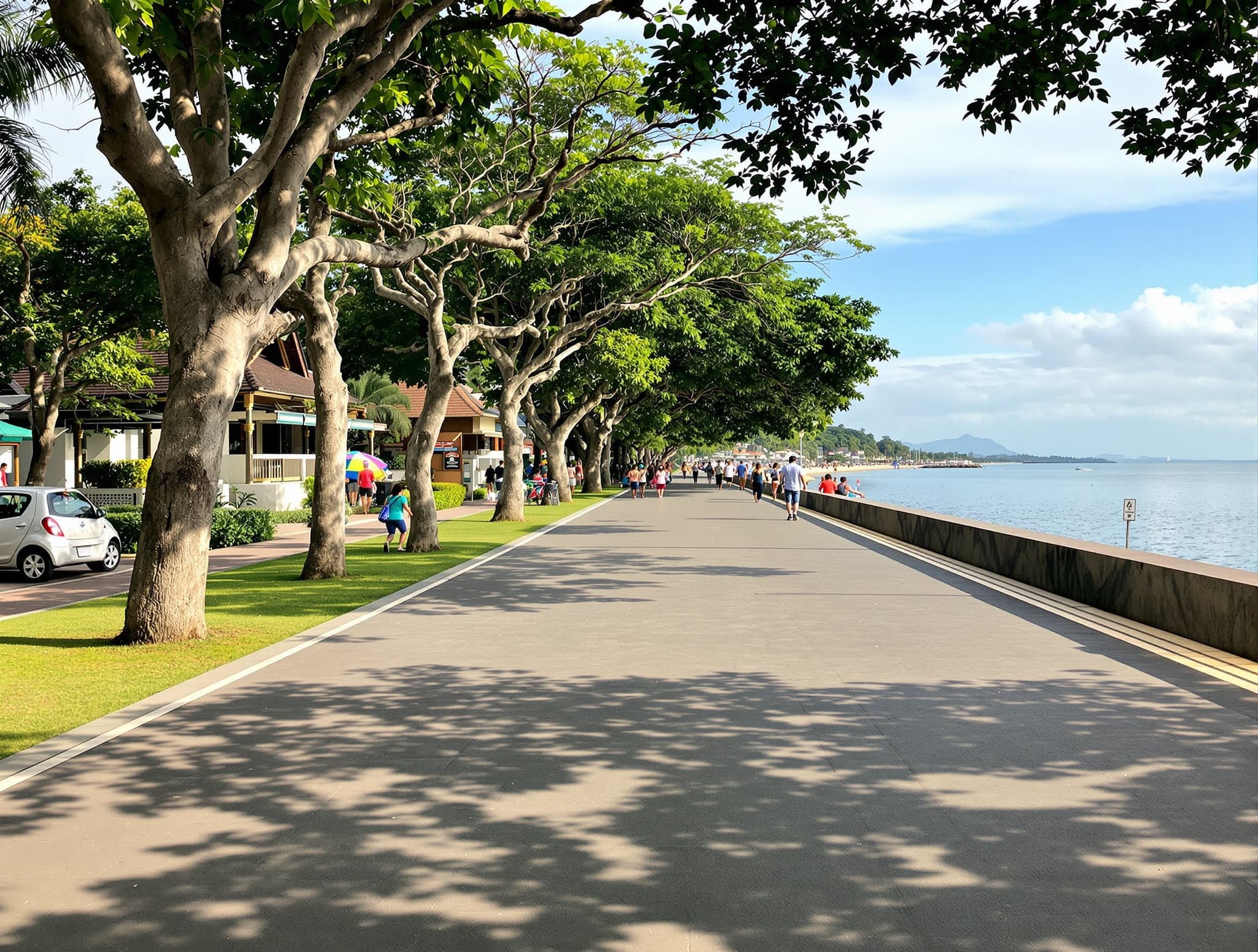
The beachfront path in Sanur runs for about five kilometers along the east coast, shaded by old-growth trees, and in the early morning it belongs to joggers, cyclists, and elderly Balinese men fishing from the seawall. The light is different here — Sanur faces east, so sunrise comes directly over the water, the sky shifting from grey to pink to gold while the rest of tourist Bali is still asleep. By the time the south coast beach clubs open for the day, Sanur has already had its best hour.
This is what Bali felt like before the boom. The streets are tree-lined and quiet. The restaurants are local warungs alongside unhurried cafés where nobody is working on a laptop. The expat community here skews older, and the pace reflects it — by 9 PM, the streets are genuinely empty.
Sanur at a Glance
Best For
Families with young kids, older travelers, island-hopping base
Vibe
Calm, local, slow-paced
Price Tier
Mid-range sweet spot — homestays from $10–$20/night, good mid-range $30–$80/night
Airport Distance
20–30 minutes from DPS
Why it's underrated: Proximity to everything without the cost of being in the middle of it. Sanur is 20–30 minutes from the airport, 15–20 minutes by taxi to Kuta or Seminyak, and it's the departure point for [fast boats to Nusa Lembongan and Nusa Penida](/asia/indonesia/bali/day-trips-from-bali). The east-facing coast means calm, reef-protected water — flat enough for small children to wade in safely, which is exactly why families end up here.
The honest trade-offs: Nightlife is essentially nonexistent. The dining scene is modest — good, but not a destination in itself. Younger travelers and digital nomads will find it too quiet. The reef that protects the beach makes it useless for surfing. If you need energy and stimulation, Sanur will feel like retirement.
But if you've spent four days in south Bali sensory overload and you want somewhere to sit with a coffee and watch the water change color at dawn, this is where you come.
Nusa Dua — Resort Strip for Luxury and Families
Nusa Dua is a gated resort enclave on the southeast coast. Manicured beaches, 24/7 security, international hotel brands — Hilton, St. Regis, Sofitel. This is Bali with the edges sanded off, by design.
Nusa Dua at a Glance
Best For
Resort families, all-inclusive seekers, conference attendees
Vibe
Manicured, insulated, international-hotel standard
Price Tier
Skews luxury — budget travelers have no reason to come here
Airport Distance
15–20 minutes from DPS — closest resort area
Who it's for: Families who want resort infrastructure — kids' clubs, pools, organized activities. Travelers who prefer all-inclusive comfort and don't need to feel like they're somewhere specific.
The honest trade-offs: You will not feel like you're in Bali. The gated nature insulates you from local culture, local food, and the texture of the island. Dining and nightlife outside the resorts are limited. If you wanted a beach resort that could be anywhere in Southeast Asia, this is it — and for some travelers, that's exactly the point.
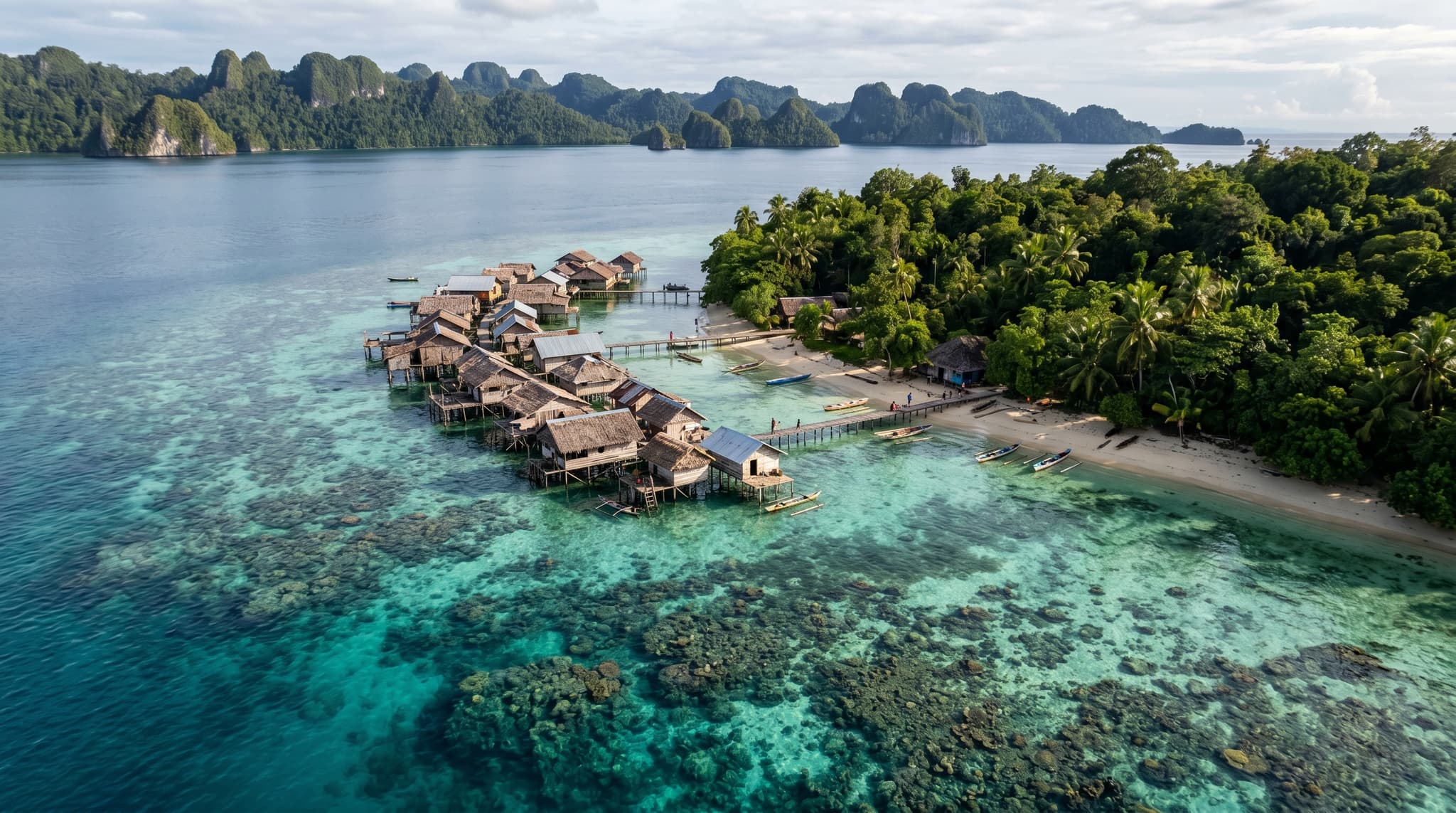
Lovina and Amed — The North and East for Divers and Escapists
These two areas share a common appeal: they're where you go when you want to leave tourist Bali behind entirely.
Lovina sits on the north coast — black sand beaches, dolphin-watching boats that leave before dawn, hot springs in the hills behind town. The pace is quiet to the point of sleepy. The accommodation is remarkably cheap: mid-range pool villas from $20–$50/night, monthly rentals as low as $300. The trade-off is that "quiet" also means "limited" — the restaurant scene is thin, the nightlife nonexistent, and the 2.5–3 hour drive from the airport crosses mountain roads that are beautiful but slow.
Amed occupies the east coast, a former fishing village turned dive and snorkel destination. The draw is underwater: a Japanese shipwreck sits in shallow water off the coast, surrounded by coral gardens dense enough to snorkel without a boat. Above the surface, Mount Agung fills the background — massive, occasionally smoking, impossible to ignore. The guesthouses are simple. A handful of good restaurants line the coastal road. The village still feels like a village.
Lovina & Amed at a Glance
Best For
Divers, snorkelers, long-stay budget travelers, repeat Bali visitors
Vibe
Remote, unhurried, locally rooted
Price Tier
Budget to low mid-range
Airport Distance
2.5–3+ hours from DPS
The honest trade-offs for both: Infrastructure is basic. Rainy season (November–March) can make rural roads difficult and occasionally impassable. You're choosing isolation — make sure that's what you want, not just what sounds romantic from a café in Seminyak.
Bali Neighborhoods Compared at a Glance
Neighborhood Comparison
Ubud
Cultural, spiritual, quiet. Best for wellness and long stays. No beach access.
Canggu
Social, surf-oriented, nomad hub. Best for remote workers. Traffic is severe.
Seminyak
Polished, cosmopolitan, curated. Best for couples and foodies. Most expensive dining.
Uluwatu
Dramatic cliffs, serious surf. Best for experienced surfers and scenery seekers. Remote — need transport.
Kuta
Cheap, loud, commercial. Best for budget stays near the airport. Most travelers skip it.
Sanur
Calm, family-friendly, sunrise coast. Best for families and decompression. Too quiet for nightlife seekers.
Nusa Dua
Gated resort enclave. Best for all-inclusive families. Insulated from local Bali.
Lovina / Amed
Remote, unhurried, locally rooted. Best for divers and escapists. 2.5–3+ hours from airport.
Bali rewards a split stay. Rather than commuting from a single base through traffic that will test your patience, consider pairing a south coast neighborhood — Seminyak, Canggu, or Uluwatu — with 3–4 nights in Ubud or the east coast. The island is small enough to make this practical but congested enough that moving your base beats fighting the roads every day.